Fischer RC4 Carbon Pro LV ZF BOA (115+)

The flagship women’s narrow Fischer offers a unique host of features that will appeal to a hardcore and specific-fit-focused cohort of skiers.

Category 
All-Mountain Traditional
Last Width 
98
Flex Index 
115+
Price (MSRP) 
$1200.00USD
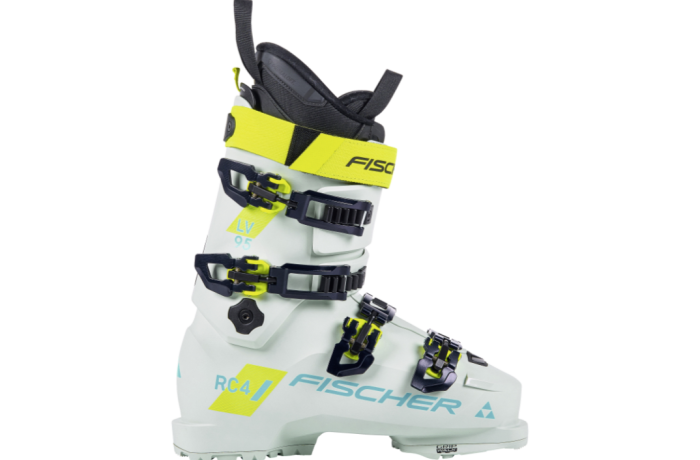
Fischer RC4 95 LV Vac

Gender 
Women's
Sizes (MP) 
22.5-26.5
Hike Mode 
No
Construction 
Overlap
Boot width profile 
Narrow
Also in this Collection 
115
Special Sizes 
22.5 and smaller
Cantology Compatible 
No

The RC4 lineage still shows in the RC4 95 LV, testers said, claiming it was one of the tightest, shortest most forward leaning boots of the test. That is how we came to know the RC4 early on--aggressive in fit and stance and ready to arc serious turns in lightning quick side-to-side moves. Of the boot's agility and quickness, one tester said: it can't help but be reactive, it's so damn tight!

Another tester said it was built for the tiniest of little gynmast bodies. This is an old-school narrow, women's boot in its toebox shape, lowish cuff feel and raked-forward stance. Testers were sure that there were skiers out there looking for this set-up, but most of them said it wasn't for them in its out-of-box form. What they did mention might serve skiers well would be a Vacuum molding session, as the lower shell is made of Vacuplast, the highly moldable, low-temp plastic that the Fischer Vacuum boot is known for. Our tests in the past have shown that big shape changes--and stance adaptations--can be made possible through this process. One unique quality of the Vacuum molding protocol is the use of the external pressure bladder that exerts a certain amount of squeeze back against the foot, so while some areas might be made wider to suit a bony prominence another area could be tightened up--like the heel pocket, which testers said could use a little of that.

Some testers suggested that skiers might simply go up one size, which would open-up the fit and probably achieve a taller-feeling cuff. Savvy testers mentioned that there are always folks that are caught in between sizes, and the Fischer RC4 95 LV is one of those boots that can satisfy that skier that's never finding a snug enough boot but can't tolerate dropping down a size.

Testers liked the fact that there was a forward lean adjustment on board, which would be a modification they recommended to most skiers, and they liked the solid cuff attachment points for maximizing the boot's quick lateral game. Dual pull loops and a Velcro strap were straightforward and functional, and testers all mentioned the Ice Grey cosmetic--in a positive way.

Total Avg Score 
4.35
Shell/Cuff/Tongue Plastic 
Vacuplast/PU
Dry-Test Fit 
4.25
Dynamic Balance 
3.75
Edge Power & Fore-Aft Support 
4.42
Quickness, Steering & Feel 
4.58
Convenience, Warmth & Features 
4.75
Tech Compatible 
No

Fischer RC4 Pro LV ZF

Gender 
Men's
Sizes (MP) 
24.5-29.5
Hike Mode 
No
Construction 
Overlap
Boot width profile 
Narrow
Also in this Collection 
130, 120
Cantology Compatible 
No

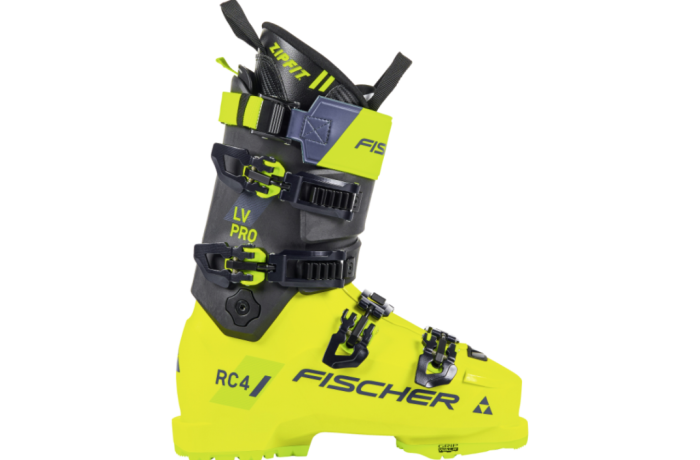
Some things have a kind of cult appeal that might not make sense to some, but to others will represent an answer to their prayers--the Fischer RC4 Pro LV ZF is like that. The ZF stands for ZipFit, meaning its lace-up ZipFit liner. Those two initials will be enough to sell the boot to ZipFit cultists who can't go back to boots that don't have liners with chipped cork and resin ankle pocket and tongue fill-zones. The RC4 Pro's "LV" initials indicate low-volume, and it's all of that, in spades, even without the additional performance squeeze provided by ZF cork. Anytime you start talking up something's cult following, you've essentially chosen to overlook (or alienate) a portion of that thing's potential market. But it doesn't matter. This boot may not be for everybody, but for those that it is for, it is perfect--and not found anywhere else.

First, the liner must go on the foot and be laced up, then crammed into the shell like putting on a World Cup style race boot. Some of our testers were able to remove the laces and get the boot on their foot with the liner in the shell, in normal fashion, but this comes with its own entry challenges and we think plug-style liner cramming is the way to go here. For some skiers, especially the ZipFit savvy and those with serious race backgrounds, this is not a problem. However, for the uninitiated it can be daunting, especially given the shell's real 140 stiffness carved out of standard wall-thickness polyurethane--queue up a single-digit parking lot morning and donning this bad boy could be hernia-inducing. To be fair, with some practice, getting the boot on and off this way isn't so bad, and in fact, for folks with a bony top of foot, the liner, on and laced-up, protects that spot from a traditional entry's painful encounter with the plastic shell overlap at the throat of the boot. Lace-up liner fans will also attest that the closure achieved through the instep and up through the base of the shin with laces is hard to duplicate. This, plus an already closely-lasted 98mm shell adds up to a very snug fit for the low-volume foot. A lot of boots may just slap an L and a V onto the model name--this one means it.

The chipped cork resin of the ZipFit liner fills the ankle pockets and helps secure the heel and is also packed into the liner tongue's exterior construction, away from the padded shin contact layer. This relatively stiff, putty-like material responds to the heat and pressure of wearing by migrating slightly and slowly, eventually matching the body's shape by moving away from high pressure points to fill adjacent void spaces. This does not happen quickly, but even ten minutes spent wearing the boot indoors will begin to have a beneficial affect. Adding heat to the liner, or ideally liner and shell both, can accelerate this heat molding process but regardless, some time and patience will be rewarded with a firm (not hard) grip on the foot and leg. Additional cork goo can be pumped into the ankle or tongue chambers via cork-loaded tubes that can be purchased as an accessory item.

Putting on this boot after another tester has worn it often doesn't feel right, as it had molded a bit to that person's shape. Upon initial try-on, if a tester doesn't either have the patience to wear the boot for a little longer than usual (or adding heat) before judging fit, he'll invariable downgrade the boot's initial fit score--which was probably the case for this boot's lower-than-deserved Anatomical Fit and Initial Feel score. It's no different for the prospective buyer who will be trying on the RC4 Pro LV ZF in the shop--it'll feel like somebody else's foot (the previous customer's) for a while, so expect that and give it some extra time to do its thing.

With enough time or heat, the ZipFit liner matches the foot and leg but it also matches the interior shellscape for a well-locked connection from body to ski. The density of the cork is also a good transmitter of movement energy--no soft foam packing to mute direct messaging to the ski. The patience that led to a comfortable, close fit will also yield performance gains in terms of how the boot skis, and testers said that the RC4 Pro LV ZF did that quite well. Its highest scores were loaded into the performance parameters of stance, edging and quickness, and testers found few faults in any of those metrics, save its fore-aft stance which was slightly more forward than the too-upright cuff of current fashion (meaning, the RC4 Pro LV ZF is probably just right the way it is).

The stiffness, the ZipFit considerations and the aggressive stance attack all add up to needing a skilled pilot who knows what he's getting into. For the technically skilled all-mountain skier with a low-volume foot who wants the edge power and quickness of an almost-race Frontside carver but tuned for high-speed, off-piste, hammering descents the RC4 Pro LV ZF will not disappoint. For skiers who aren't quite there yet, testers say it will absolutely elevate your game--if you're game.


Total Avg Score 
4.33
Shell/Cuff/Tongue Plastic 
PU/carbon-infused PU
Dry-Test Fit 
4.00
Dynamic Balance 
4.67
Edge Power & Fore-Aft Support 
4.67
Quickness, Steering & Feel 
4.67
Convenience, Warmth & Features 
3.67
Tech Compatible 
No

Fischer RC4 Pro MV DYN BOA Vac ZF

Gender 
Men's
Sizes (MP) 
24.5-29.5
Hike Mode 
No
Construction 
Overlap
Boot width profile 
Medium
Cantology Compatible 
No

There's a lot going on in the Fischer RC4 Pro MV DYN BOA Vac ZF's naming structure, and its entire meaning warrants explanation--it's a good story! The Pro level RC4 MV is the 130-flex flagship of the medium width, 100mm all-mountain boot group. Here, the DYN moniker indicates that it's outfitted with tech fittings at the toe (a rarity in fixed-cuff boots). The Vac means, you guessed it, the boot's lower shell is made of Fischer's low-temp, Vacuum-moldable Vacuplast material. ZF stands for the lace-up, cork-powered ZipFit liner that comes with this boot.

Our test team had a blast unlocking all the potential that the RC4 Pro MV DYN Boa Vac ZF's unique set of features had to offer them. Some testers' eyes bugged out (in a good way) at the unicorn-like confluence of expert all-mountain skiing amenities: 130-flex, ZipFit liner, tech fittings. Others thought that the unicornicopia of elements slotted the Pro MV into a somewhat niche sub-category and in turn limited its broader appeal. Both camps are right, we think.

The nature of the ZipFit liner is one that had a polarizing effect on our testers. The ZipFit fans on the team loved the close lace-up wrap around the lower leg shaft and smoothly snug transition of tension into the instep and over the top of the foot. They always rave about the dense but shape-matching fit of the cork-and-resin filled ankle pockets and tongue--and they're okay with the extra warm-up time or heat-molding required to get the putty-like stuff to move, mold and stop "feeling weird." The ZF fans have no problem with a liner-on-the-foot-first entry into the shell and in fact, will point to the protection the liner offers the foot's bony instep as it's jammed past the boot throat's plastic overlap as yet another benefit to ownership.

ZipFit skeptics on our team were first hung-up on having to don the liner first then stuff it into the shell like a race boot (and trying to leave a ZipFit liner in the shell for entry has its own set of challenges). They were also temporarily flummoxed by the first fit of the ZF liner--it invariably had molded to the last tester's ankles, and initially would feel foreign to their own foot shape. Over the course of ten minutes of wear time inside while testers conducted their dry testing the liner would warm and form and if those testers took notice, they'd have to revise their earlier fit impressions in a positive direction. Other testers took advantage of a quick liner warm-up using the test center hot stacks or convection oven to accelerate the fit-matching process. For testers (and prospective buyers) who are uninitiated to the entry and molding particulars of the ZipFit there's a learning curve to be traveled. For those who are open-minded and patient, the reward is almost always worth the effort.

The fit of this medium is noticeably snug in the rearfoot and lower leg shaft, testers said. It's also noticeably open in the forefoot and toebox, they agreed. Both of these fit characteristics are amplified by the ZipFit liner, as the overall fit is a combination of shell shape and liner, like any other boot. Some testers love this fit map--a tight rear end with legroom in the forward cabin. Other testers didn't love this fit tension differential. The truly "V-shaped" foot (skinny heel, wide forefoot and toes) is a match made in heaven with the RC4 Pro MV DYN Vac ZF.

The fans on our team showed their love with generous scores. The skeptics downgraded theirs, mainly in the Convenience metric and a bit in the Initial Fit parameter. The resulting score average isn't a fair reflection of the boot's merit when matched with the right skier, we don't think.

How this boot skis was never in question for our test team. Over twelve separate tests they gave its Quickness and Steering score a perfect 5.0. Its Dynamic Balance and Edge Power scores were both 4.80's. This is a boot built for accomplished skiers who are looking for serious downhill performance and who are not thwarted by a lace-up liner, plug-style entry or bright yellow. Add tech fittings to the toe for this kind of all-mountain charger and it's value-added. Can you ascend with skins without a releasable cuff? Sure you can, you just don't want to go for hours like that. Can you crush the descent when you have a full-blown, fixed-cuff 130 on your foot after you trudge your way up--you sure as hell can.

But can you wear the yellow? That's another question entirely, but if you're a skier who is not daunted by the other unicorny elements here, then yes, you most certainly can.


Total Avg Score 
4.44
Shell/Cuff/Tongue Plastic 
Vacuplast/carbon-infused PU
Dry-Test Fit 
4.00
Dynamic Balance 
4.80
Edge Power & Fore-Aft Support 
4.80
Quickness, Steering & Feel 
5.00
Convenience, Warmth & Features 
3.60
Tech Compatible 
Yes

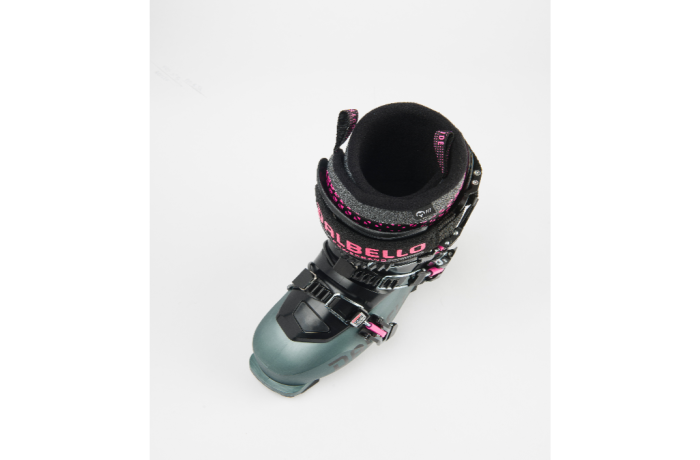
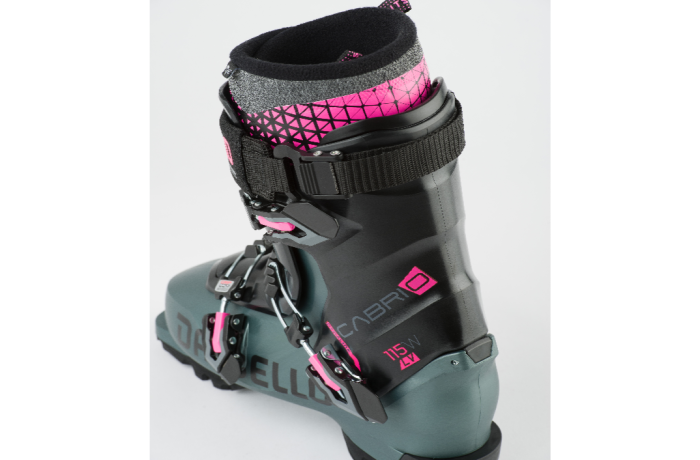
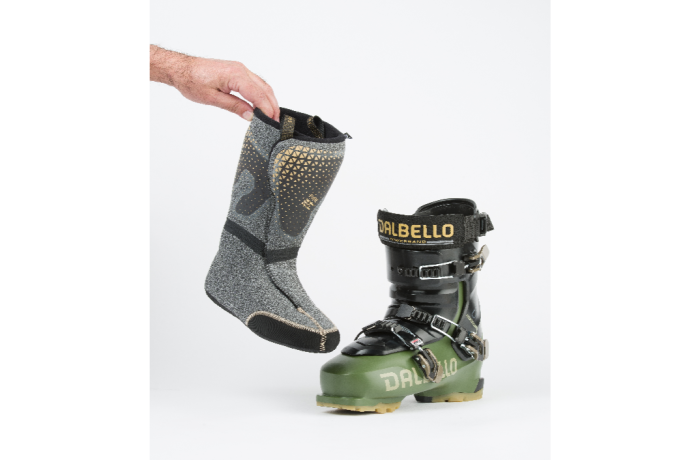
Dalbello Cabrio LV 115 W 3DWRAP

Gender 
Women's
Sizes (MP) 
22.5-27.5
Hike Mode 
No
Construction 
Cabrio/3-PC
Boot width profile 
Narrow
Also in this Collection 
95, 85
Special Sizes 
22.5 and smaller
Cantology Compatible 
No

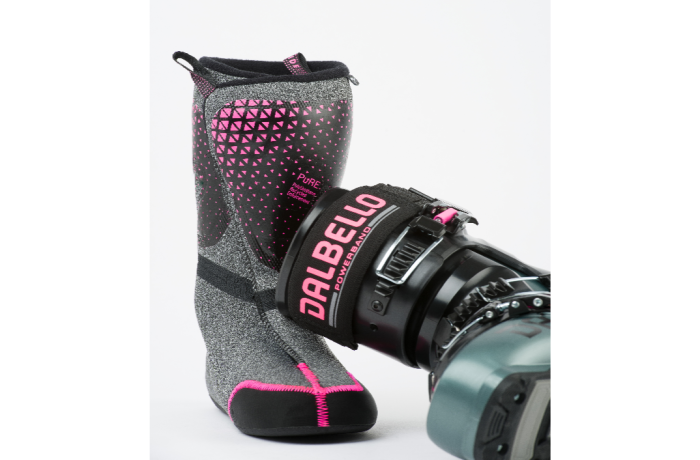
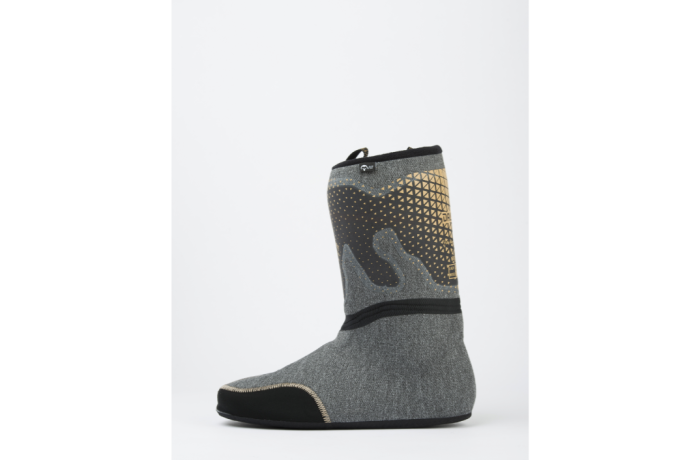
Expert skiers with long, slender legs who are looking for a strong-skiing boot that's also easy to get on should hustle to find a Dalbello Cabrio LV 115 W 3DWRAP because our test team says it was absolutely made for them! They also say that the initial fit is deceptively aggressive--it's a firm, tall liner that really requires full molding to achieve both a proper fit and a more comfortable flex feel, so either be patient with try-on or get some heat into that liner. Testers suggest prospective buyers not let the first fit get in their way of finding a great skiing boot and making this one theirs.

Our taller testers with lower volume calves were in heaven with the cuff fit on the Cabrio LV W, though even those testers mentioned that the top of the liner at the shin and calf had an abrupt feel until they had spent time in the boot and taken it for a few runs. Testers who took advantage of a secondary custom test with a full liner mold reported that the boot top fit was vastly improved, as were most of the other initial fit complaints. The heel seated more deeply into its pocket and the ankles and navicular found a well-supported home without hot spot points. So, testers reiterated to not judge the book by its initial fit cover--huge improvements in the fit await those who mold the liner.

The fore-aft positioning of the boot is on the upright side and the cuff is tall, which put shorter and thicker calf testers at a bit of a disadvantage. Our Amazonian testers absolutely loved this boot for the stance support it offered them and the massive amount of leverage the tall cuff could exert on the ski, at speed, through gnarly terrain. Testers who could harness the cuff's stance and power came back raving about high-energy rebound and a fun, springy feel to their turns. Those who couldn't got tossed in the backseat and didn't get the giggles. Testers who molded the liner made mention that the shin seated more deeply and comfortably into the liner, which dissipated pressure along the tibia and made it easier to power up the forward flex, tapping into the cuff's hidden mojo.

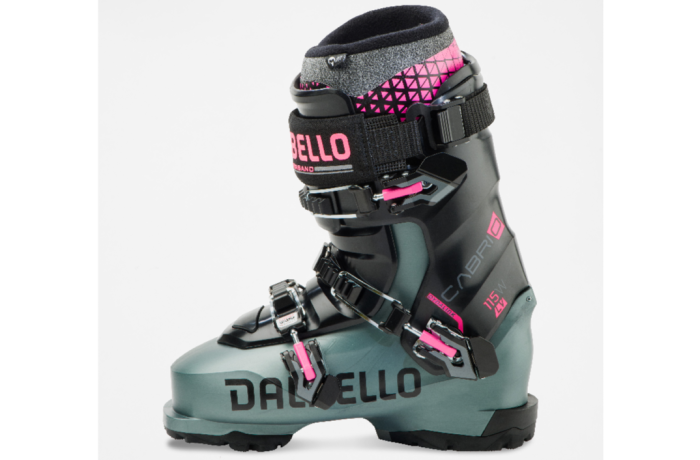
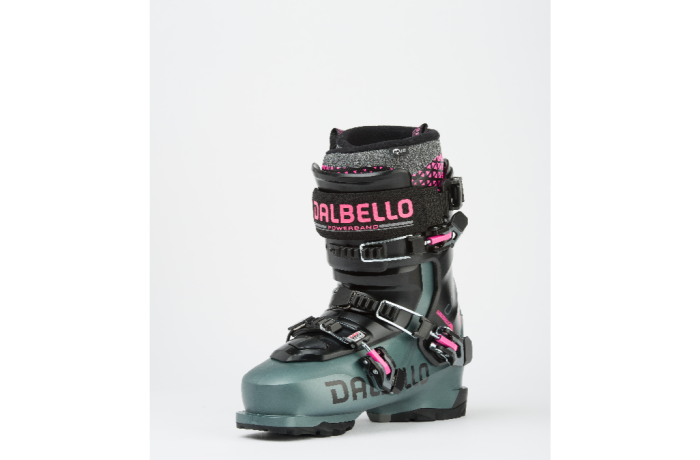
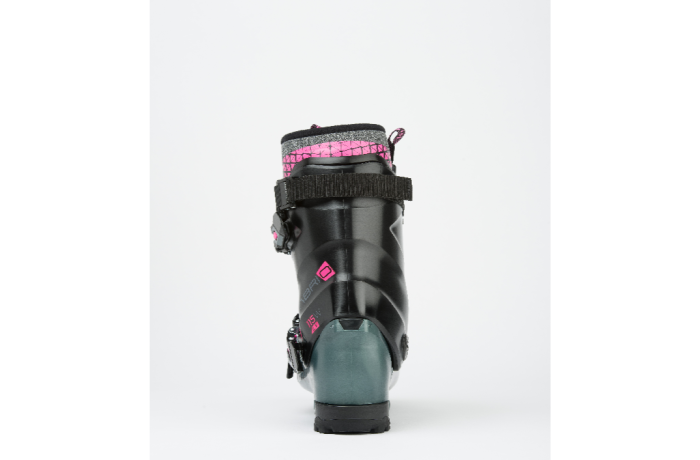
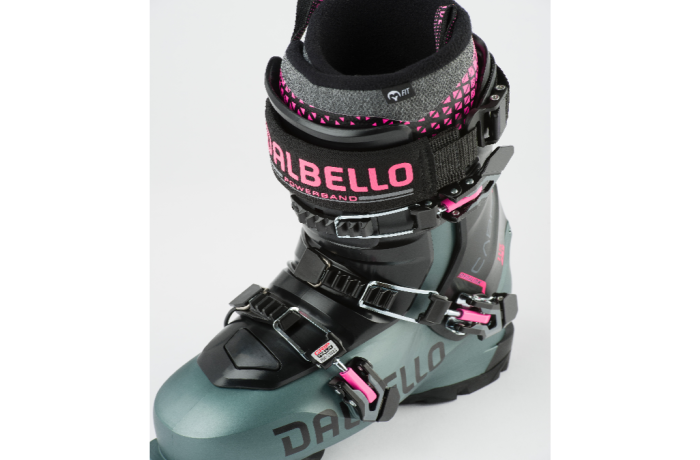
Even with a stiff, tall cuff, testers were blown away at how easy it is to put on a cabrio boot when it's coupled with a spiral wrap liner. They loved the easy slide in and out and also approved of the revised Dalbello Cabrio closure with its straightforward buckle system. The fat-fronted cam buckle power strap was a hit, especially for the Amazons who wanted all the power this cuff had to offer. The whole test team, regardless of height, loved the sage green and black cosmetic, punctuated with hot pink accents.

Remember, they said, mold the liner!

Total Avg Score 
4.45
Shell/Cuff/Tongue Plastic 
PU/PU/Pebax Rnew
Dry-Test Fit 
4.00
Dynamic Balance 
4.75
Edge Power & Fore-Aft Support 
4.75
Quickness, Steering & Feel 
4.50
Convenience, Warmth & Features 
4.25
Tech Compatible 
No

Dalbello Veloce 95 MV W

Gender 
Women's
Sizes (MP) 
22.5-27.5
Hike Mode 
No
Construction 
Overlap
Boot width profile 
Medium
Also in this Collection 
105, 85, 75
Special Sizes 
22.5 and smaller
Cantology Compatible 
No

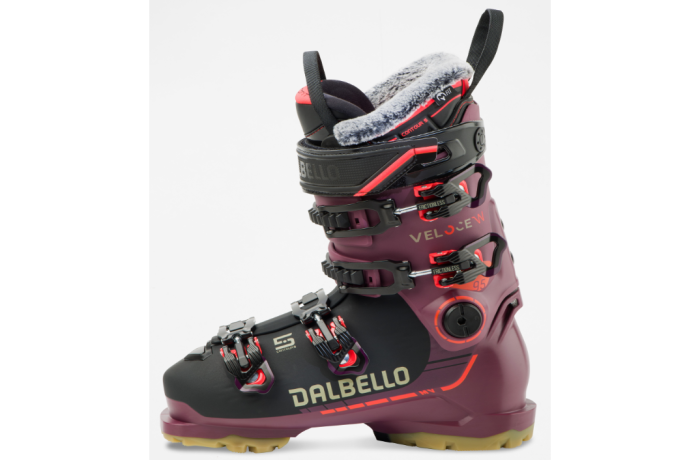
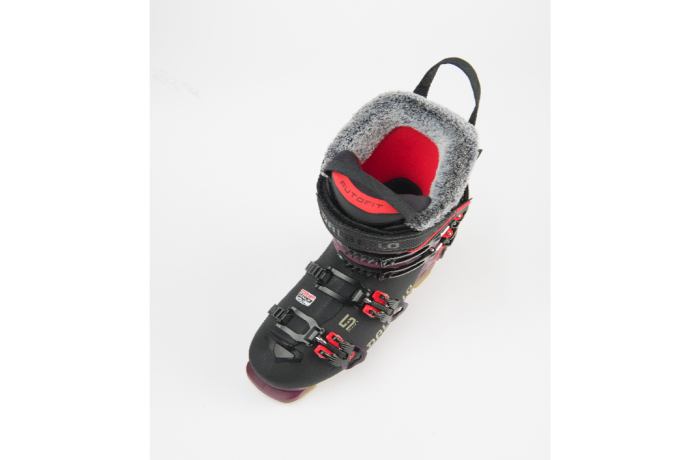
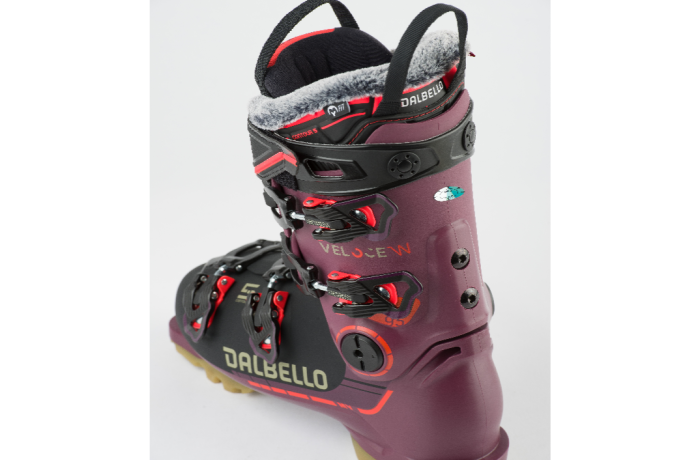
Dalbello's Veloce line for women runs from its stiffest model at 105, down to its softest at a 75-flex. The brand submitted the Veloce 95 MV W for testing this year and it represented the range quite well by stomping all over other substantially stiffer models in the category and receiving a gold medal alongside some perennial heavy-hitters. The Veloce 95's total score average of 4.70 (out of 5.00) was on par mainly with 115-flex boots, and its supporting scores told the same great fit, comfort and convenience story that testers' comments did, with a Convenience Warmth & Features score of 4.94 and an Anatomical Fit & Initial Feel score of a perfect 5.00.

The Veloce 95 MV W impressed every single tester who got into it with its snug-medium fit, saying that it hit the 99mm fit tension target right on the bullseye--they loved the cushioned but firm-enough feel against the foot and leg, with a particularly nice feel from the memory foam tongue against the shin and over the top of the foot. But testers didn't fully appreciate what the Veloce 95 had to offer until they got it on snow and made some turns. Testers agreed that it put the edges against snow with the power and stability of boots 20-flex-points stiffer and 200-bucks more expensive, and it wasn't just a dull and clunky sledgehammer but rather it was quick and precise underfoot at performance levels to match its power quotient.

Another common refrain from testers was the Veloce 95's ease of access, and they didn't mean that it was easy to put on (which it was) but rather they meant its ability to communicate any skier's different style to the skis in a functional, efficient way. They said its stance balance home base was right on the money and didn't require any special moves or learning curve to figure out what the boot wanted. Testers just buckled up, clicked in and went skiing, everywhere. They forgot they'd saved two bills on the 95-flex and continued ripping. Many testers made note of the boot's huge performance bandwidth and broad appeal to a variety of skiers, like: This boot is fantastic--it will make any gal happy, from intermediate to advanced.

Were there some caveats to go with all these kudos, sure, but not very many. A couple testers commented on the somewhat rounded, old-school toebox shape that put a little squeeze on the sides of big and little piggies, but agreed they were not deal-breakers, and given that the lower shell is traditional polyurethane would offer easy fit solutions in a grind or stretch. A couple testers found that the lower ankle pockets were a bit firm at the start of on-snow testing but reported that with some warm-up and wear time those issues improved substantially--again, easy fit solutions with a bootfitter's help, if needed.

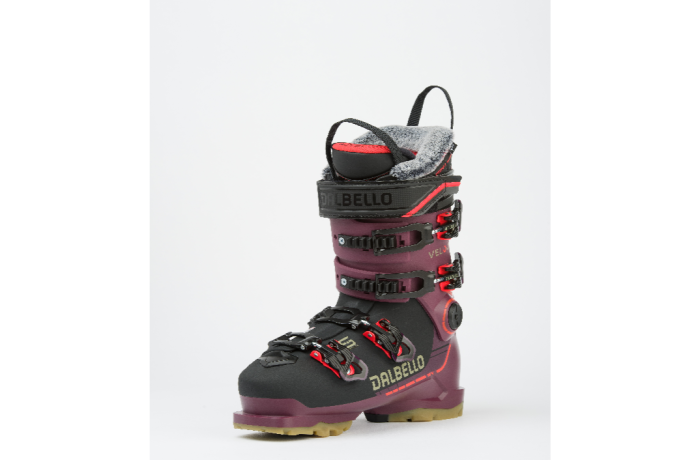
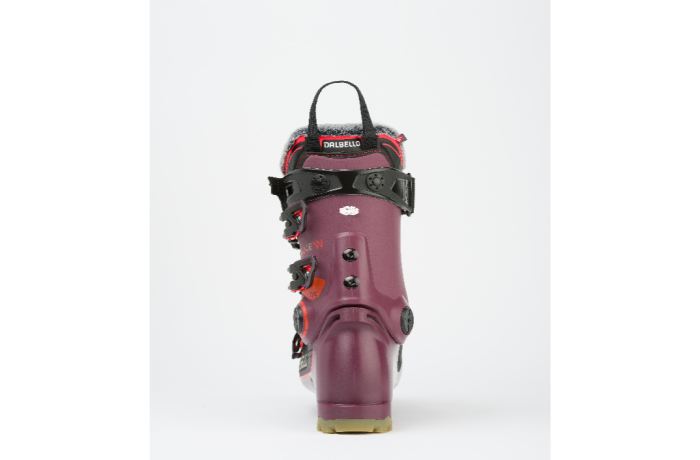
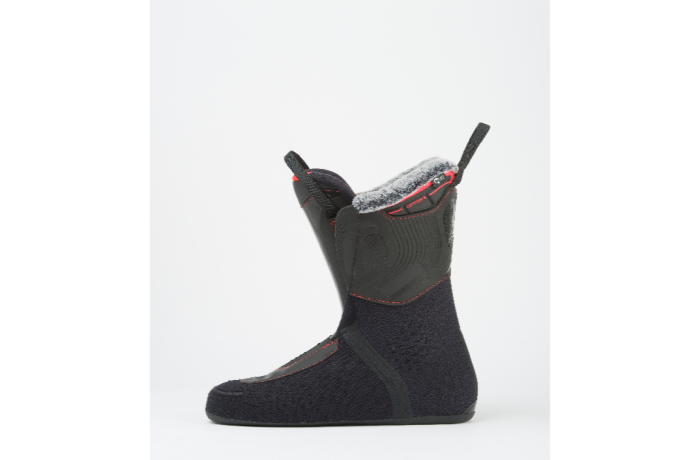
Testers unanimously approved of the berry and black cosmetics, they didn't mind the amount of fur on the liner, and they gave two thumbs-up for two liner pull loops, dual cuff adjusters and GripWalk soles. At a list price of 600-bucks there’s huge bang for the buck available on all tested elements of the Veloce 95 MV W, testers agreed.

Total Avg Score 
4.73
Shell/Cuff/Tongue Plastic 
PU/DB Hyperlite
Dry-Test Fit 
5.00
Dynamic Balance 
4.81
Edge Power & Fore-Aft Support 
4.44
Quickness, Steering & Feel 
4.44
Convenience, Warmth & Features 
4.94
Tech Compatible 
No

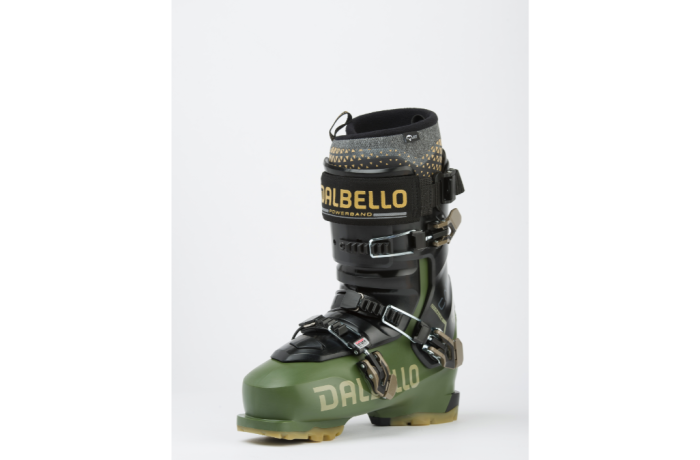
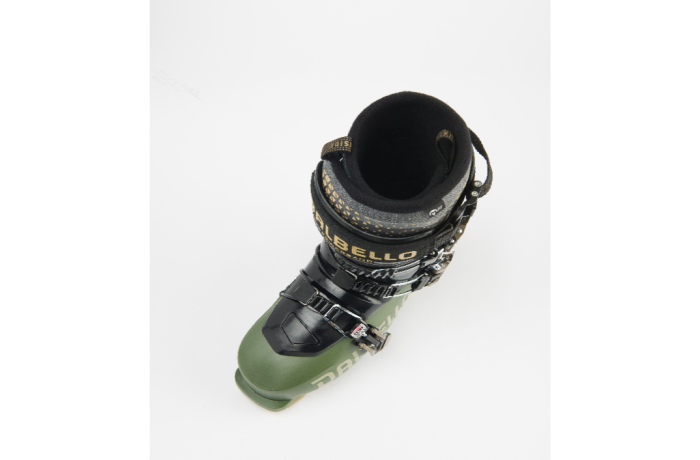
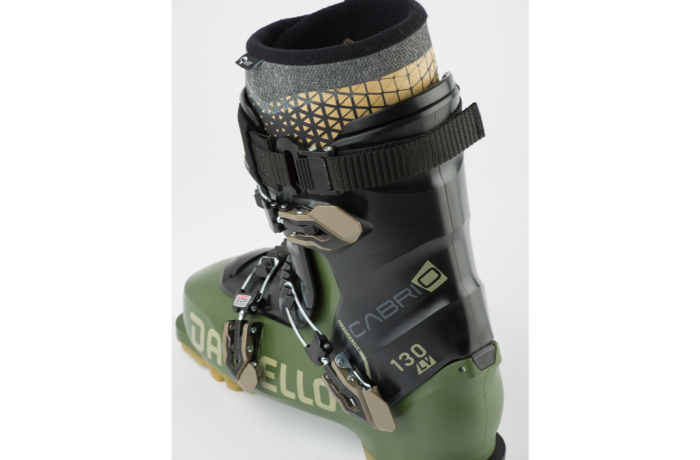
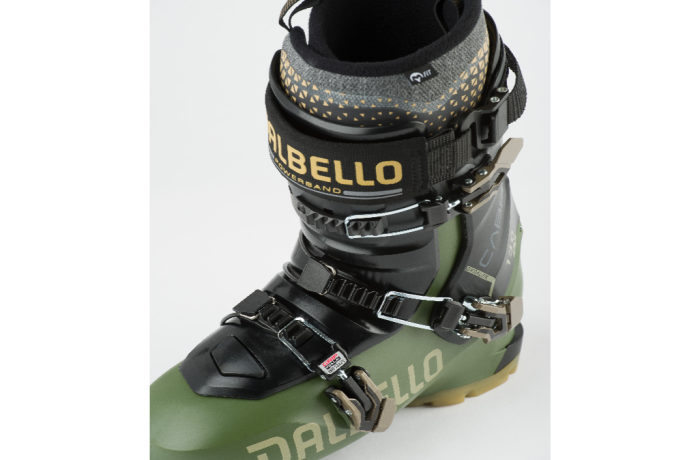
Dalbello Cabrio LV 130 3DWRAP

Gender 
Men's
Sizes (MP) 
24.5-30.5
Hike Mode 
No
Construction 
Cabrio/3-PC
Boot width profile 
Narrow
Also in this Collection 
120, 100
Cantology Compatible 
No

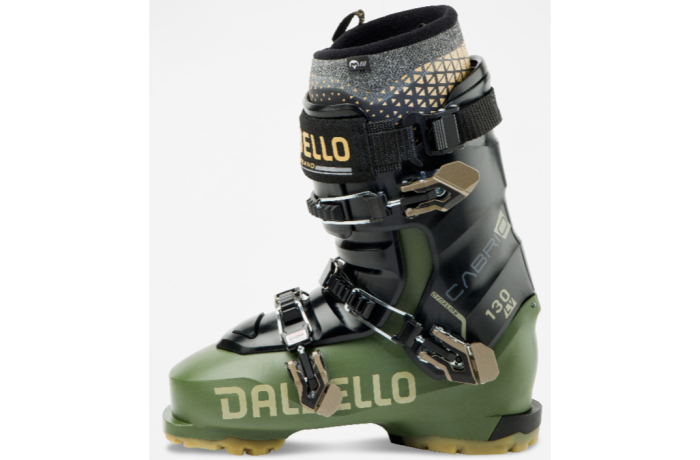
Lotta leverage for long, lanky legs is what testers say skiers can expect from the Dalbello Cabrio LV 130 3DWRAP. The upper cuff is tall on the leg and so is the firm, spiral wrapping 3DWRAP liner, so the stance and lever arm is set up to load the shovel and tip a ski onto edge like nobody's business, they said. Our taller, heavier testers loved this set-up for its legit 130-flex power and tall, relaxed-quads positioning that they could move forward from to find a centered attack on bigger, wider skis all around the mountain.

Our shorter, lighter members of the test team found that the height of cuff, upright angle and stout flex index put them at a deficit in the getting forward department. They agreed that the lateral power of the Cabrio LV was undeniably strong but they had a difficult time accessing that torque without getting tossed, unceremoniously, into the trunk.

Virtually all the testers who put the Cabrio LV 130 through its paces this year commented on the liner's firmness and initial fit issues. While this full-thermo spiral-wrapper is factory pre-molded to allow for some semblance of comfort upon initial try-on in a retail shop environment, it simply ain't done yet, is what testers said. They found the top of the liner edgy, abrupt and overly firm and an anatomically-challenged fit map in the lower boot that bugged folks' navicular bones and didn't let the heel seat fully down into its pocket. Testers mentioned that the time spent skiing the boot for 3 runs was enough to warm up the liner and improve the fit marginally, but the testers who took the time to do a custom re-test with a full-temp liner molding job came back with vastly improved scores for fit, flex feel and stance.

The fully customized liner relaxed the abrupt boot top and allowed the tibia to find a molded home into the front of the liner--this better distributed pressure against the shin, giving the boot a more agreeable flex feel and slightly more forward-leaning stance. The heel pocket turned into a gloriously snug but comfortable control center, and the navicular bone stopped barking. Testers reiterated that prospective customers should keep this fit adaptation in mind during boot try-on. While they might be able to get their boot salesperson to pump a little heat into the liner for a moderately improved try-on experience, it'll take pulling the trigger on purchase to gain entry into the full-molding club, and testers say it's a requirement for really tapping this snug-fitting and solid-skiing boot's full potential.

The flex feel felt spring-loaded to testers, who all commented on huge rebound energy and rapid return to center transitions between turns. They said this energy was fun and able to be harnessed, never twitchy. They liked the dampness of the polyurethane plastic build when the boot was on edge and they gave one of its highest scores in the Edge Power test parameter. The cuff's height, upright stance and stiff cuff limited quickness scores for testers who couldn't get up and over the top of the boot, but for big, tall skiers who know how to stomp on a ski it's plenty quick edge to edge, testers (who fit the profile) said.

Total Avg Score 
4.42
Shell/Cuff/Tongue Plastic 
PU/PU/Pebax Rnew
Dry-Test Fit 
4.08
Dynamic Balance 
4.25
Edge Power & Fore-Aft Support 
4.58
Quickness, Steering & Feel 
4.58
Convenience, Warmth & Features 
4.58
Tech Compatible 
No

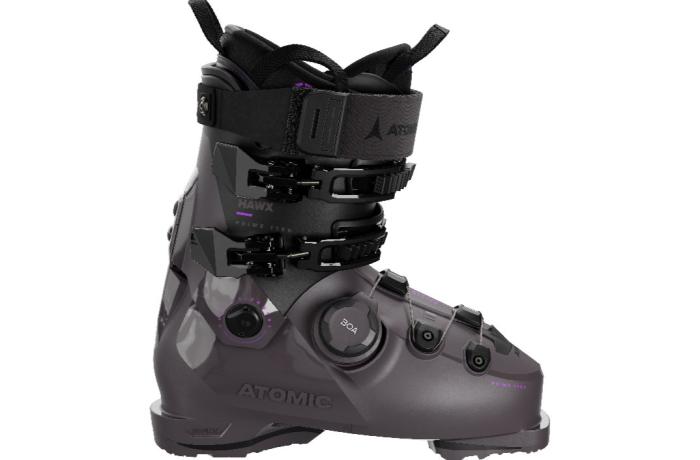
Atomic Hawx Prime 115 S W BOA

Gender 
Women's
Sizes (MP) 
22.0-27.5
Hike Mode 
No
Construction 
Overlap
Boot width profile 
Medium
Also in this Collection 
105, 95, 85
Special Sizes 
22.5 and smaller
Cantology Compatible 
No

The new Atomic Hawx Prime 115 S W BOA impressed testers with its performance-oriented grip on the rearfoot mated to a relaxed forward cabin and flared boot cuff--a Hawx Prime fit combination that has been a successful one for several years. Testers said that the addition of a BOA closure on the lower shell added a welcome addition in the way of further fit fine tuning and rounded out an already robust set of useful features.

For years, our testers have lauded the Hawx Prime for its versatile 100mm fit profile--enough extra room for the toes and ball of foot paired with a firm grip on the heel and ankles. Testers felt that the heel fit this year was particularly snug, with a couple mentioning that they'd need to cook the Mimic liner in hopes of relieving a bit of that squeeze. The calf fit has always offered a nicely flared shape in both shell and liner to accommodate the more muscular or higher volume lower leg shape, and this year was no different--testers said the out-of-box fit on the calf was fantastic, with additional buckle adjustment available if needed. In fact, with a bolted-in but removable rear spoiler and the moldable Memory Fit shell cook job as a modification option, the Hawx Prime 115 S W BOA stacked up as one of the most versatile calf-fitters in the test.

Testers like the BOA system on the Hawx Prime for its small-increment adjustability and well-wrapped closure feel, but they also like that the Hawx Prime is still available with buckles--unless of course the 115-flex is a requirement, and then you're getting a BOA reel, at least for this year. One tester thought that the BOA offered a slight impediment to entry but it was not the majority opinion. They all liked the stock forward lean set-up and firm flex feel that they said was on-target for the 115 label, though there were some mentions of an uncomfortably edgy liner tongue fit that they hoped would be resolved with some more wear time or a liner cook.

Ski power and quickness was not lacking for the traditional polyurethane-powered Hawx Prime 115 S W BOA according to testers who gave one of its highest scores to its Edge Power rating, though that high score was matched in the Convenience, Warmth and Features criterion. The features set is substantial on the Hawx Prime BOA boots--in addition to aforementioned shell-morphing Memory Fit modifications, removable rear spoiler and a BOA system, there are dual cuff adjusters, the Power Shift 2.0 forward lean adjustment, dual liner pull loops, a 40mm Velcro power strap and GripWalk soles.

Total Avg Score 
4.27
Shell/Cuff/Tongue Plastic 
PU/PU
Dry-Test Fit 
4.33
Dynamic Balance 
4.17
Edge Power & Fore-Aft Support 
4.50
Quickness, Steering & Feel 
3.83
Convenience, Warmth & Features 
4.50
Tech Compatible 
No
CANT SHIM OPTIONS - AVAILABLE FROM BRAND

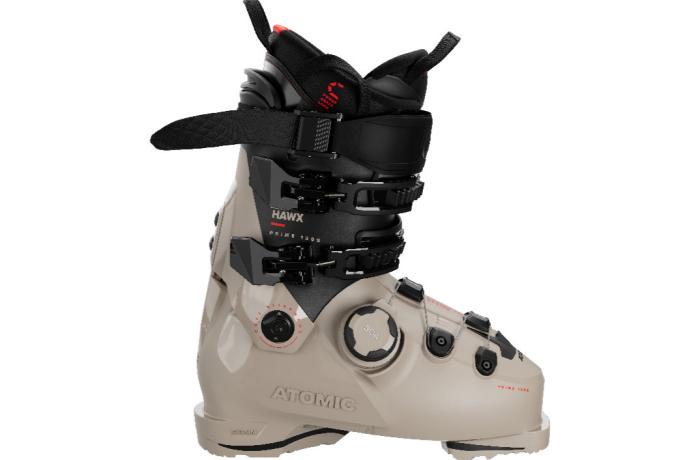
Atomic Hawx Prime 130 S BOA

Gender 
Men's
Sizes (MP) 
24.0-32.5
Hike Mode 
No
Construction 
Overlap
Boot width profile 
Medium
Also in this Collection 
120, 110
Special Sizes 
31.0 and larger
Cantology Compatible 
No

Every year we have tested the Atomic Hawx Prime boot our test team comes away impressed with its accuracy of fit and performance. Accurate means precise and targeted for our purposes, and testers like how both aspects, fit and performance, complement each other in this well-put-together new iteration of an old favorite.

The BOA closure system is the most obvious new feature on this veteran all-mountain utility boot. Testers like the way it made subtle, incremental changes to the fit tension in the lower boot, a click at a time. The lower boot feel of the Hawx Prime has been characterized by a tall, dome-like fit over the top of the foot, which testers like for freedom of blood flow and a comfortable instep hold, but the BOA's cable-wrapping closure seemed to pair well with this starting shape. Testers felt that while the forefoot offered typical medium width fit tension, the BOA did a fantastic job of closing that space down enough to match the more-snug-than-medium grip they felt in the ankle and heel pockets.

The scores the Hawx Prime 130 S BOA received seem unfairly low to many on our test team, looking back on them post-test, as some veteran testers gave perfect 5.00s while others downgraded the fit and convenience scores for two reasons. One, many testers thought the heel and ankle fit was snug like a narrow boot, so they dinged the fit score. Two, several testers thought that the introduction of the BOA closure impeded entry and exit in comparison to past non-BOA Hawx Prime tests, and so the Convenience metric took a hit.

While both criticisms are fair, we have a few thoughts about them. First, the extra snug heel and ankle is not necessarily a bad thing for the skier looking for maximum rearfoot control with some freedom of fit in the toebox and forefoot, as well as at the boot top where the cuff still flares open in characteristic Hawx Prime fashion. Also, a slightly too-snug heel and ankle zone can be easily remedied with the Hawx's Memory Fit shell molding feature and a good liner cook job--so not a deal breaker by any means. Last, the entry was not that bad--there were certainly more difficult to put on boots at the test, and it's not clear that the challenge was directly related to BOA. Our thinking about entry and exit at the 130-flex level is that an easy slide in is a nice bonus, but like a fat gratuity, should not be expected. Skiers looking for 130-level performance should be accomplished enough that they can put a boot on, and if they can't, we guess it's time to step it down to a 120-flex. Sorry guys.

The Hawx Prime is an example of how lighter weight can be achieved by way of thinner shell wall plastic construction. Atomic employs traditional polyurethane plastic in the cuff and lower shell in a stiff-enough form in thicker areas to provide a rigid, stable lever for attacking edge angles but also optimizing shell-wrapping for fit and closure by thinning out the wall thickness elsewhere. This thin but stiff plastic design can make the 130 a little tougher to get on, but the trade-off is for high levels of agility, responsiveness and accuracy of messaging to the ski. The Hawx Prime 130 S BOA received its highest score of 4.80 in the Quickness and Steering metric, and while testers liked the solid feel on edge they got with the Hawx Prime tipped over, they called-out the boot's fast twitch transitions and precision direction changes as its strong suit.

Testers like the full complement of top-shelf features, from quad pull loops on the liner to dual cuff adjusters, cam buckle power strap and GripWalk soles. There's a lot to love about the Atomic Hawx Prime, as always, and our advice to good skiers in the medium width market is to get one on their feet this Fall--our scores this time around didn't tell the whole story, we think.

Total Avg Score 
4.32
Shell/Cuff/Tongue Plastic 
PU/PU
Dry-Test Fit 
4.00
Dynamic Balance 
4.20
Edge Power & Fore-Aft Support 
4.20
Quickness, Steering & Feel 
4.80
Convenience, Warmth & Features 
4.40
Tech Compatible 
No
CANT SHIM OPTIONS - AVAILABLE FROM BRAND

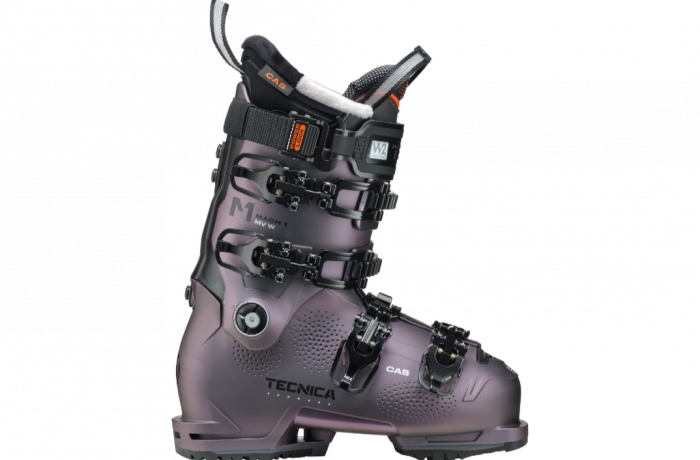
Tecnica Mach1 MV 115 W

Gender 
Women's
Sizes (MP) 
22.5-27.5
Hike Mode 
No
Construction 
Overlap
Boot width profile 
Medium
Also in this Collection 
105, 95
Cantology Compatible 
No

The perennial favorite Mach1 MV W has returned but in a burlier, badder build--the 115 flex model! Testers have always loved the 105 flex and even the 95 flex for their consummate blends of power, quickness and comfort. And our test team applauded the step-up to the 115 flex in the LV Mach W boot previously, so it's no surprise that they love that new flex level brought to the medium width. Testers said the Mach1 MV 115 W delivered on all fronts without flaw and used more B-words: it's a boss, it's a beast, it's beautiful, they said.

What do you get in the bump up from the 105 to the 115? Well, you get 10 more! Ten more power, ten more quickness and ten more comfort, testers said--really! They found that the new MV was able to successfully "scale-up" performance from the 105 without causing unintended harshness of fit or reduction in convenience. Testers' reports were almost boring in their similarity--they unanimously had no problem with entry and exit, they all loved the flex feel, they found consensus on how balanced the stance was. Two-thirds of testers gave the Mach1 MV 115 W a perfect score (which in the most heavily stacked category in the women's test placed it in a three-way tie for second place!).

Who needs such a badass boot? Well, certainly any skier in the more-is-better camp, obviously, but also women who've often trended toward men's boots for a more robust cuff feel or any skier who's just been dubious that a 105-flex could really do the job for them all around the mountain, no matter how much it might "punch above its weight class." There is no reason to doubt how well this new Tecnica will perform for these tough customers. Interestingly, the cuff of the Mach1 MV 115 W is made of polypropylene rather than polyurethane (still found in the lower shell), which offers some weight reduction but testers did not find that it posed any issue with fore aft stability or a solid, damp feel that they've come to expect from Mach1 boots yet it may have lit up its quickness quotient a bit.

Yes, the Mach1 still comes with all the Custom Adaptive Shape goodies we've come to expect in the shell and liner, including a heat moldable tongue design. Testers didn't find that there were any glaring fit issues to worry about here--and for those who find the MV just a bit too snug, there is a 105-flex HV model with a proportionately opened-up fit throughout.

Total Avg Score 
4.80
Shell/Cuff/Tongue Plastic 
polyurethane/polypropylene
Dry-Test Fit 
4.83
Dynamic Balance 
4.83
Edge Power & Fore-Aft Support 
4.83
Quickness, Steering & Feel 
4.50
Convenience, Warmth & Features 
5.00
Tech Compatible 
No

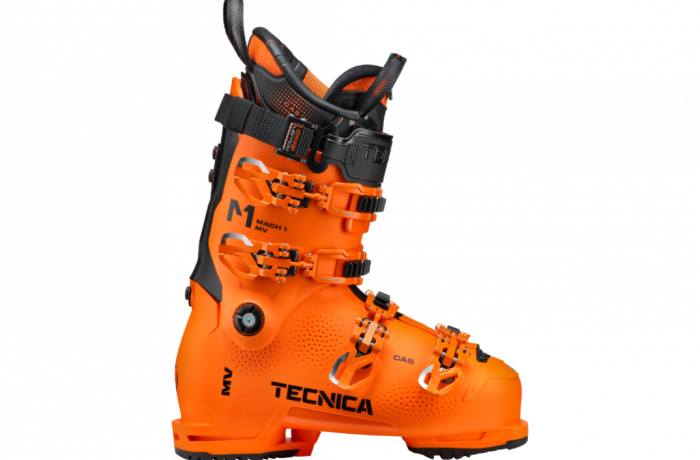
Tecnica Mach1 MV 130

Gender 
Men's
Sizes (MP) 
24.5-30.5
Hike Mode 
No
Construction 
Overlap
Boot width profile 
Medium
Also in this Collection 
120, 110
Cantology Compatible 
No

When testers start saying things like: a perfectly perfect all-mountain machine you know they've run out of superlatives with which to describe a stellar boot. This year's boot test offered up more good boots than our test team has ever seen, especially in the All-Mountain Traditional medium width group, but the Tecnica Mach1 MV 130 delivered (again) for our testers, who put the unchanged model back on the podium. It was nudged out of first place by a mere 0.01 point, so essentially it was a tie for the best of the best.

There's virtually nothing our test team doesn't like about the Mach1 MV 130. They unanimously praise the fit for being ideally shaped for the foot and leg with benchmark-style fit tension for the medium-volume audience. Testers say the liner is firm but well-shaped enough to avoid harshness or hotspots, and the gain with the higher density feel is less pack-out potential and a heightened connection from movement to the skis. Testers like the polyurethane build in the upper cuff and lower shell, fitted out with CAS dimpling for more permanently held stretches where needed. We've said this all before, and the boot hasn't changed since its last test, so we'll refer you to our cached, past reviews for more compliments on this boot.

This time around our testers gave the boot's stance a perfect score, which falls in line with the other boots in the Mach1 line (and Cochise line-up as well), and they say that this boot sets the standard for how a top-tier performance boot should handle on snow. They say it's powerful without feeling dull and quick edge-to-edge without ever lacking stability. This is one of those boots that simply makes skiers better, they said, and they reminded that the 120 and 110 flex options are equally good for the lighter, shorter or less aggressive.

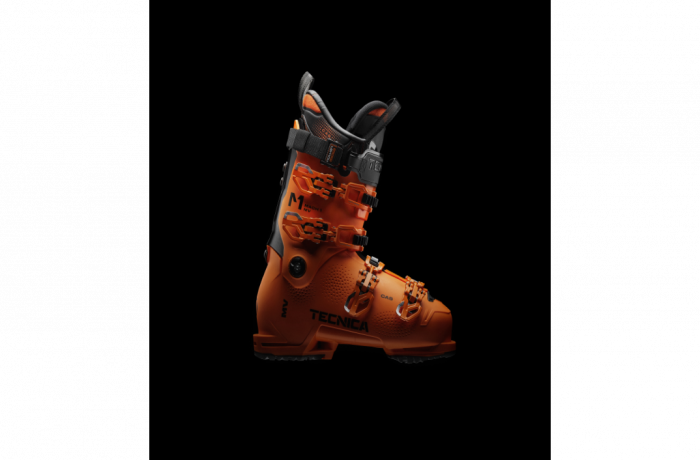
When our testers start picking on power strap design (not everyone's hooked on the hook) and color in order to find something negative to comment on we figure it's a sign that things are close to flawless. But yeah, that orange has to go.

Total Avg Score 
4.82
Shell/Cuff/Tongue Plastic 
polyurethane/polyurethane
Dry-Test Fit 
4.67
Dynamic Balance 
5.00
Edge Power & Fore-Aft Support 
4.78
Quickness, Steering & Feel 
4.89
Convenience, Warmth & Features 
4.78
Tech Compatible 
No

Gold