Fischer RC4 Carbon Pro LV ZF BOA (115+)

The flagship women’s narrow Fischer offers a unique host of features that will appeal to a hardcore and specific-fit-focused cohort of skiers.

Category 
All-Mountain Traditional
Last Width 
98
Flex Index 
115+
Price (MSRP) 
$1200.00USD
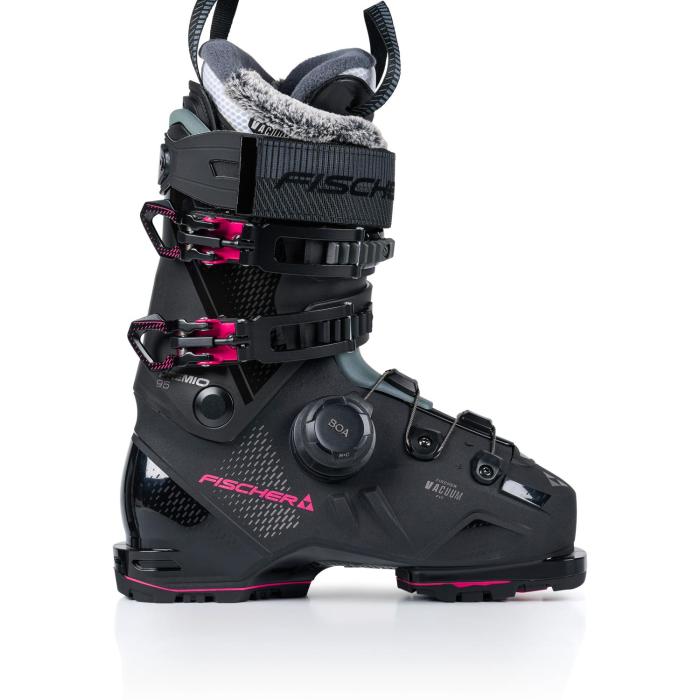
Fischer Premio 95 BOA

Gender 
Women's
Sizes (MP) 
23.5-27.5
Hike Mode 
No
Construction 
Overlap
Boot width profile 
Wide
Also in this Collection 
85
Cantology Compatible 
No

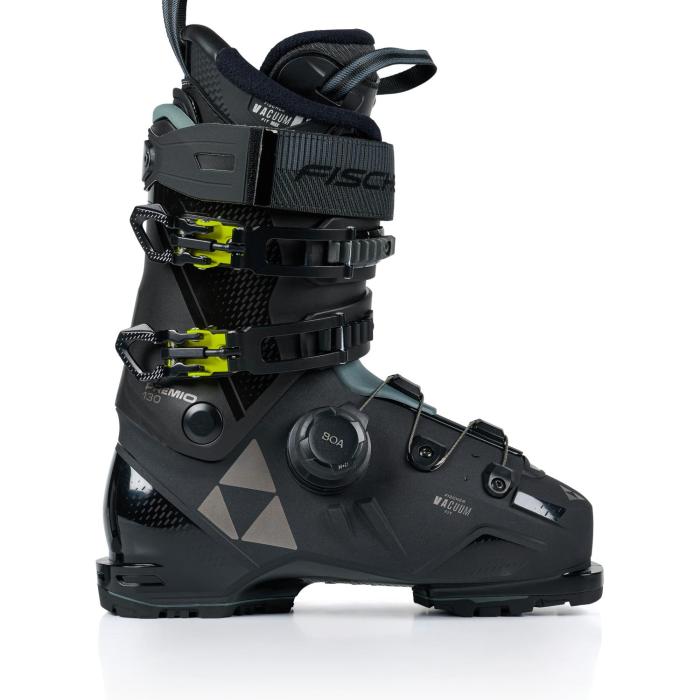
A lot of boots claim a “modern” toebox shape, meaning more squared-off to allow for a straighter-feeling big toe and less impingement on the little piggy. Most don’t, really, but the new Fischer Premio 95 BOA achieves it, both fit-wise and visually—it’s the most obliquely-shaped toebox we’ve ever seen, and testers loved how it let their toes spread out for comfort, warmth and the freedom to either grip or relax in their spaciously appointed confines.

Our fit index runs from 1 at the tightest (like a World Cup race boot fit) to 5 at the roomiest. For all eight of the fit zones we score, the Premio BOA received an average score of 5 and prompted several testers to proclaim, this is a big, big boot. And yet each of those testers followed up that comment with the clarification—and it skis well!

Wide boots have really hit their stride in the last several years but the best-performing wide rides have often trended toward medium-width fit territory while the truly wide boots still felt (and skied) a bit like the box they came in. The Premio BOA challenges that paradigm with a truly wide fit that also truly rips, according to our test team who asked if they could add a plus to their fit scores to indicate the Premio had exceeded the width metric range!

What makes the Premio ski so well, even when some of our low-volume testers don’t completely fill its cavernous environs? Stance angles and shell construction are key, so that foot and leg movements start from a neutral, balanced position and result in an immediate and strong response from the ski. Testers said they felt their feet plant flat and firm against the floor of the Premio during edging, no matter how subtle or extreme their edge angles were. The boot cuff held their lower legs comfortably in and out of turns and worked in concert with the lower shell to tip, guide and press the ski as needed in all types of terrain and snow conditions.

The only score demerits (all others were perfect 10’s) were issued in the quickness category, and we’re fairly certain that given a skier with a thicker, high-volume foot and leg to properly fill this boot’s corporeal capacity, we’d see those quickness scores jump up.

Testers applauded the lower BOA reel for reducing the extra space of the lower shell as needed, in a convenient, click-at-a-time fashion that didn’t distort the boot’s shape as it closed around them. They also said that the 95-flex rating was a little understated, claiming it provided solid support and a flex feel that didn’t fold-over on them.

As a side note, the men’s test team loved their Premio just as much as the women did, if there are any skiing couples looking for a matched, wide-ride set.

Shell/Cuff/Tongue Plastic 
polyurethane/polyurethane
Tech Compatible 
No

Fischer RC4 Carbon Pro LV ZF BOA (130+)

Gender 
Men's
Sizes (MP) 
25.5-29.5
Hike Mode 
No
Construction 
Overlap
Boot width profile 
Narrow
Also in this Collection 
130, 120, 110 (all without ZipFit)
Cantology Compatible 
No

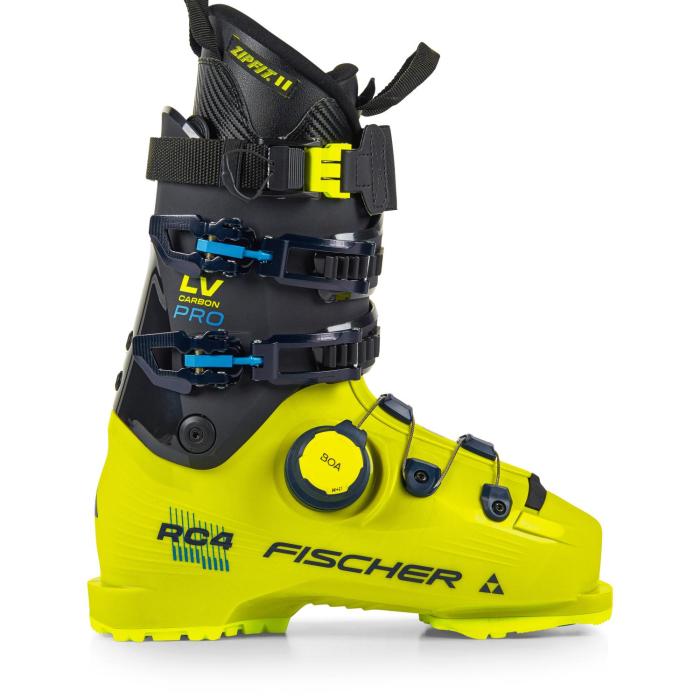
The Fischer RC4 Carbon Pro LV ZV BOA 130+ is a bit of a unicorn, within the tested all-mountain group and also within Fischer’s own RC4 range. The flagship 130+ (there is a regular 130 flex without the plus) most notably comes with a ZipFit liner but also with a carbon-infused cuff build, neither of which exist in the other RC4 130, 120 and 110 stiffnesses. For skiers who don’t want ZipFit or carbon, big discounts await them--$250, $350 or $450 off, respectively.

For skiers in the know, and with a foot and leg shape that suits, getting the ZipFit liner as part of the original purchase is well worth the premium pricing—and they’ll figure the carbon-infused cuff is a bonus, thrown in gratis! In fact, savvy ZipFit fans will see that the $1200 list price for the RC4 Carbon Pro LV ZF BOA is actually a 300-dollar savings over having to buy the 130 flex and then tacking on a full-priced ZipFit. Those same ZF fanatics will also tell you that the liner is an investment that you can amortize over time, cycling it into subsequent boots.

Our testers like the way that the RC4 controls a ski—with power and precision, and a lot of yellow. Polyurethane shell and cuff construction with additional carbon fiber infused into the upper boot makes for a strong and stable foundation that puts a ski on edge in precise fashion, holds it there as long as the skier wants, regardless of speed or snow surface, and then cleanly releases it for another trenching arc.

The RC4 LV’s fit is a favorite of our test team for a heel and ankle pocket that means business, and the ZF model’s cork-loaded ZipFit rearfoot fit zones enhance this serious grip on the foot. Both the shell and liner offer an increasing amount of fit forgiveness toward the front of the lower boot. The toebox is downright wide, testers say, and the forefoot is a generous medium-width. For skiers with feet shaped like this narrow-heeled triangle it’s a match made in heaven. Similarly, for skiers who crave a locked in rearfoot with freedom of movement, warmth, circulation and sensation for an entire family of pigs up front, the RC4 ZF fit map is manna from heaven.

The lower BOA reel serves the ZipFit boot entry protocol well. Undo the top buckles, pop out the BOA knob to release it, then stuff the foot and liner, as a unit, into the shell. The BOA cabling will spool out as much as needed to allow the foot and liner to enter the boot and then it can be reeled back in by re-engaging the spool and spinning the wheel to regain the fit tension desired around the foot.

Our test team reminds folks trying on the RC4 ZF model that the initial rearfoot fit is often firmly, not-right, depending on who was last in the boot. The cork-and-resin filled ankle area will take a partial set on a person’s foot over several minutes of warm-up. If your ankle bones’ shapes and locations differ greatly from the previous skier’s, things will take a bit of time for the liner to re-adjust. Testers assure that it will do so, and advise patience with the try-on process. Skiing the boot (runs and days) yields even more improvement, as will an in-shop heat-soaking with a trained fitter using an oven or hot stacks.

Shell/Cuff/Tongue Plastic 
polyurethane/polyurethane w/ carbon
Tech Compatible 
No

Fischer Premio 130 BOA

Gender 
Men's
Sizes (MP) 
25.5-32.5
Hike Mode 
No
Construction 
Overlap
Boot width profile 
Wide
Also in this Collection 
120, 110, 100
Special Sizes 
31.0 and larger
Cantology Compatible 
No

After SpongeBob SquarePants ripped Sand Mountain, he realized he needed boots to suit his square toes—had he been lucky enough to try on the new Fischer Premio BOA he would have been comfortably ready to shred, three times over. Testers say this is the best wide ride from Fischer they’ve ever skied and claim that it offers the broadest, squarest toebox in the business!

While a lot of skiers may envision the narrow and aggressively raked-forward RC4 line-up when they think of Fischer boots. The Premio range offers a counter-argument to that racy end of the boot spectrum—it’s a wide, wide with an upright stance and a tall-feeling cuff that begs for big, heavy dudes with potato-shaped feet (that’s how one tester described the ideal Premio candidate) to come to the high-volume party and fill up this punchbowl of a boot with thick foot flesh. Testers said the tested 130-flex could handle the biggest, widest feet attached to the biggest, widest guy and take him all around the mountain in stable, supported style. The 130- and 120-flexes are available all the way up to a 32.5, so XXXL skiers need to look no further than Premio, our team suggested.

A lot of wide boots claim to offer a modern, square, or obliquely-shaped toebox—most of those assertions are aspirational—but the new Premio delivers on this, internally and externally. Testers said you see it first—it’s obviously blunt and squared-off—but testers say you also instantly feel how spacious the internal toebox fit is. The piggies are capable of a full-sprawl, mud pit style, and testers said they were all as happy as a pig in, well, you know. Testers thought the lower shell BOA closure worked well to fine-tune the fit around the foot and said it offered a good range of adjustment for a variety of foot volumes without distorting the shape of the shell.

The Premio’s liner is interesting for three main things—one, that it marries so well with the lower shape of the boot shell, affording maximum toe and forefoot spread from the get-go, as well as enhancing the shell’s vaulted ceilings to provide maximum overhead clearance for thick insteps.

The other thing about the liner is the thick, longitudinal rib that runs up the front of the tongue, which fills the notorious free-play gap between the tongue and the plastic cuff’s wrap around the front of it. Testers loved how their forward flexing moves instantly translated into ski shovel response, rather than getting lost in translation due to a gappy linkage at the front of the leg.

The last and possibly best thing about the liner, for our flashback-prone test team, is the trippy 3-dimensional-cosmetic exterior material—the well-sculpted heel and ankle area looks almost holographic and testers were pretty sure it had been provided to Fischer by a visiting alien spacecraft. It was hard to convince testers to stop staring, put the liners back in the boots and go ski them.

But ski them they did, and they were impressed. The boot is reliable from turn to turn, without any failure of flex under duress from our larger testers (one is 6-foot, 230-pounds) and it remained stable at speed regardless of the snow surface or ski width. Quickness was there for the guys who approached a proper fit by virtue of their thick feet, but the low volume guys said the potential for greatness was obvious to them, just unattainable without adding many more pairs of socks to fill up the Premio’s cavernous interior. Some testers thought that the upright stance angle, tall-feeling cuff and legit 130-flex made getting forward a challenge for all but big, tall guys. They noted that the 120-flex would likely over-perform by virtue of the same design elements mentioned above, and it’s available for 100-bucks less.

As a final aside, premio means prize or award in romance languages, and our testers thought this was apropos, accurately foreshadowing the gold medal they gave it.

Shell/Cuff/Tongue Plastic 
polyurethane/polyurethane
Tech Compatible 
No

Nordica Speedmachine 3 130 S BOA Cuff

Gender 
Men's
Sizes (MP) 
24.5-30.5
Hike Mode 
No
Construction 
Overlap
Boot width profile 
Medium
Also in this Collection 
120
Cantology Compatible 
No

One tester said, feels great, skis even better! Another said, just put it on and go skiing—that’s a win! Not only is there a lot to love about the Speedmachine 3 BOA Cuff, but there are a lot of other ways to love the Speedmachine these days—so many closure and flex options!

We tested the cuff BOA 130-flex but there’s a 120-flex available the same way. Want maximum BOA constriction? There are Dual Dial versions available in both a 130- and 120-flex. Prefer the lower boot BOA—and there are reasons you might—you’ll be best suited for the 110- and 100-flex options there if you’re not a heavyweight. Just can’t do BOA? Well, you’re in luck—there is an all-buckle model and you’ll save a whopping 600-bucks over our tested flagship model, but you’ll have to be okay with a 90-flex.

Testers say there are a select handful of perfect medium-width all-mountain boots on the market, and the Speedmachine 3 is one of them—and they remind us that’s been the case for several years running. What’s a perfect boot? For our test team it’s one that has no deal-breaker flaws in fit, stance geometry or on-snow performance. When a boot fits more foot and leg types than expected and offers zero balance issues, and lets a skier head for challenging terrain without any thought about the unfamiliar boots on his feet; testers say that is a perfect boot.

Now, we know nothing is really perfect, and truth be told our test team did find a chink in the armor of the Speedmachine 3 130 S BOA Cuff. Namely those last two words, BOA and cuff. Testers felt that the amount of cable in the BOA spool was just limited enough to prevent maximum cuff spreading on entry, which in turn reduced the spread of the lower shell overlap—the result being a bit of struggle to get this boot on. Testers didn’t call it a problem, per se, but rather a slight annoyance that they had to provide a caveat to their otherwise full-throated claim of perfection.

Cuff BOA is known to be the boot entry bouncer guarding the door, and our team is fine with a little entryway hassle in order to get into that exclusive cabled cuff closure club—they say the wrap for the lower leg is awesome here and it also offers a bit of flare at the boot top to prevent a ratchet-induced calf pinch.

Is the Speedmachine 3 130 S BOA Cuff a new model this year? No. What did one tester think of that? His words: still fantastic.

Shell/Cuff/Tongue Plastic 
polyurethane/polyurethane
Tech Compatible 
No

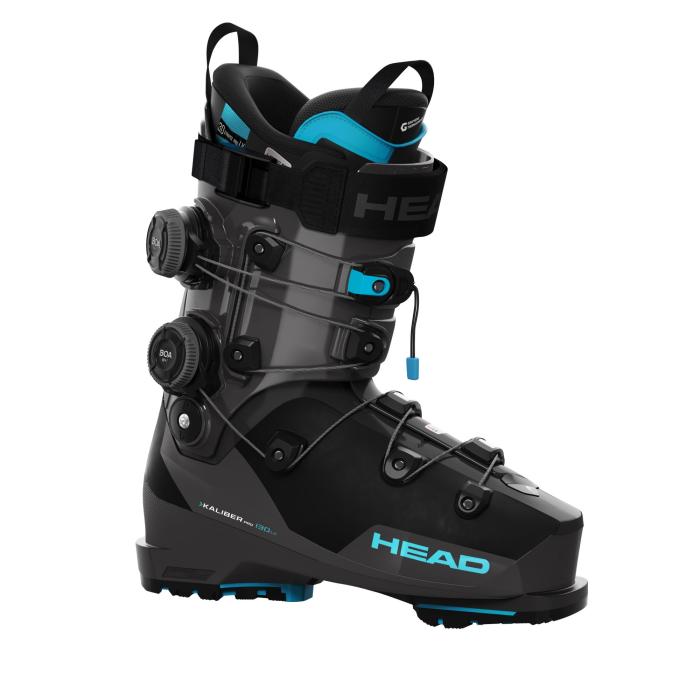
Head Kaliber Pro 130 LV GW BOA2

Gender 
Men's
Sizes (MP) 
25.0-30.5
Hike Mode 
No
Construction 
Overlap
Boot width profile 
Narrow
Also in this Collection 
110
Cantology Compatible 
No

The new Kaliber Pro 130 LV BOA2 turned heads at our boot test, with testers and casual observers taking note of Head’s new double BOA boot that doesn’t look anything like one. What was so visually striking? Without a doubt the absence of the Frankenstein knob sticking out the side of the lower boot created a strangely smooth and stylish look—no buckles and no reel, just a sneaky cable snaking its way along the shell overlap and then up under the pant cuff to where it spools discretely at its mount location just below the upper cuff’s dial.

Even before testing Head’s new dual BOA with the one-and-only double-mounted cuff we had a list of questions as to why they’d located the lower shell cable system on the upper cuff? Was it to avoid outside-edge boot-out during super-high-edge-angle carves? Was it to somehow enhance the closure of the cable wrap? Was it to simply clean-up the cosmetic appearance of the boot? Also, we wanted to know why the women didn’t get the same duplex-dial treatment for their newly launched narrow Kaliber?

After testing the Kaliber Pro 130 LV BOA2 our test teams primary question became, where do we get one?

Testers said the new Kaliber Pro LV nailed the fit for its anatomical curves that cradled the foot and lower leg in a perfect shape match for their common wide and bony spots as well as where they wanted a firmer fit, like the ankles and heel. Our testers have been in every all-mountain boot that Head has introduced in the past decade (and longer for some of them) and they said this was the most polished fit and feel they’ve ever experienced.

They said the blend of comfort and cushion, where appropriate (toebox, top-of-foot and along the shin), was ideal, as were the areas that needed to maintain a firm grip between body and boot for control over the ski. Testers wished they had the Kaliber LV there for a side-by-side test to see how well the two fit tensions were differentiated from each other, because the consensus was that the LV was on the relaxed side of the narrow-fit group. They didn’t have a problem with it, but they noted the fact and moved on to getting the Kaliber Pro LV on the snow.

Again, testers used best Head ever commentary to describe their skiing experience in the Kaliber Pro LV BOA2. They loved how dialed their stance felt from the first skates toward the lift after clicking into their bindings. This intuitive and balanced feel extended to the first turns they made as well. Several testers mentioned that there was no adjustment period involved with getting up to speed in the dual BOA LV Head. One tester said it felt exactly like my own boot, just more comfortable!

While our crew isn’t sure that outside edge boot-out is a problem for us, certainly, they did feel like the lower shell, sans BOA or buckles, slipped through boot-top pow with zero drag—a tester commented it felt like being on a hydrofoil rather than a board down in the water. Perhaps less drag was why we were skiing so fast in the Kaliber Pro. Yeah, right. While we can’t confirm low-drag legitimacy, we can attest to the fact that we looked pretty sleek in this newly naked boot.

Oh, and Head’s answers to our questions up above? They said we were on target but missed perhaps the most important elements of the unique mount location for the lower spool. Eliminating the Frankenknob on the lower shell also eliminated the thick plastic housing for the reel, which further enhanced shell wrapping around the foot, and the final cable vector is more in-line with the 45-degree instep closure, providing more precise retention of the rearfoot. The girls? Their boot cuff is just too small in the bottom sizes, lacking the available real estate to add another dial—sorry ladies.

Shell/Cuff/Tongue Plastic 
polyurethane/polyurethane
Tech Compatible 
No

Head Kaliber Pro 105 W LV GW BOA

Gender 
Women's
Sizes (MP) 
22.0-27.5
Hike Mode 
No
Construction 
Overlap
Boot width profile 
Narrow
Also in this Collection 
95, 85
Special Sizes 
22.5 and smaller
Cantology Compatible 
No

Testers love the clean aesthetic of the Kaliber, saying that the stylish lines of the lower boot, especially at the toebox, drew them in to take a closer look. They really began to appreciate the Kaliber Pro 105 W LV BOA when they first put it on—without struggle. BOA closure systems can cause some barrier to entry depending on how the cuff, shell and liner interact with the technology but our team says that there was no hindrance here. Getting the boot closed-up was intuitive and they still like traditional buckles on the lower boot for a familiar feel and ability to modify both fit zones independently of the other.

Our women’s test team have been monitoring Head’s all-mountain boots over the past several years and as a group they say the new Kaliber Pro LV BOA puts all the pieces together for the best women’s Head they’ve ever skied. The key to its appeal is its ease of operation and broad fit and performance bandwidth.

They say that the narrow fit is nearly perfect for the foot and lower leg shaft and say that the wrapping of the cuff on slender legs was executed in comfortable fashion via the cable reel. What gave cause for their nearly hedge? Testers say the fit is not extremely tight, and they put it on the relaxed-fit side of the narrow boot group. This gave it a nearly perfect rating as an LV, but earned it an absolutely perfect grade for a goldilocks-type fit right between narrow and medium, which testers thought would appeal to a lot of skiers, though they predicted it might rob some sales numbers from the medium-width Kaliber 105 W MV BOA2.

The convenience of entry and the easy-to-love fit made the new LV a boot for everyone, they said, but they doubled-down on that claim after skiing it, saying that it ripped everywhere without their having to make any changes to their skiing style or try very hard, period. This was as close to automatic pilot as skiing got, they said, noting that the 105-flex was solid enough for most skiers but that the boot can be drilled-and-pinned with included hardware to tap into a higher-geared 115-flex for taller, bigger skiers looking for an even firmer flex feel.

There are 95- and 85-flex versions available with the same key features found on the 105-flex we tested, providing a wide swath of performance and price options in this winning combination of relaxed-LV fit and instantly good on-snow performance.

Shell/Cuff/Tongue Plastic 
polyurethane/polyurethane
Tech Compatible 
No

Atomic Remedy 130

Gender 
Men's
Sizes (MP) 
24.0-29.5
Hike Mode 
No
Construction 
Overlap
Boot width profile 
Narrow
Also in this Collection 
110
Cantology Compatible 
No

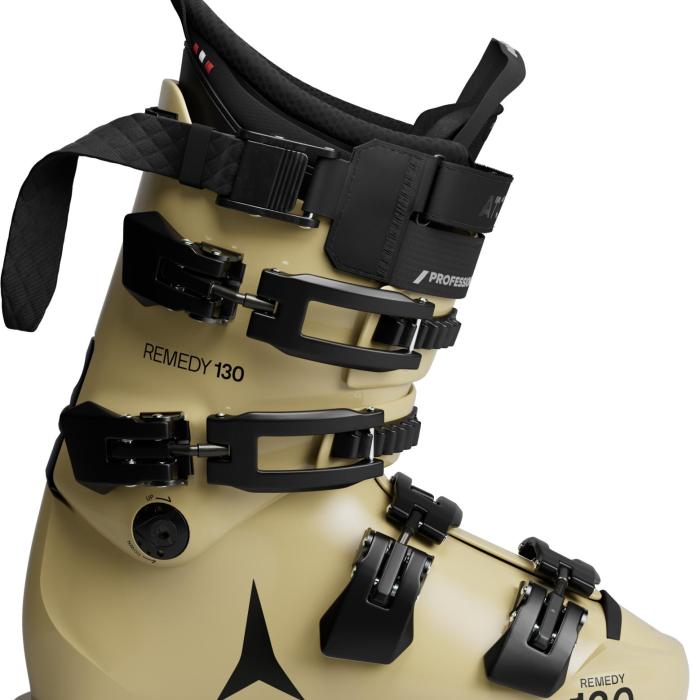
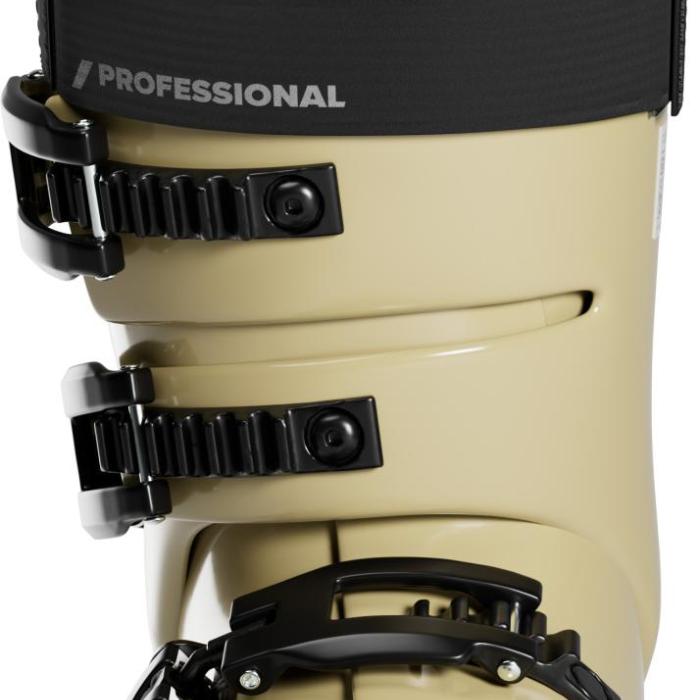
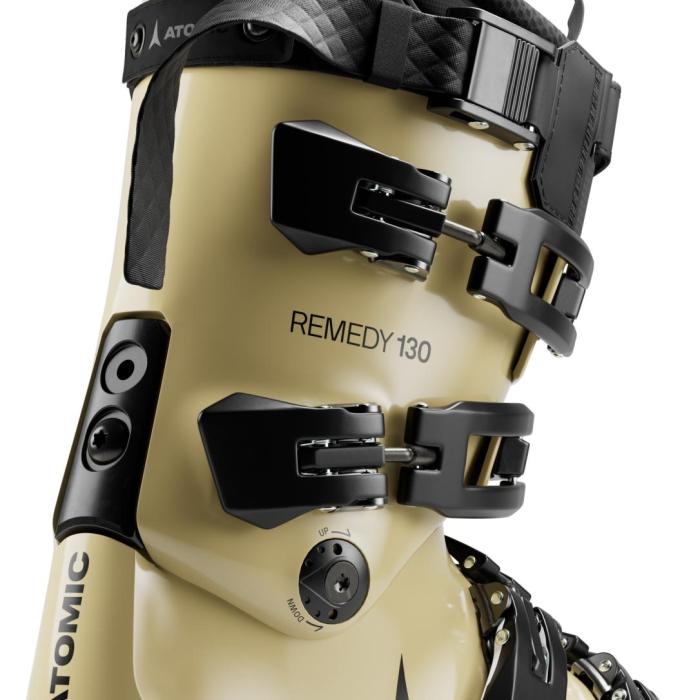
While the Atomic Remedy 130 isn’t new, it was a first-time test for our crew. And in a fitting, old-versus-new makeover story, the Remedy reminded us that race boots kick hard snow’s ass, period. And even though the Remedy might choose to identify as an all-mountain boot, it couldn’t change its genetics, cuz it kicked hard snow’s ass too.

The Remedy remakes the Redster TX in a more off-piste focused build, employing some shock-cushioning elements (the shell floor’s bootboard, rear spoiler and GripWalk soles) that help mitigate the harsh ride that comes from race boot suspension (or lack thereof) when it goes off-road. The Remedy’s Competition Elite liner is also a touch softer and more padded than the Redster’s World Cup Elite liner. These design tweaks detune the Redster’s chassis only subtly and don’t really hide the fact that this is a wolf in sheep’s clothing, testers said.

The first moment the Remedy is tipped over, the charade is over and the curtain is pulled back. The way the Redster, ahem, we mean Remedy, controls, no, pardon us, hammers the edge into the snow is like no other all-mountain boot we’ve tested in recent years. There is just something about the way a race boot is built that generates more power and control along the ski edge than other boot types—and the Remedy is, for all intents and purposes, a race boot, albeit one that’s going to go wherever you point it and crush the snow there, too.

Yes, the Remedy uses the same race boot polyurethane in the lower shell that the Redster uses, and that has an effect on stability, dampness and the transmission of power to the ski. But testers mention that the feel directly underfoot is more serious and strong than the typical all-mountain sole. This feedback is not without explanation—the sole construction of the Remedy shares the same I-beam-style beef as do the race boots it’s derived from, also known as the Atomic Power Chassis. This thicker, more rigid sole construction between the toe and heel GripWalk pads reduces lower boot sole flexing and by extension minimizes energy loss that could be driven into the ski’s edge.

Testers say that to tap into this beast of an all-mountain boot you still need to get it on (not easy) and then get it to fit (super tight in the heel and ankles) if the plan is to ski this boot all around the hill, all day long. The 96mm last is not a joke, meaning it’s snug, but testers said that the heel and ankle grip felt even tighter than they expected. Our bootfitter testers say that the race boot PU plastic grinds like a dream, and that working on the Remedy is much like working on a true plug boot—easy grinding plastic and plenty of wall thickness to sculpt the interior shape to match the foot. They say most folks will need some help in this fashion—but they say for those looking for maximum edge-driving power in an all-mountain charger, it will be worth the effort.

Shell/Cuff/Tongue Plastic 
polyurethane/polyurethane
Tech Compatible 
No

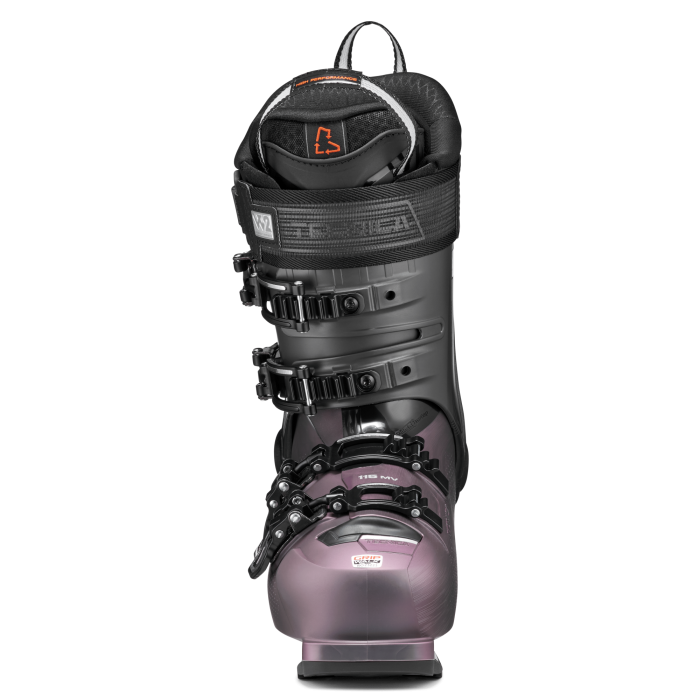
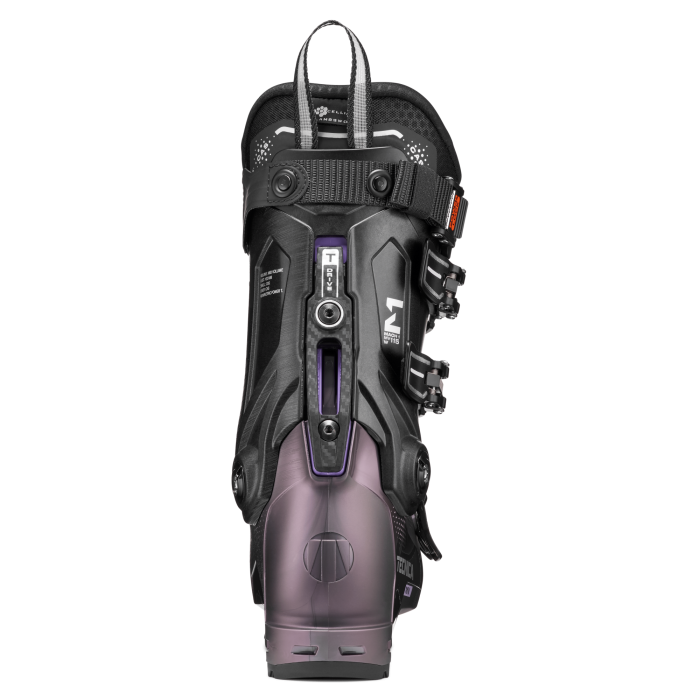
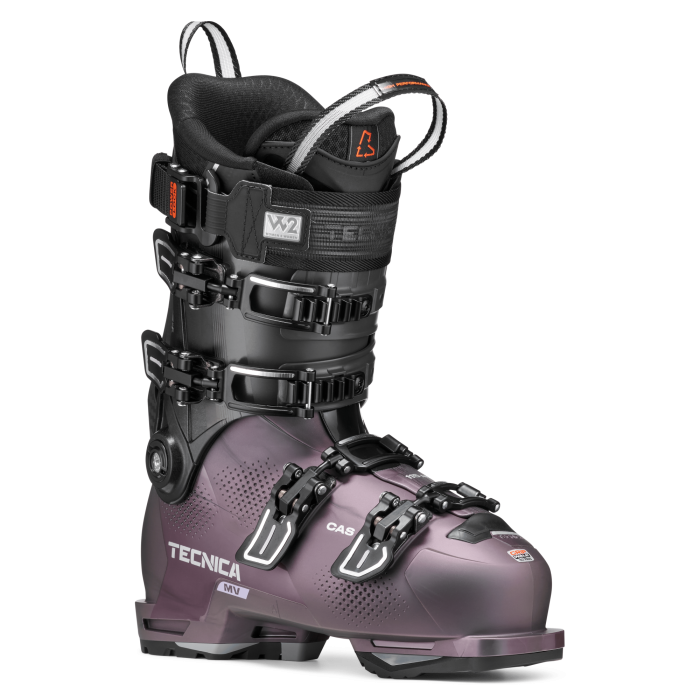
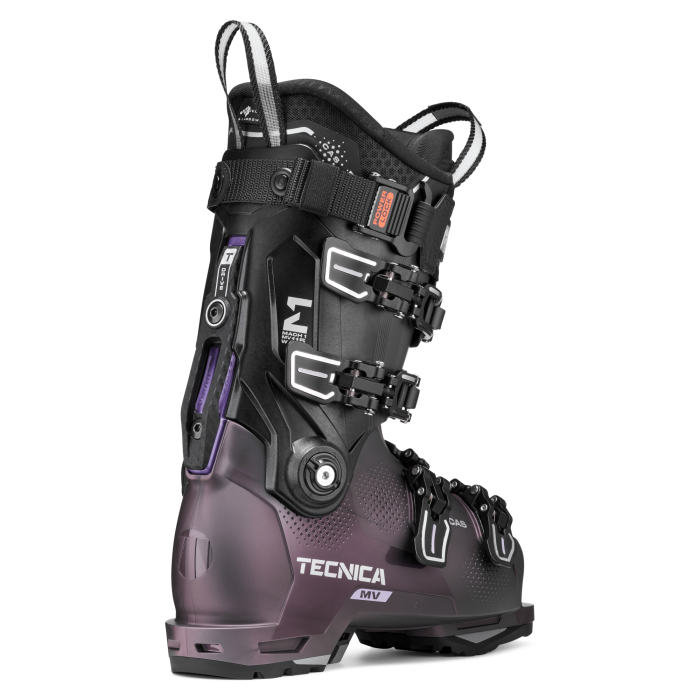
Tecnica Mach1 MV 115 W TD2

Gender 
Women's
Sizes (MP) 
22.5-27.5
Hike Mode 
No
Construction 
Overlap
Boot width profile 
Medium
Also in this Collection 
105, 95
Special Sizes 
22.5 and smaller
Cantology Compatible 
No

It’s a challenge for brands to update flawless boots, but testers say that Tecnica did an admirable job of rendering the new Mach1 MV 115 W TD2 easier to get on, more comfortable and more responsive to skier inputs—bravo!

Our test team has had a long-running love affair with the Mach1 MV boots. For over a decade testers have unanimously praised this go-everywhere, do-everything all-mountain solution for how easily it unlocks the whole hill for them. They’ve come to trust that this model will fit the average foot and leg flawlessly, with a blend of cushioning and rearfoot control to extend the appeal a bit beyond the medium-width scope, attracting some narrow- and wide-footed skiers to the party as well. The all-new version this season did not disappoint testers, who hoisted it onto the podium as one of the highest-scoring boots of the test.

One tester’s high praise focused on the seamless skiing experience it offered—put it on without any trouble, buckle it up without any fiddling, click-in and go rip, completely forgetting it was a product test. Instant access to top-level skiing, mountain-wide, without having to think about fit issues or modify one’s stance or technique is a huge accolade—and testers say that’s been the Mach1 MV W’s hallmark for many years running, this year now included.

The 105-flex had always been the tester favorite for its ease of entry and softer-wrapping plastic. Testers say the new 115’s easier-on, lighter feel and improved creature comforts of its updated liner have opened-up a new level of high-performance without giving up on convenience. The shell’s new T-Drive 2.0 composite cuff-to-lower attachment lever gave the Mach1 MV newfound rebound energy after flexion and it paired well with the new, lighter Grilamid plastic cuff construction for enhanced responsiveness, testers said.

They mention that while the Iridescent Green of the 105-flex Mach1 remains the favorite hue, they’d take their second choice, plum-colored Iridescent Boreal of the 115 for its performance uptick. And they do also appreciate the up-hooking release of the cam-lock style power strap that comes on the flagship model. The few testers who mentioned some initial ankle pocket bite made note that this diminished with some time on snow.

Shell/Cuff/Tongue Plastic 
polyurethane/Grilamid w/ carbon
Tech Compatible 
No

Tecnica Mach1 MV 130 TD2

Gender 
Men's
Sizes (MP) 
24.5-30.5
Hike Mode 
No
Construction 
Overlap
Boot width profile 
Medium
Also in this Collection 
120, 110
Cantology Compatible 
Yes

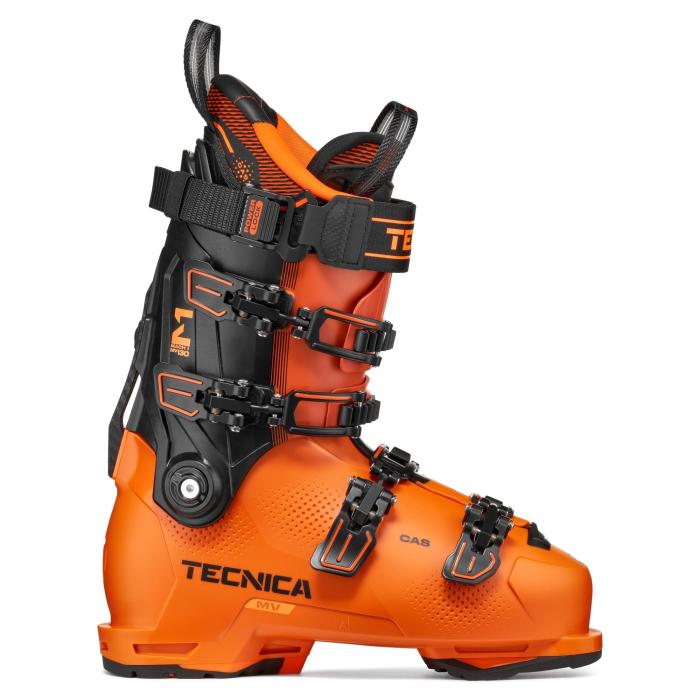
Testers agreed that this year’s Tecnica Mach1 MV 130 TD2 was the easiest-on and most approachable Mach1 medium yet, and with its available softer flexes in tow, they felt it could prove to be the best-loved all-mountain boot of the upcoming season.

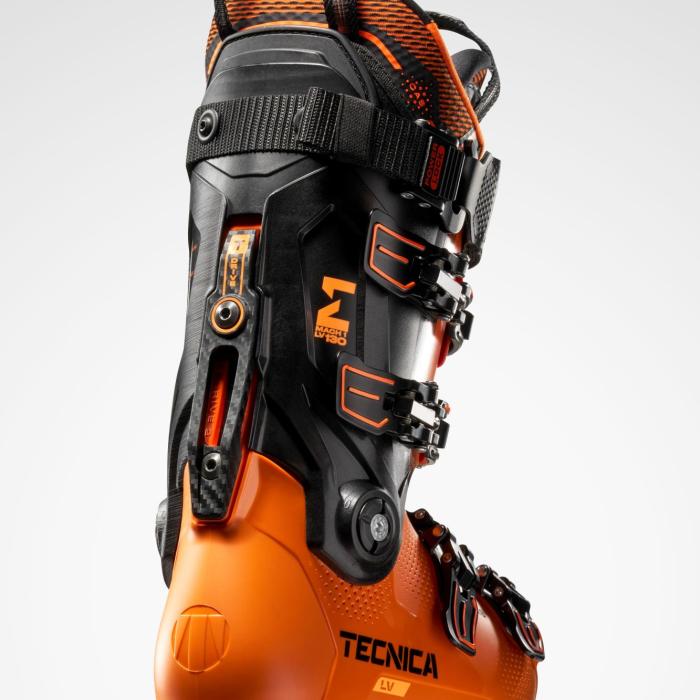
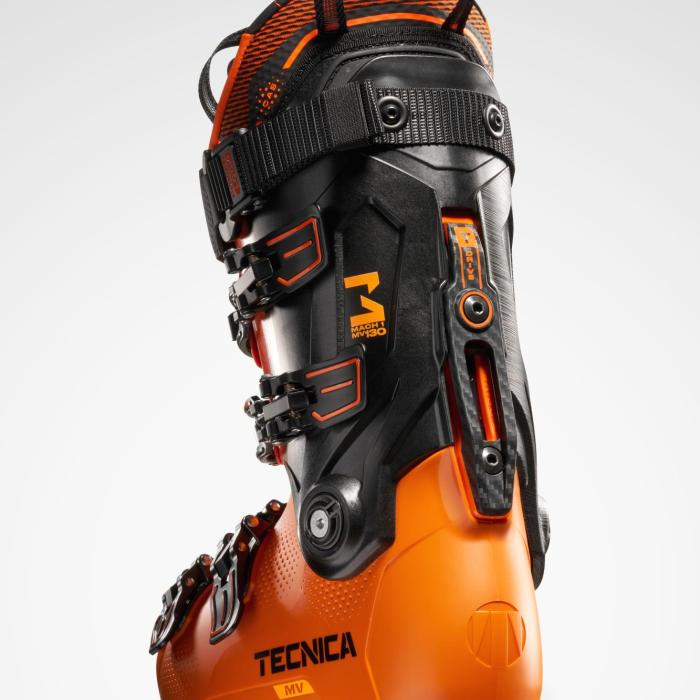
The TD2 in the name is the droid-like abbreviation for the so-called T-Drive 2.0 cuff-to-shell connection technology. This newest generation of the lightweight and stiff alloy connector both anchors the cuff to the lower shell at the boot’s rear spine but also serves as a spring-loaded lever arm that bends during forward flexion, then snaps back to attention in between flexes, returning to the boot to top-dead-center where it’s locked and loaded for another turn. The solid attachment and flex control of the T-Drive unit also allows the use of softer plastic in the lower shell which enhances both entry and a better shape-wrapping closure.

This latest T-Drive evolution is lighter, stiffer and snappier, and testers say that it pairs well with the new, lighter Grilamid plastic cuff construction to create a more reactive and precise flex feel that amplified the boot’s quickness underfoot. The new cuff plastic’s thin, crisp feel is apparent in one’s hands at the point of initial entry, testers said. The Mach1 MV has always been powerful, damp and predictable, but this year’s shell updates give it a responsive launch and fast-twitch cadence to navigating tight spots that require quick turns. While a Grilamid cuff brings a lively new feel lauded by the majority of testers, some of our heavy hitters (sounds better than saying stocky, right?) preferred the stout, stable polyurethane cuff of the predecessor Mach1.

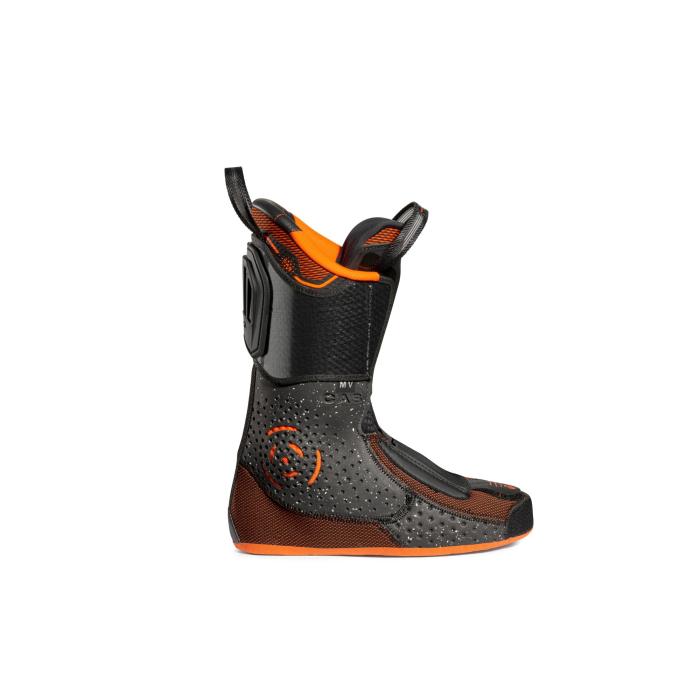
The Mach1 MV liner is all-new, too, and while it still brings its highly-moldable and even grindable Custom Adaptive Shape exterior material in key fit zones, the internal material above the heel pocket is made slightly softer and smoother for better glide into the boot without rendering the heel pocket slippery. The padding around the ankles offers a deeper pocket and slightly softer material, which is a dream for those whose ankle shapes line up perfectly. Some of our testers did not, initially, but after a simple heat molding session found that the ankle bone fit improved hugely.

For more than a decade we have tested Tecnica’s medium-width Mach1 boots and found them improved with each update made to the range, and they’ve always ended up on the podium (more often than not on the top step). We’ve also tried a variety of different stiffnesses in the line and have always been impressed with how the fit and performance traits were mirrored, consistently, down the branches of the family tree. In the new MV TD2, Tecnica took one of our favorite all-mountain boots that needed no fixes, and made it easier-on, lighter weight and more responsive—that’s going to appeal to a lot of skiers.

Shell/Cuff/Tongue Plastic 
polyurethane/Grilamid w/ carbon
Tech Compatible 
No

Dalbello Cabrio LV 130 3DWrap

Gender 
Men's
Sizes (MP) 
24.5-29.5
Hike Mode 
No
Construction 
Cabrio/3-PC
Boot width profile 
Narrow
Also in this Collection 
120
Cantology Compatible 
No

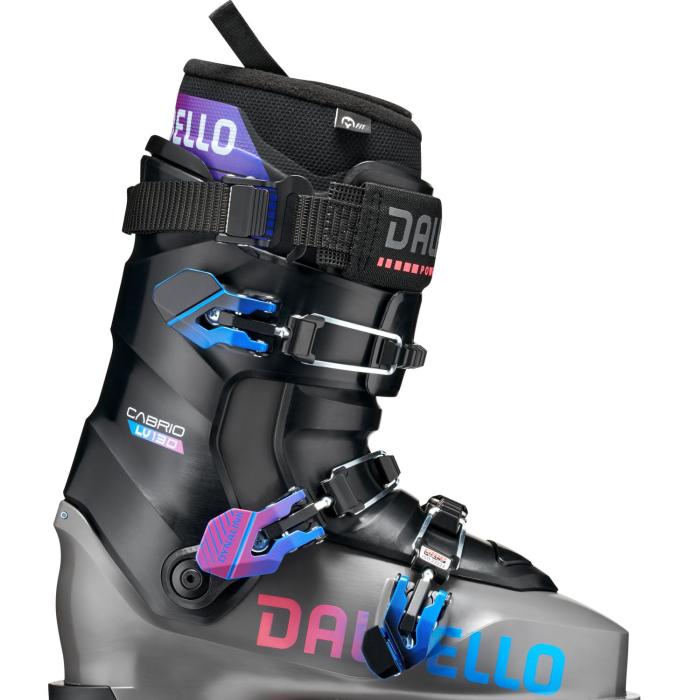
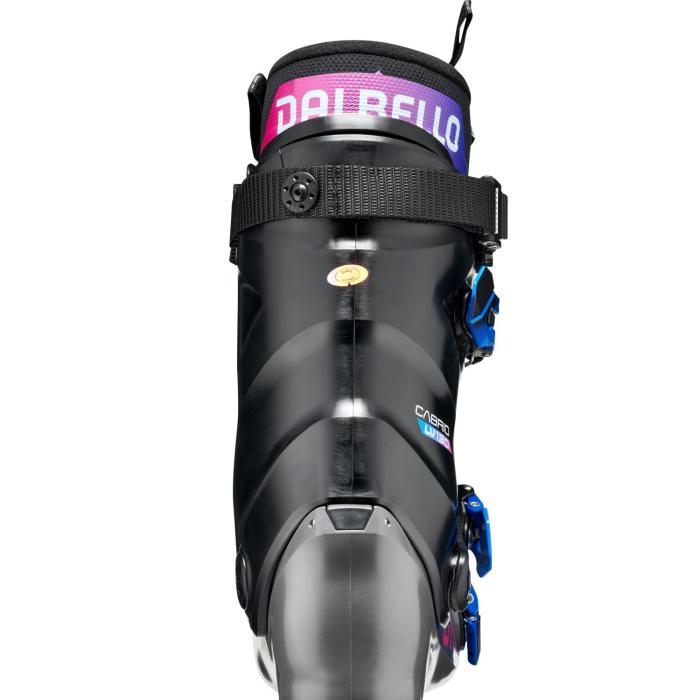
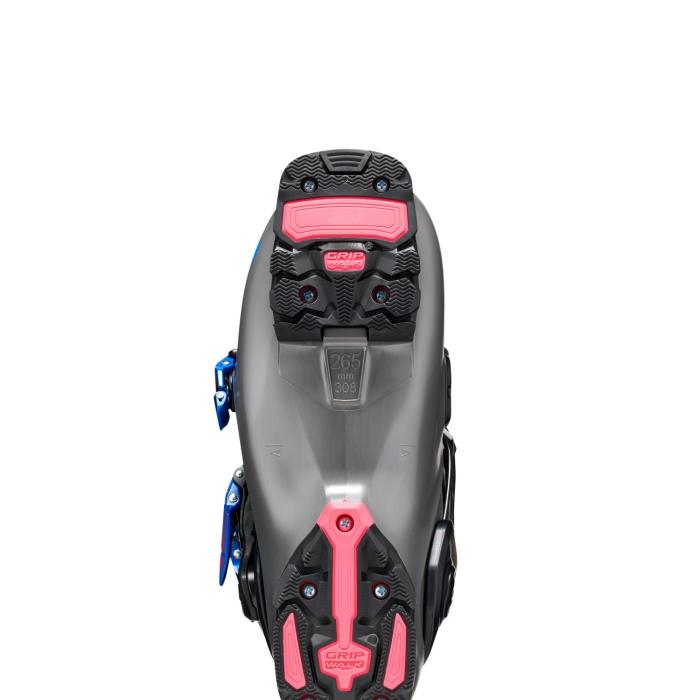
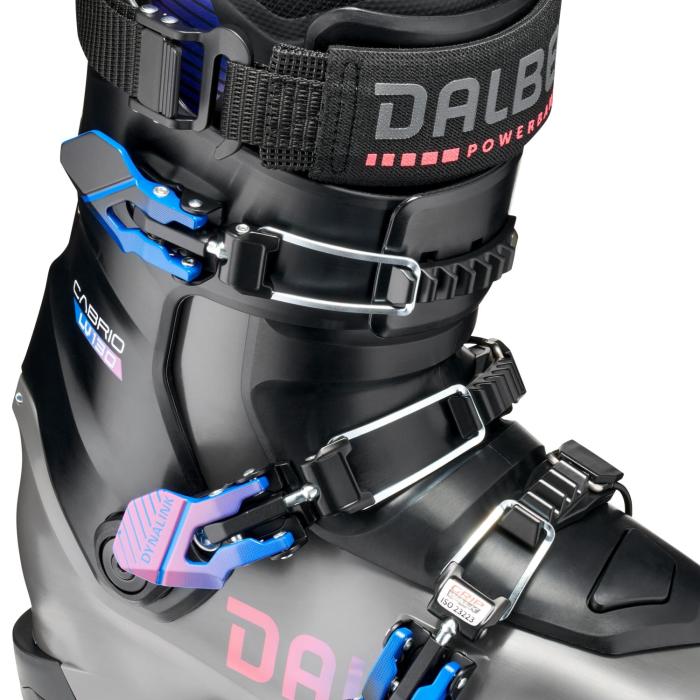
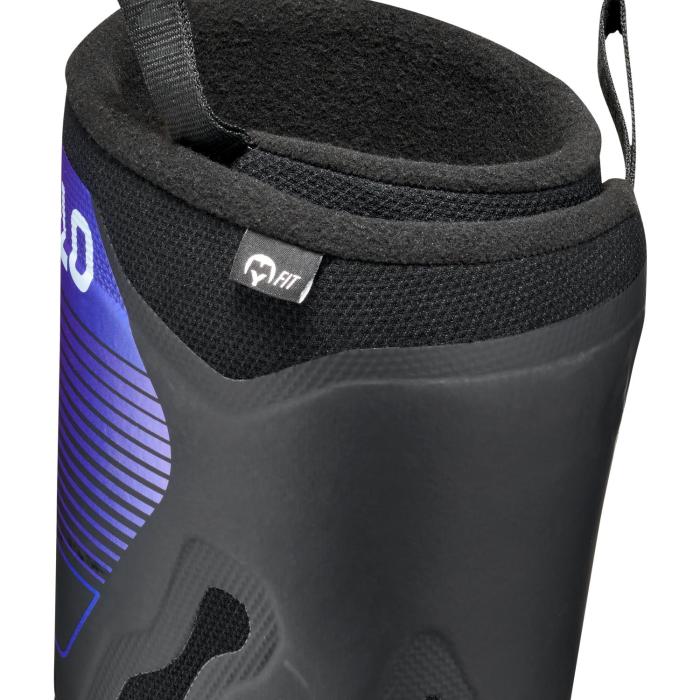
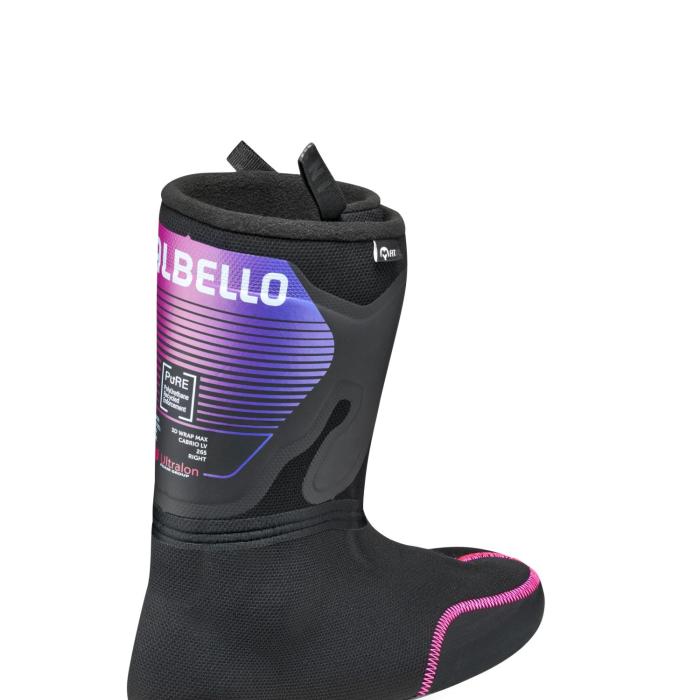
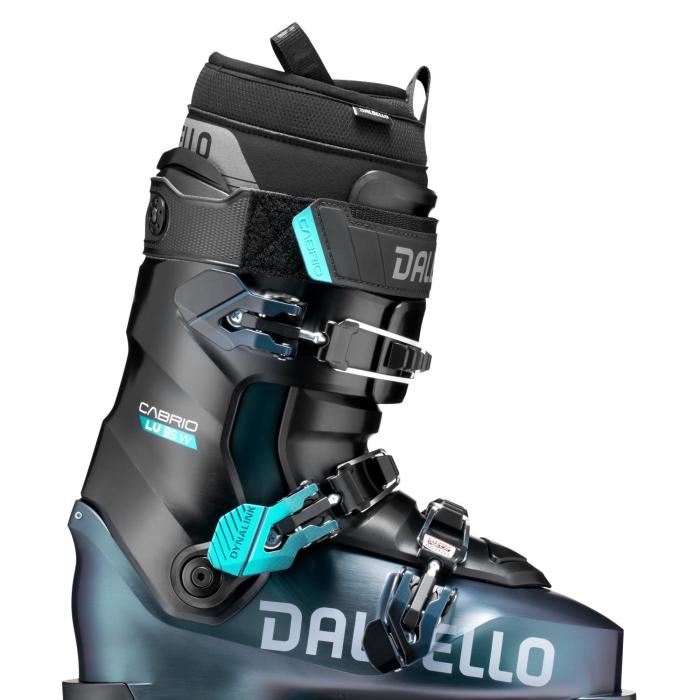
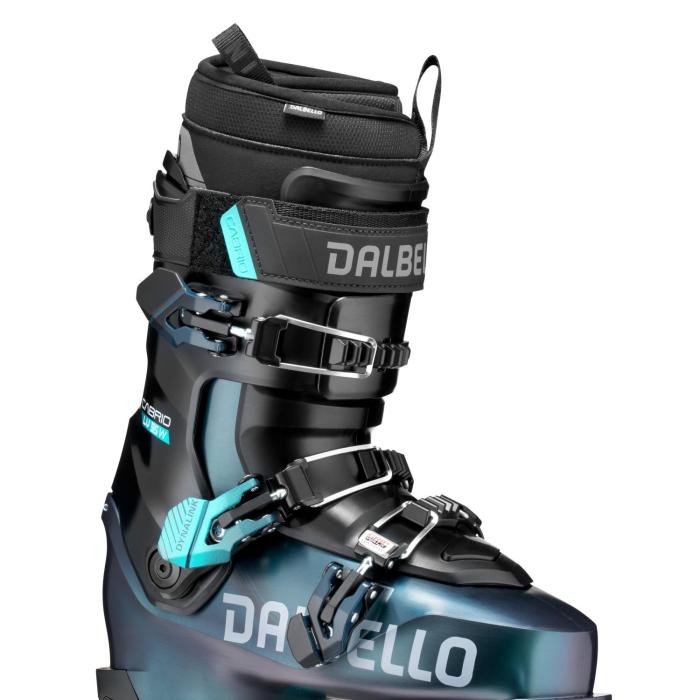
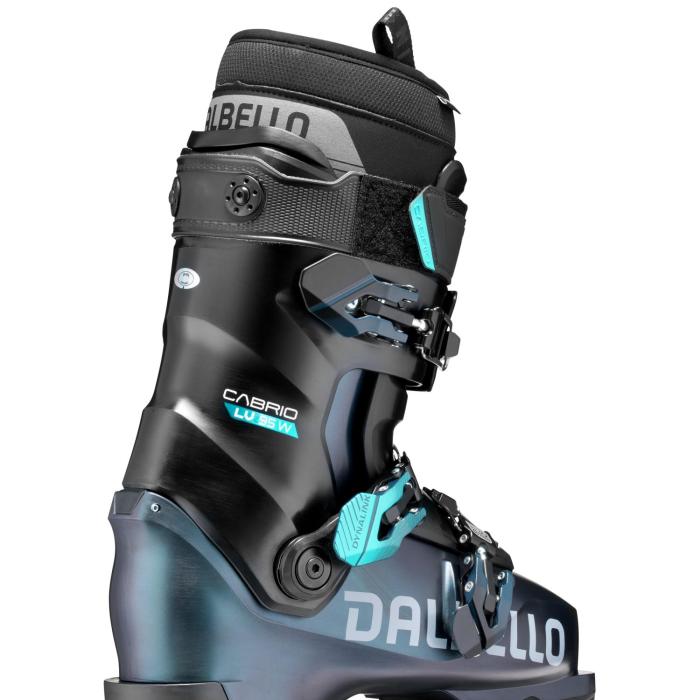
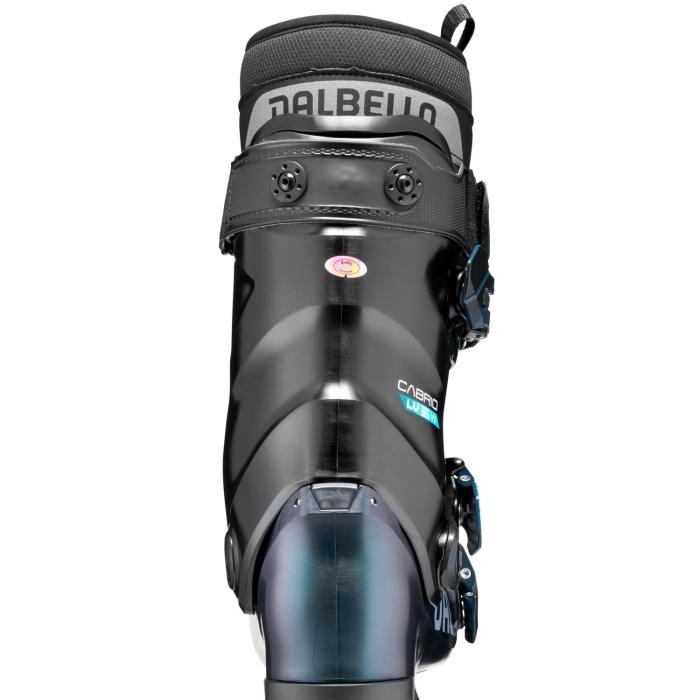
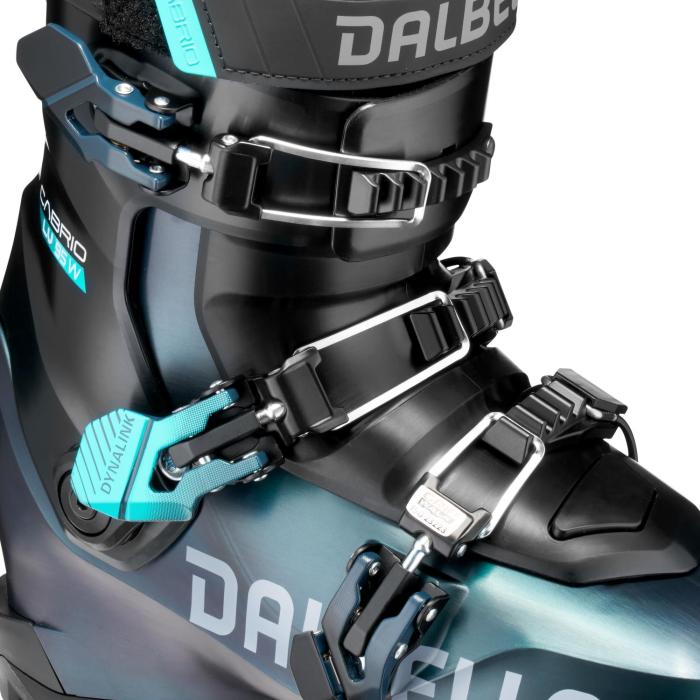
The new Cabrio LV 130 3DWrap so impressed our test team with its updates that they called it both this year’s Most-Improved boot and also Dalbello’s best cabrio design yet. Testers had a solid list of things they loved about the Cabrio LV this time around.

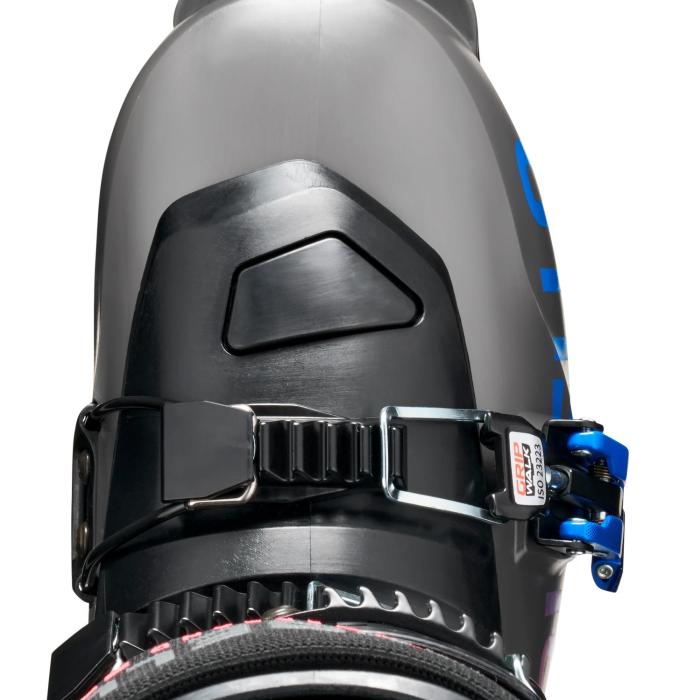
First, testers were impressed with the internal shell shape change in this new version for its true-to-LV forefoot fit. This is a great, narrow fit throughout the lower boot, now, testers said, though they mention that there’s some added ceiling height over the top of the foot—a boon for the high-arched and bony instep folks who still need a narrow fit elsewhere. Testers praised the closure at the base of the lower leg where the 45-degree Dynalink buckle did an admirable job of keeping the heel planted back in its pocket, while not crushing the top of the foot.

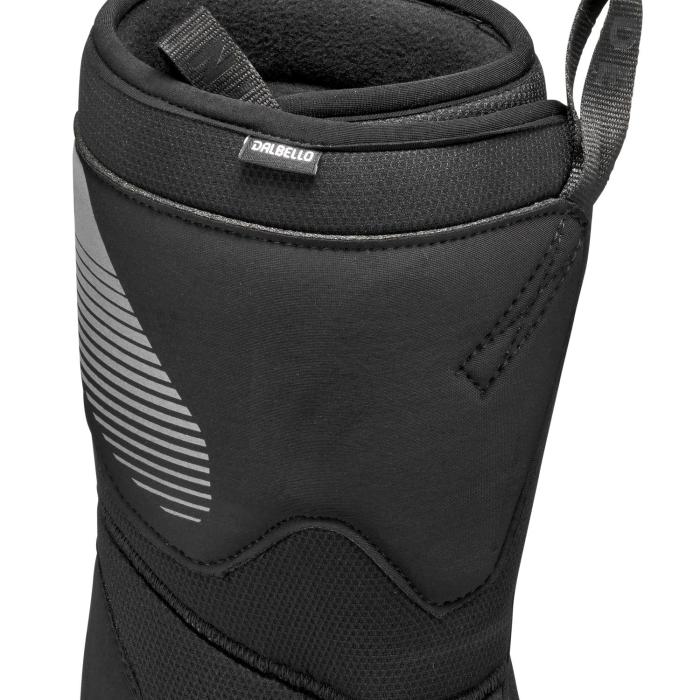
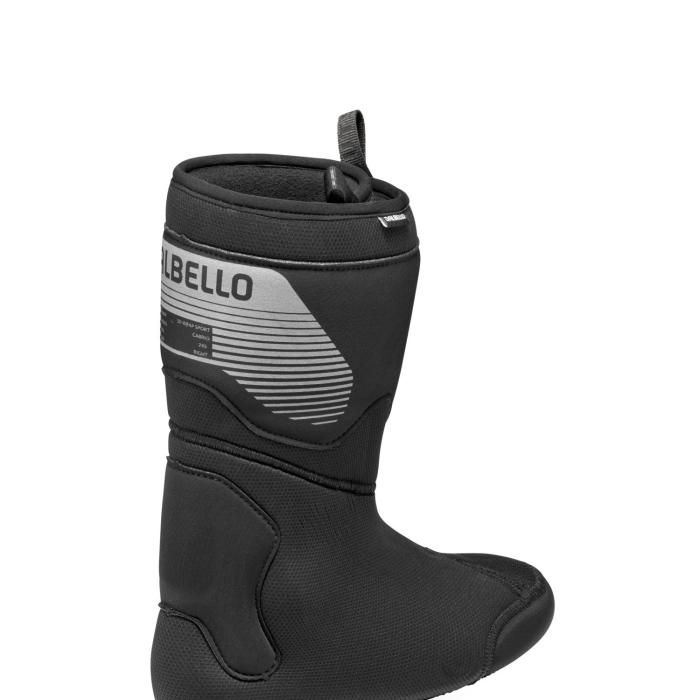
The other fit update came in the form of the liner’s revised fit along the shin—hugely improved, testers reported. They were pleased that the previously abrupt feel at boot top had been eradicated, replaced by a well-shaped and nicely cushioned wrap across the front of the lower leg from top to bottom. These fit improvements were noted straight-out-of-the-box, without the aid of any true heat molding, so testers surmised that the fit will be even better once that’s accomplished, post-purchase. The initial fit was good enough that no liner molding was considered at our test this year, which was a first for the Dalbello cabrios in the past several seasons.

The improved shin fit unlocked the classic, three-piece-shell flex feel that our testers always hope to find in a cabrio model—longer forward travel with an energetic return to center in between turns. That’s what the Cabrio LV brings to the table now, they say, claiming that the rebound energy was high and lively, without excessive pogo-ing or disruption of the skis’ entry into the next turn. Edge power is not always part of the cabrio performance blend but the Cabrio LV 130’s edge power score was a 9.5 out of 10, so not too shabby for an all-mountain three-piece.

As expected, the spiral-wrapping liner teamed with the open-topped cabrio lower shell to make entry and exit an absolute breeze, testers said. They also liked the hook-releasing cam-buckle style power strap on the 130 they tested—that strap is also available on the 120-flex, but you’ll lose the rad 80’s inspired graphic highlights in addition to ten flex-index points, and you’ll only save 55-bucks. Get the 130, testers say.

Shell/Cuff/Tongue Plastic 
polyurethane/polyurethane/Pebax Rnew
Tech Compatible 
No

Dalbello Cabrio LV 95 W 3DWrap

Gender 
Women's
Sizes (MP) 
22.5-26.5
Hike Mode 
No
Construction 
Cabrio/3-PC
Boot width profile 
Narrow
Also in this Collection 
115
Special Sizes 
22.5 and smaller
Cantology Compatible 
No

The newly updated Cabrio LV 95 W was a hit with our test team for its classic cabrio, long-travel flex feel and ridiculously easy entry and exit. They also said that for narrow, high-arched feet looking for a snug lower boot without crushing the top of the foot, this is that fit-unicorn!

This year’s Cabrio LV is revised in both shell and liner, with a more-snug forefoot fueled by the narrower cabrio lower shell and a re-designed shin fit a la the spiral-wrapping 3DWrap liner. The improved shin fit played into the soft-flexing 95’s relaxed fore-aft attitude, testers said, claiming that this flex level was best geared for more petite skiers and those with a cruisey all-mountain plan for the day. Easy, breezy arcs on groomers and light off-piste chunder and bumps served as the happy place for the Cabrio LV 95, they said.

They adored how easy the open-throat of the cabrio lower shell paired with the spiral wrap liner to offer unimpeded and well-padded entry into the boot—especially for skiers with limited first toe or ankle joint range of motion, they said this was the golden ticket for getting a boot on easily. As with most three-piece designs, testers had to negotiate the various tongue overlaps and flaps to arrange buckles and straps to get the closure done-up, but once practiced a few times the system is easily navigated, they said.

Testers were a little disappointed in the 95’s overly soft (i.e. collapsing at times) flex but they were intrigued by the fact that there is a stiffer 115-flex version available that comes with a burlier hook-and-cam-buckle powerstrap—both features that would appeal to taller, more aggressive skiers looking for the same narrow but high instep fit agenda found on the tested model. Considering that the 115-flex only costs thirty-bucks more, that should be on strong skiers’ radar, for sure.

Shell/Cuff/Tongue Plastic 
polyurethane/polyurethane/Pebax Rnew
Tech Compatible 
No

Dalbello Veloce Space Dual 105 W

Gender 
Women's
Sizes (MP) 
23.5-27.5
Hike Mode 
No
Construction 
Overlap
Boot width profile 
Medium
Also in this Collection 
95, 85 (single BOA)
Cantology Compatible 
No

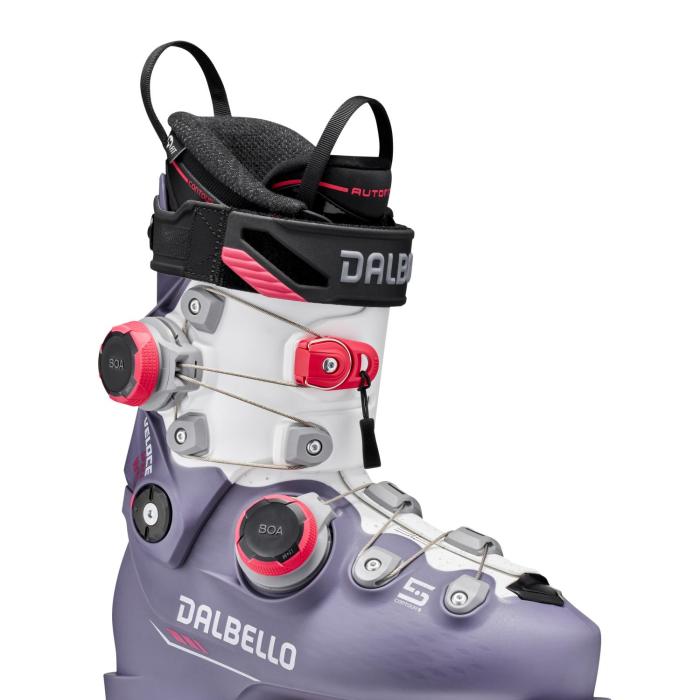
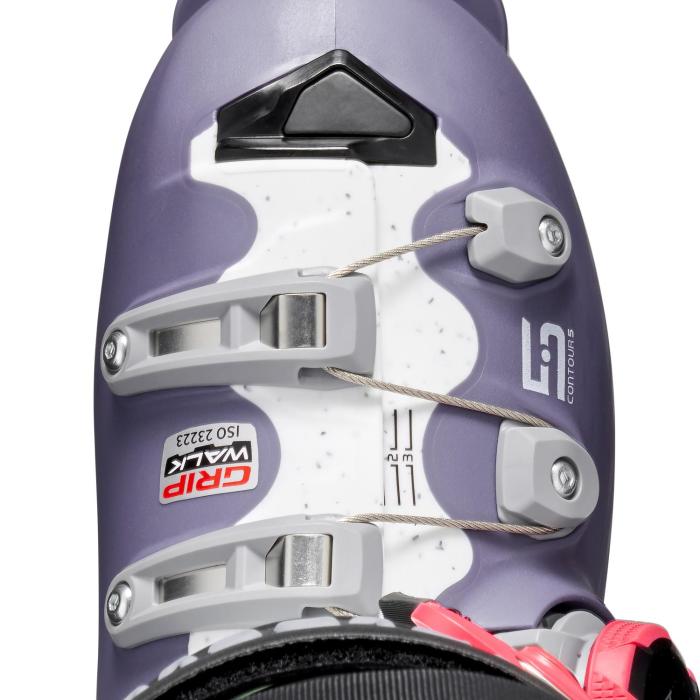
Our test team is made up of savvy ski industry types who have skied in (and sold) many different boots over the years. They know that when testing boots the goal is to ignore their own fit issues, particular performance needs and individual biases in order to objectively identify a boot’s merits and ideal audience. They aren’t supposed to make it personal—and yet that’s what they did with the Dalbello Veloce Space Dual 105 W.

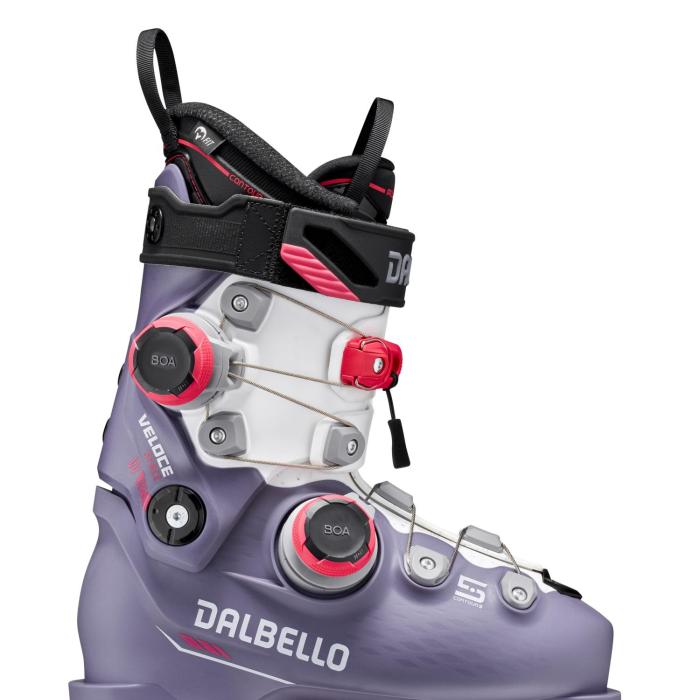
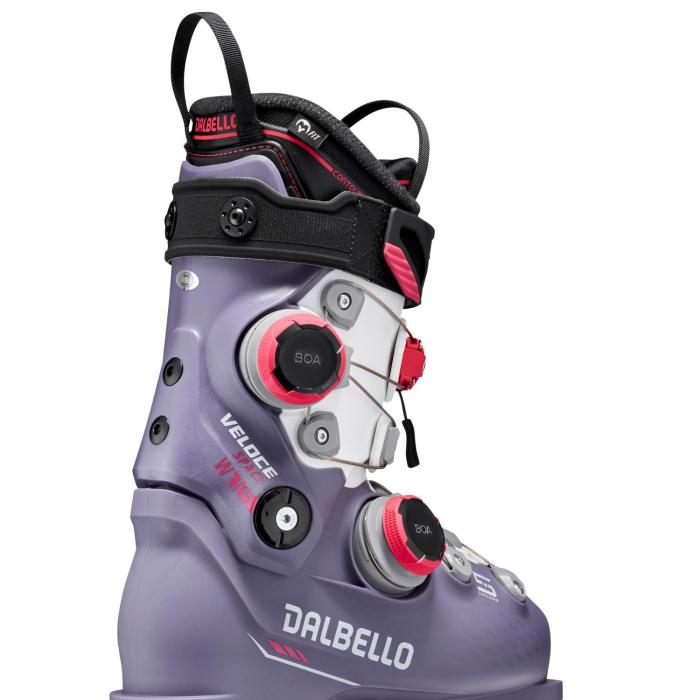
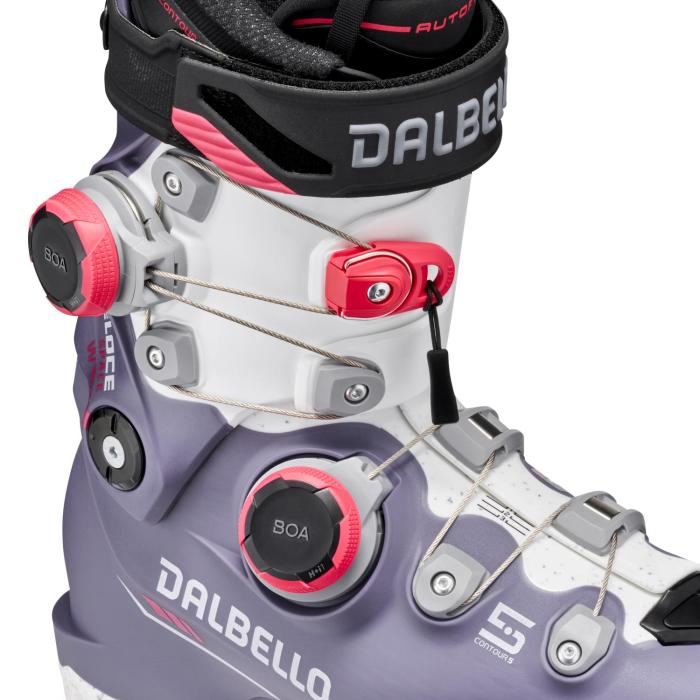
First impressions don’t always carry the day and as in any relationship, the beginnings of a boot romance can have its ups and downs. Case in point, the Dalbello Veloce Space Dual lured in our testers with its sexy look—it’s a visually attractive boot with exotic colors like Future Dusk and Mercury, with fuchsia highlights. They thought they’d found their love match—and then the boot almost blew it on the first entry date. Testers discovered the dual BOA cabling was a bit fussy and high maintenance, making the Veloce Space Dual more resistant to their getting it on than they’d expected.

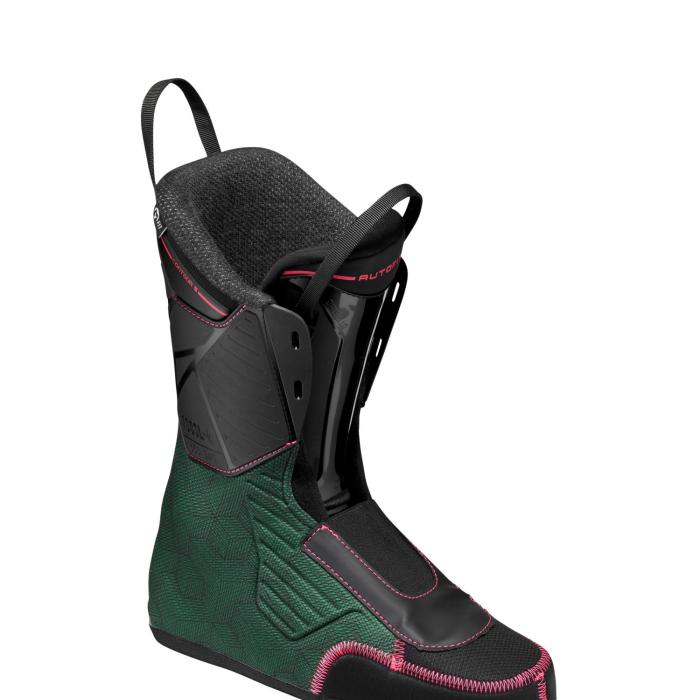
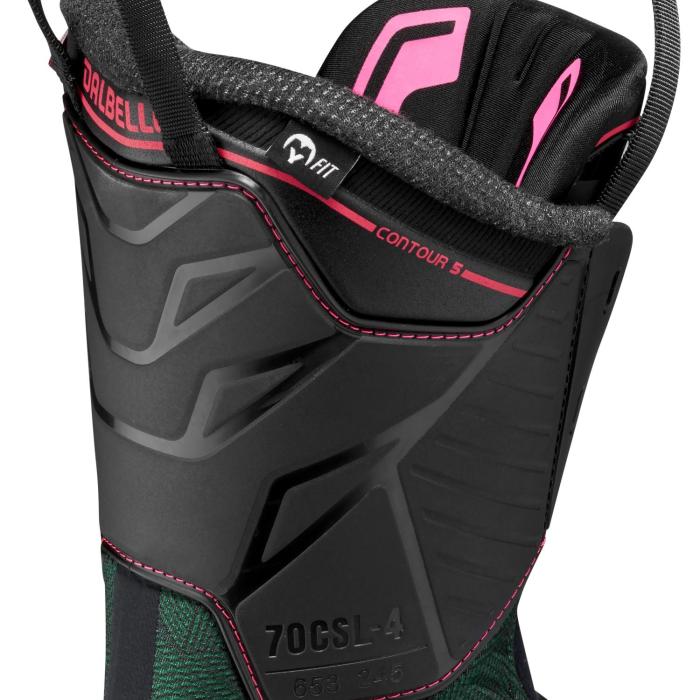
But in something of a fairy tale ending to this first chapter of unrequited love, testers did get it on, and once in, they discovered that this boot was as beautiful inside as it was on the outside. It was both accommodating but firm in the way it held them and it liked being pushed—testers said the shin fit and flex feel was spot on and provided some push back, never collapsing no matter how aggressive the skiing got. The medium width shape suited a broad variety of testers’ feet and legs, with some cushion and curves to maintain a high level of fit luxury without feeling fluffy or loose.

The dual BOA, so standoffish at the start, became a close ally for fine-tuning the fit around the foot and the lower leg shaft where the cabling wrapped their contours a click at a time to achieve a Goldilocks-style balance between retention and all-day comfort.

Testers were smitten to discover that the Veloce Space Dual offered some real substance and spine when it came to doing the work of going down the hill, its polyurethane foundation proving rock-solid at speed and through variable terrain. Testers found it quick to respond to their edge change demands and it remained predictable without feeling dull underfoot.

They compared its fit and ski performance to stiffer boots with an added 200-dollar price tag premium and therefore called this the best value boot of the test. They made mention that for testers who might like to meet its siblings (and in the process ditch the cable complications of an upper BOA and save a few more bucks), the Veloce Space is available with buckles-top and BOA-bottom at a 95- and 85-flex for an additional 200- or 300-bucks off, respectively. Double date anyone?

Shell/Cuff/Tongue Plastic 
polyurethane/polyurethane
Tech Compatible 
No

Gold