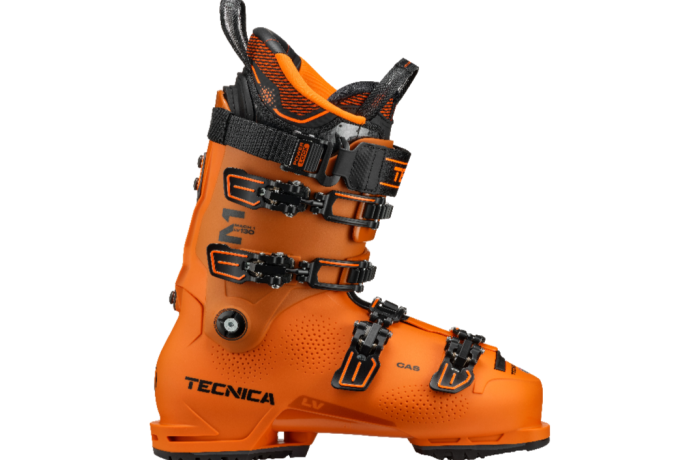
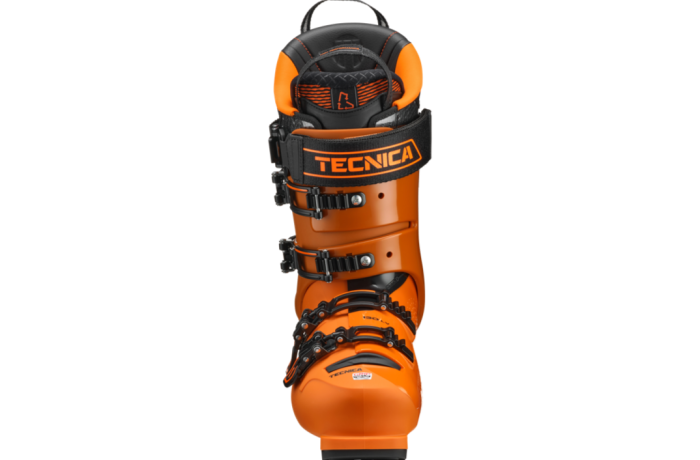
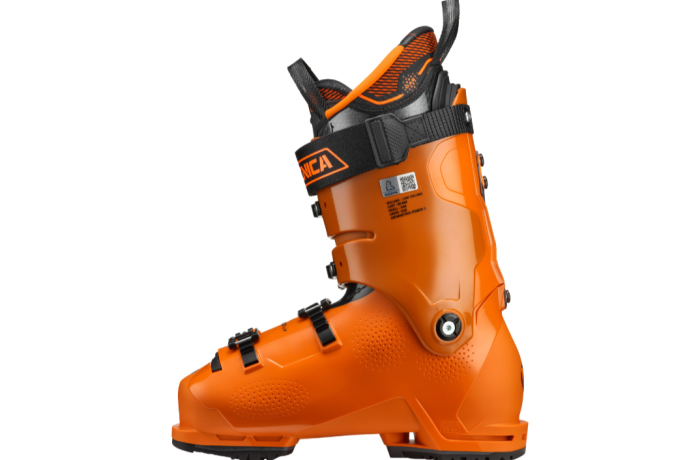
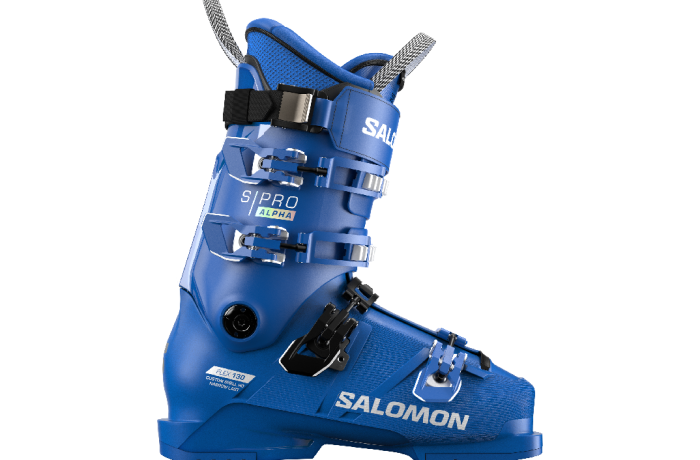
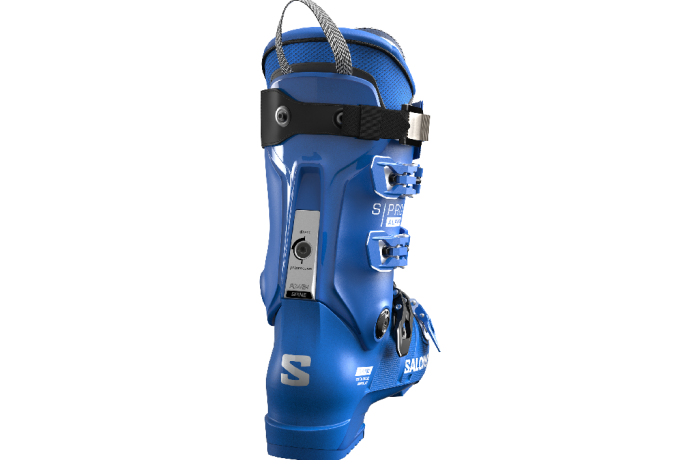
Fischer RC4 Carbon Pro LV ZF BOA (115+)

The flagship women’s narrow Fischer offers a unique host of features that will appeal to a hardcore and specific-fit-focused cohort of skiers.

Category 
All-Mountain Traditional
Last Width 
98
Flex Index 
115+
Price (MSRP) 
$1200.00USD
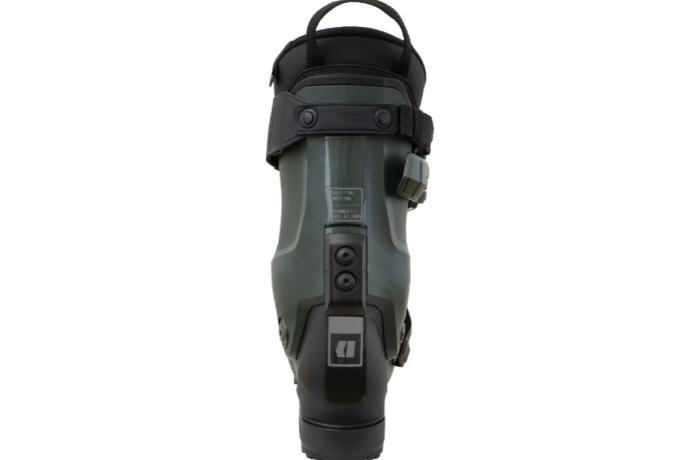
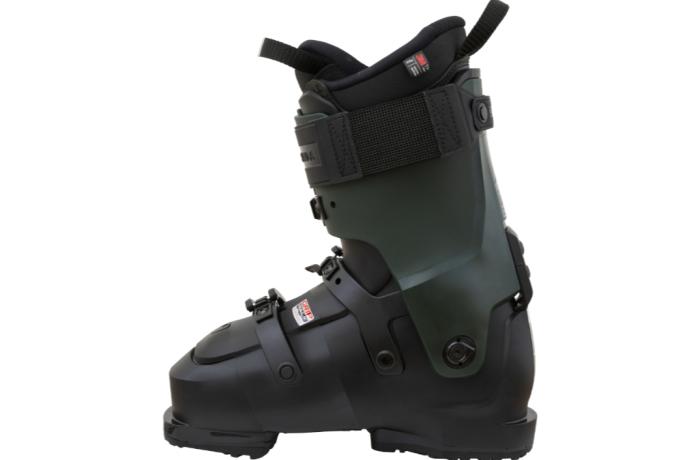
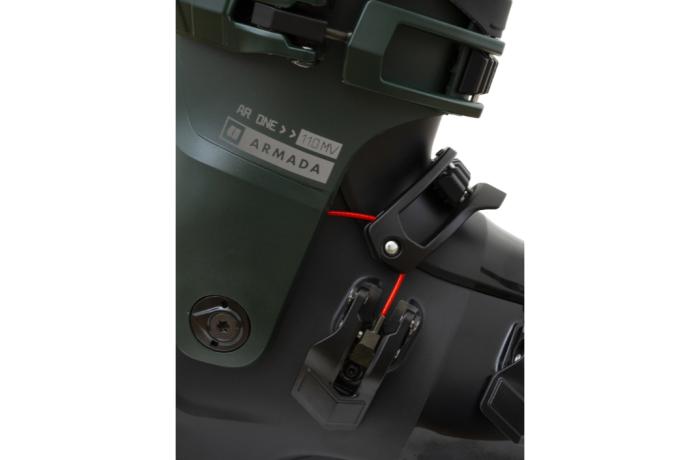
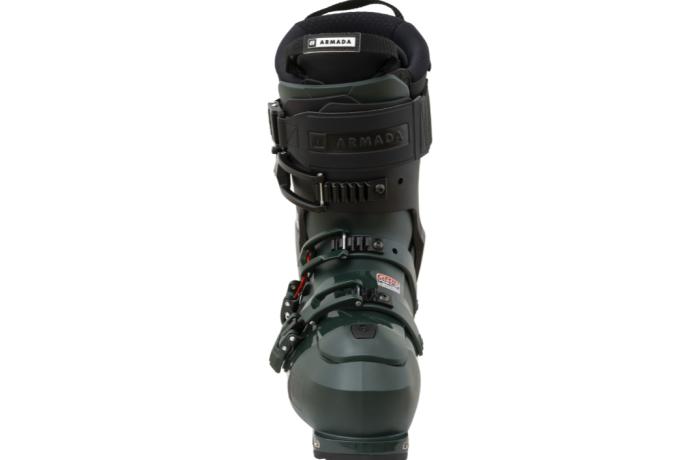
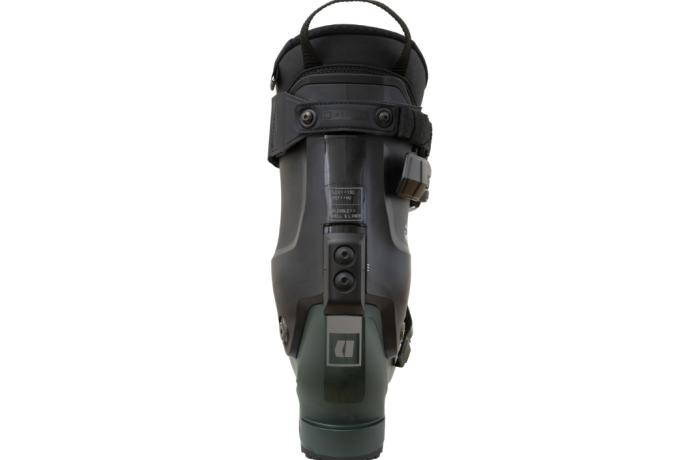
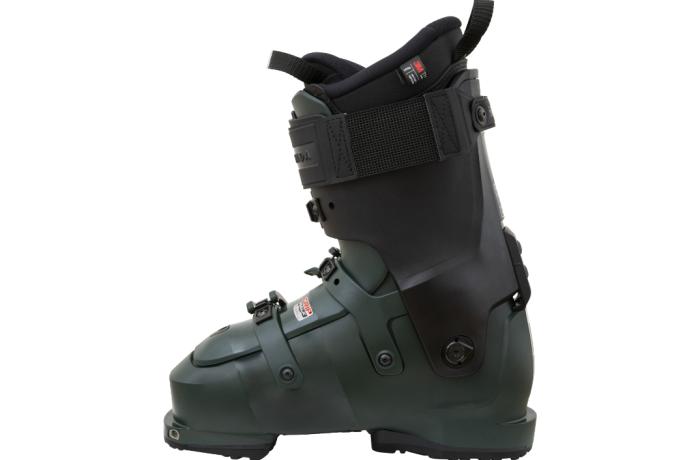
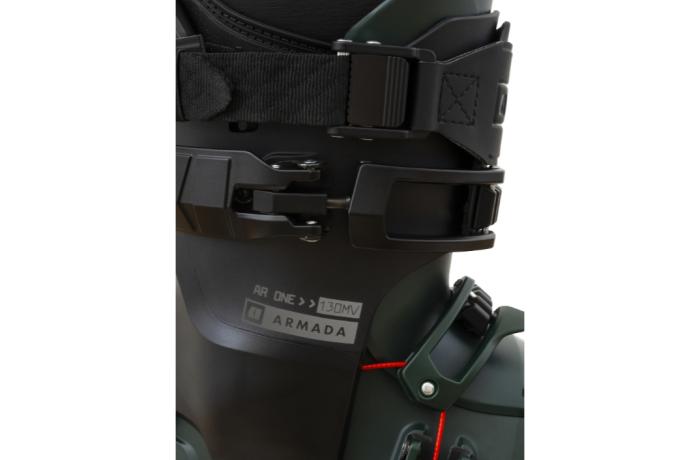
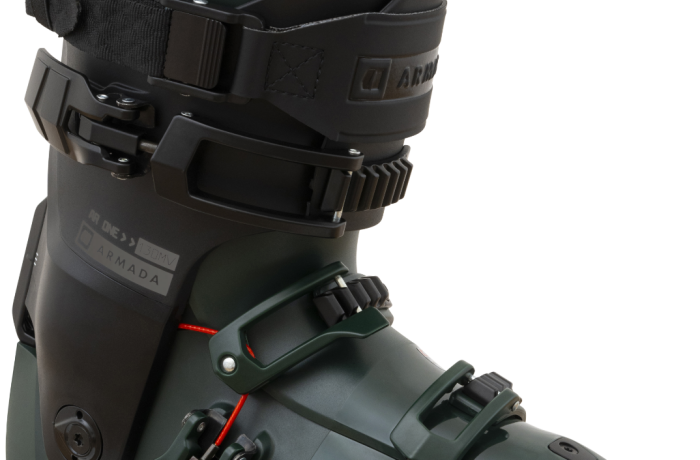
Armada AR ONE 110

Gender 
Men's
Sizes (MP) 
23.0-29.5
Hike Mode 
No
Construction 
Cabrio/3-PC
Boot width profile 
Medium
Also in this Collection 
130, 120, 100, 90
Cantology Compatible 
No

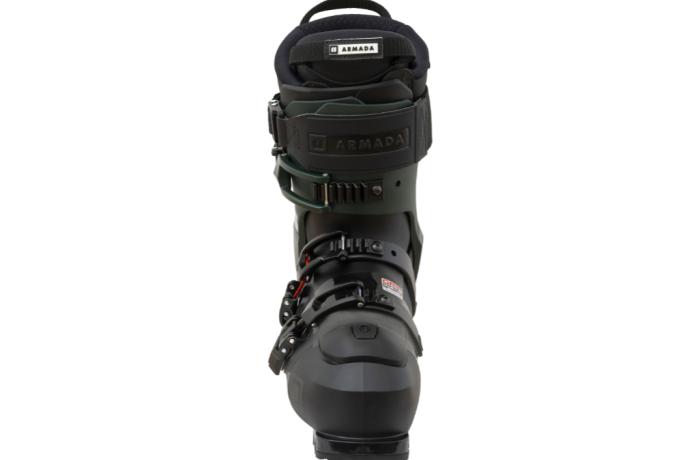
This season Armada launches its entry into the alpine-slash-freeride boot market with the AR line-up of two boots, a tech-compatible 130-flex and its slew of step-down-brothers 120-, 110- (reviewed here), 100- and 90-flex. Many of our test team who work as bootfitters and retailers had already been selling the early-released Armada boots this past season but most of them hadn't gotten the chance to ski in them yet, and so the anticipation level was high going into this year's boot test.

First, testers were very impressed with the similarities in performance of the AR ONE 110 when compared to the tougher 130-flex we also tested this year, and at a list price $225 less than the stiffer model, we considered it one of the best deals of the test and certainly felt it qualified as a legit sleeper that would impress a lot of other skiers. True, a skier gives up on the tech fittings at this performance tier--in fact, they're only available on the 130-flex and toe only--but in addition to the reduced tariff, testers say folks gain a lot more by going with less flex.

Specifically, the softer 110 plastic (130, 120 and 110 flexes all use polyurethane throughout) allowed testers to glide into the boot, past the constriction point of the cabrio instep with relative ease--at least more ease than they found in the 130-flex--and testers said that it seemed to wrap their foot and leg shaft in a clean, comfortable way.

The 110's flex feel was also favored by testers who felt it offered more of the classic cabrio/three-piece range of travel and comfy shin fit that they were hoping to find in the Armada design. While they liked the progressive flex feel and range of flexion (Armada is calling this Natty Flex) of the 110, they said it was probably a bit stronger-than-billed and performed admirably well on snow, driving a variety of different ski widths through every type of snow and terrain Mt. Bachelor had on offer.

Testers liked the pairing of the flexible 110- plastic platform with the shock-mitigating Damp Kush bootboard for softening off-piste impacts and landings sent beyond the transition. They also felt like the slightly softer cuff gave them freedom to find a fore-aft position that worked for them, regardless of their terrain or stance preferences. A bit more ankle flexion fueled some quick transitions and rapid direction changes for testers in the AR ONE 110, and that translated into its highest score of 9.25, awarded for Quickness and Steering.

Fitwise, testers say the AR fits more snugly than suggested by the medium 100mm badging. Most of the fit impressions were scored near 2.5, which is right between narrow and medium fit tension, though the tightest fit zone was over the top of the foot in the instep/midfoot where it averaged out to a 2.0, and testers' comments mirrored this as the boot's least comfortable area--at least for those with high arched, bony feet. Testers liked the fact that the 110 sports the same performance-tier Team liner as the 130 version and they dug the elasticized 50mm cam-locking power strap for closing down the fit around the shin. The heel and ankle zones were similarly locked-in for performance skiing.

The boot was rated as just a touch forward-leaning of ideal in its stock setting but there is an Atomic-style, 3-position forward lean adjustment on board. Testers liked the fact that there was an eliptical-cam-style lateral cuff adjustment for fine-tuning the edge feel--a few testers thought it was set-up a little on the under-edged, schmeary side of neutral which worked well for a loose and slashy off-piste attack but some thought it might feel stronger underfoot with a small adjustment made there.


Total Avg Score 
8.29
Shell/Cuff/Tongue Plastic 
polyurethane/polyurethane
Dry-Test Fit 
7.50
Dynamic Balance 
8.50
Edge Power & Fore-Aft Support 
8.50
Quickness, Steering & Feel 
9.25
Convenience, Warmth & Features 
8.00
Tech Compatible 
No
On-Snow Fit 
8.00

Armada AR ONE 130 MV

Gender 
Men's
Sizes (MP) 
24.0-29.5
Hike Mode 
No
Construction 
Cabrio/3-PC
Boot width profile 
Medium
Also in this Collection 
120, 110, 100, 90
Cantology Compatible 
No

Our test team was stoked to have a chance to get the new Armada boots on their feet, out the door of our test center and on-snow for testing after a long build-up to launch that included early release sales of the boot over the course of this past season. Many of our testers who work in the bootfitting and retail sectors had already had experience selling the boot but hadn't yet skied it. The takeaway after 8-days of on-snow testing was that the AR ONE 130 is a seriously good-skiing boot with some stealthy ascending skills and some fit and entry challenges that shouldn't be a problem for the tough guys who ski a 130-flex. Right?

There was a lot of curiosity about what Armada would bring to market with their first boot project--those in the know expected it would be a three-piece shell design since that was where their brand's ski audience was already focused but the details were secret. When testers first got the 130 in their hands they realized this was not a gooey-soft cabrio best suited for dull-edged butters and rail work--no, the AR ONE 130 is a legitimate 130-flex built to charge, testers said. It's a boot that means business and isn't interested in coddling the unsure.

That begins with entry. It's not the easiest boot to get on, even though ease-of-entry is oft heralded as a cabrio characteristic. It all depends on the stiffness of the the cabrio clog, or open-throated lower shell. In this case the 130-level polyurethane doesn't budge much, so the edges of the cabrio opening are waiting like a stealthy rattler to bite any foot that strays outside the padding offered by the traditional tongue style liner. So, testers say, take a moment to ease the foot past the boot throat's constriction point without yarding the tongue inadvertently off center--let it lay over the top of the foot to protect its slower slide into the boot.

Once in, testers did a little fumbling with the typical three-piece layering puzzle (one tester called it the labia labyrinth) to ensure that the liner tongue and outer cuff layers mated up inside the cuff buckles, without accidentally trapping the cable-dangling, Slingshot middle buckle under the external tongue. That accomplished, testers say this 100mm offers closer closure than expected for a medium-width, with a narrow-class clamp-down across the top of the foot prior to heat molding the liner. They loved the control over the ski that this fit enabled, but they said that the out-of-box fit favored the lower-volume-than-average foot and leg. The heel pocket was tight and right, and the fit remained performance-snug from the instep, through the navicular, inside ankle bone and up into the base of the shin. Some testers loved the snug, ski-tipping grip and others lamented the to-do list in their overgrown hot-spot garden.

While the cuff is solid and strong, both in forward flex and laterally, testers found that the stock geometry best suited skiers who prefer a slightly more forward leaning position and a neutral-to-looser, side-to-side set-up. The AR ONE is well-outfitted to fine-tune stance alignment with a three-position forward lean adjustment (stock is in the middle setting) and an eliptical-cam-style lateral cuff adjustment, so depending on the athlete's intended application there's a way to get dialed in straightforward fashion.

For aggressive all-mountain chargers who want the ability to approach adventure terrain using skins, the AR ONE 130 is the only option for them in the new Armada range as it's the only model that offers toe-only tech fittings. While testers liked the softer styling of the 110-flex we tested and surmised that the 120-flex version might be the all-mountain sweet spot for them, they point out that a lot of core rippers will be choosing the 130 for the ascent option found there.  

Total Avg Score 
8.26
Shell/Cuff/Tongue Plastic 
polyurethane/polyurethane/polyurethane
Dry-Test Fit 
8.29
Dynamic Balance 
8.67
Edge Power & Fore-Aft Support 
8.67
Quickness, Steering & Feel 
9.17
Convenience, Warmth & Features 
7.83
Tech Compatible 
Yes
On-Snow Fit 
8.00

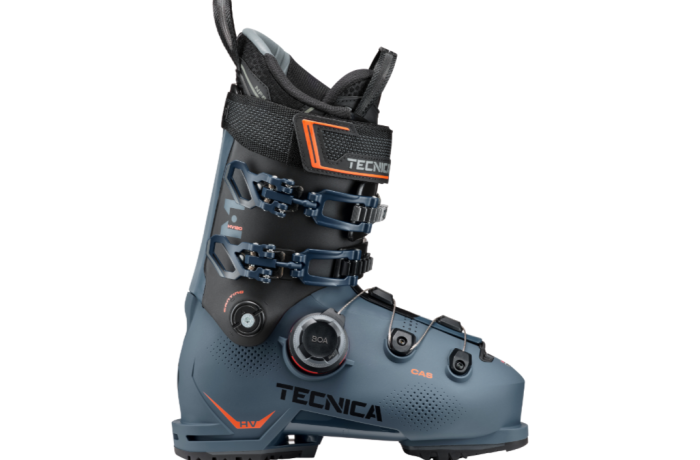
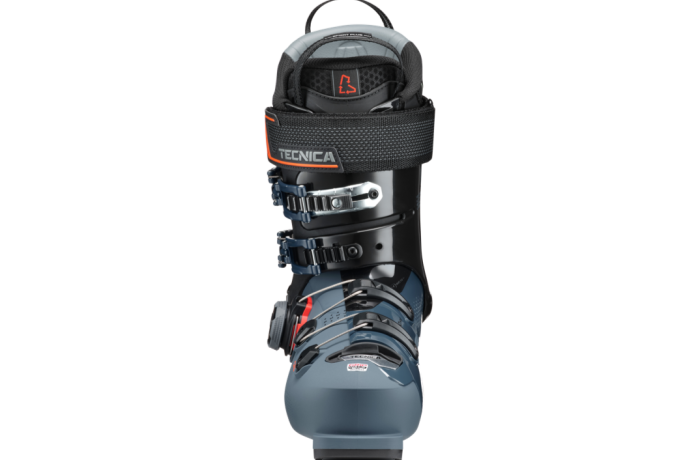
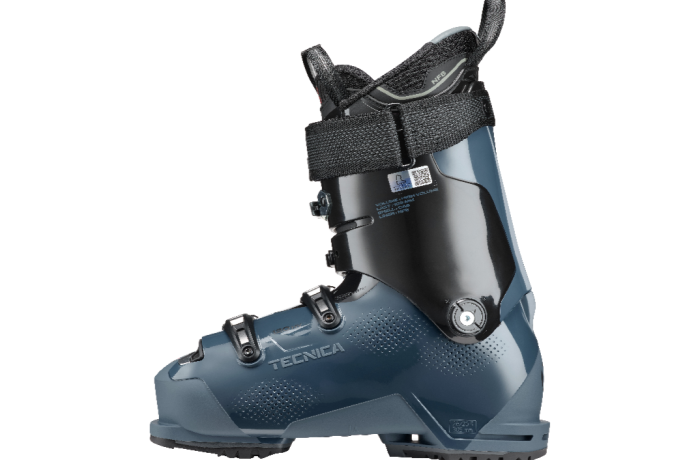
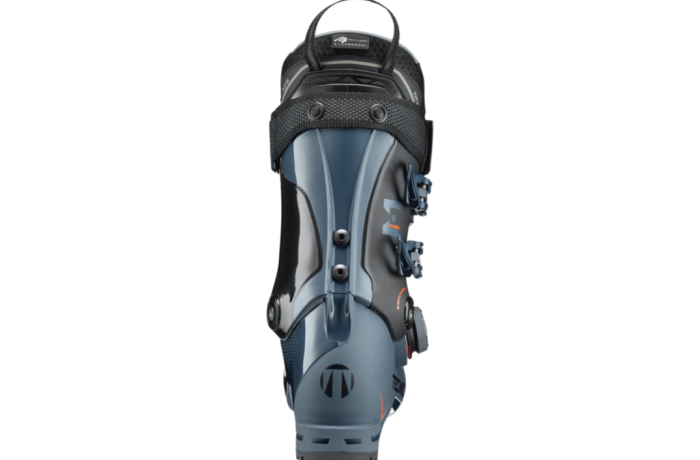
Tecnica Mach BOA HV 105 W

Gender 
Women's
Sizes (MP) 
22.5-27.5
Hike Mode 
No
Construction 
Overlap
Boot width profile 
Wide
Also in this Collection 
95
Special Sizes 
22.5 and smaller
Cantology Compatible 
No

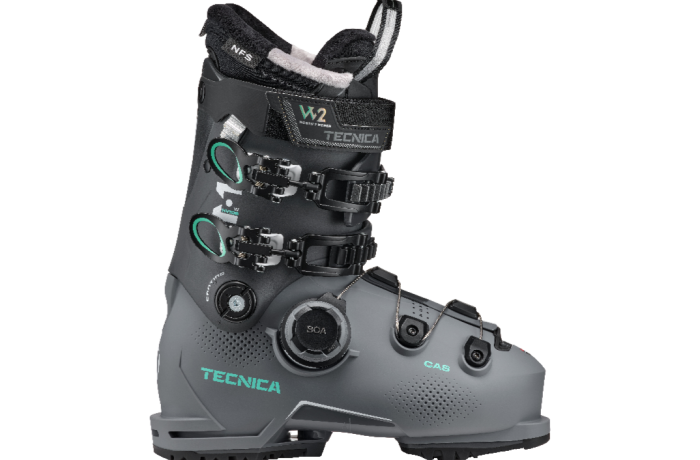
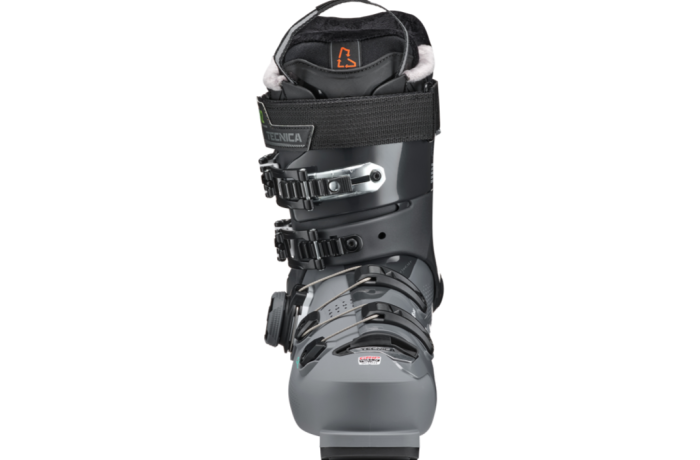
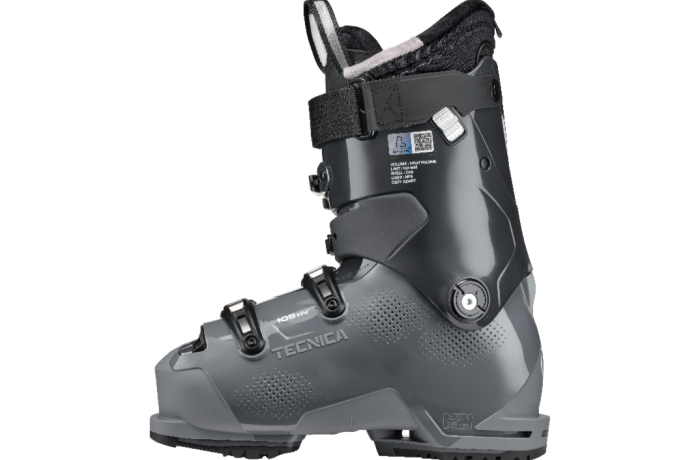
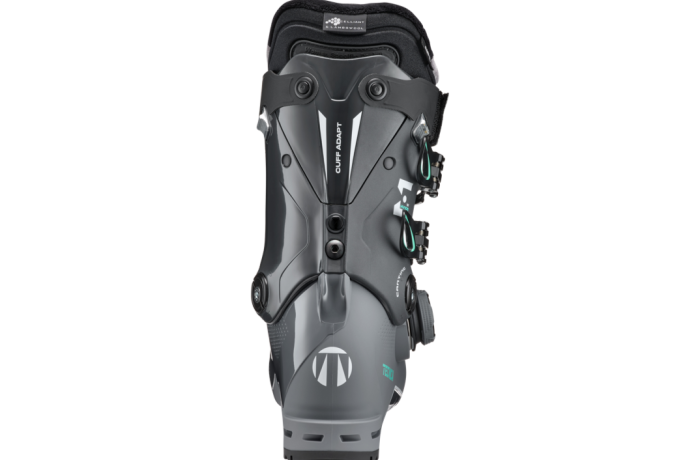
Testers loved the Tecnica Mach BOA HV 105 W for its ample volume and plus-size curves, and that's without their huge appreciation for how the BOA closure system put a new spin on the Mach1 wide ride line-up. Testers said that it was an easy call for the thick-of-foot, thick-of-calf and good skiers looking to get into the thick of it off-piste or at high speeds, alike.

The toebox and forefoot fit of the Mach BOA HV rung the big girl bell for high volume, testers said. We score fit on a 1 to 5 scale where a 1 is as tight as a World Cup race boot and a 5 is as roomy as a ski boot gets. Testers gave a unanimous fit score of 5.0 to both the toebox and forefoot--and that doesn't happen very often. They said the fit shrunk down a little in critical control areas like the ankles and heel but not by much--this boot wants a chunky foot to fill its foyer, and well, its upstairs too. That next.

The cuff is first and foremost upright in its stance angle, testers agreed. That, and it's pretty tall on the lower leg also. On top of that the cuff circumference is big--built to wrap a thick calf comfortably. Add to those three elements a fourth variable--this boot is stout, according to testers who said it ran stiffer than the advertised 105-flex. These four upper cuff design elements combine to produce absolute joy for the big, tall skier with a thick leg who will find herself properly balanced and supported in a proper skiing stance, ready to attack the mountain without burning quads and jabby calves. On the flipside, those four elements combined for backseat-betty, wheelied-out thrill rides for shorter, lighter, more slender-legged testers--but this probably isn't their boot, anyway, so forget them.

Testers loved how well this boot held an edge, regardless of their morphology--this was a strong-skiing boot that did everything that they asked of it, from carving firm groomers to whittling through bumps and tracking up virgin pow. They thought it skied better than expected from a 105-flex, from a stability and power perspective, but said its quickness was nothing to complain about, either.

Testers thought that the boot's simple design with the added convenience of the BOA reel made it a convenience winner--in fact they gave its Convenience, Warmth and Features score a perfect 5.0 to match the one they gave it for its perfectly outsized, wide-last fit.


Total Avg Score 
4.65
Shell/Cuff/Tongue Plastic 
PU/PU
Dry-Test Fit 
5.00
Dynamic Balance 
4.00
Edge Power & Fore-Aft Support 
4.75
Quickness, Steering & Feel 
4.50
Convenience, Warmth & Features 
5.00
Tech Compatible 
No

Tecnica Mach1 MV 115 W

Gender 
Women's
Sizes (MP) 
22.5-27.5
Hike Mode 
No
Construction 
Overlap
Boot width profile 
Medium
Also in this Collection 
105. 95, 85, 75
Special Sizes 
22.5 and smaller
Cantology Compatible 
Yes

Does gold medal status at our boot test require perfection? No, of course not, but the Tecnica Mach1 MV 115 W is close to it. Again. The medium width Mach1 women's boots have topped the leader board off and on for several years of boot tests, and last year was no different when the 115-flex model was introduced. Here it is returned to the podium, this time onto the top step out of 11 very good boots in the medium width group of the All-Mountain Traditional category.

It very nearly did achieve perfection for our test team, who as a group gave it perfect 5.0's for its on-snow performance metrics of Dynamic Balance, Edge Power and Quickness & Steering. Testers remain very impressed with how this supremely comfortable (and pretty generous of fit this year) all-mountain utility boot can deliver race-bred power and quickness to narrow or fat skis alike, across an entire mountain of terrain and through any assortment of snow surface our testers drove it through.

The generosity of fit (aka comfortable, warm and not numb) was a blessing for most of our testers, who made multiple mentions of the fact that their toes were not tingling and their calves were not pinched. A few highly discerning (aka critical) testers reduced the Mach1 MV 115's fit score to less-than-perfect because they thought it missed the medium width target by a bit. That's fair, but for the skier who is opting for medium instead of narrow, the key fit zone areas of toebox, forefoot, instep and calf add up to either agony or all-day skiing, and a little bit of extra blood flow and room for nerves to breathe easy is an okay trade-off for most folks in the MV market. Here, they get just what they're looking for, we think. Obviously those critical testers didn't think the comfort level negatively affected performance (hence the perfect scores) but they did mention having to buckle the boot a little tighter--which bumped the Mach1 MV's convenience score out of perfect 5.0 contention. Damn, they're a tough bunch.

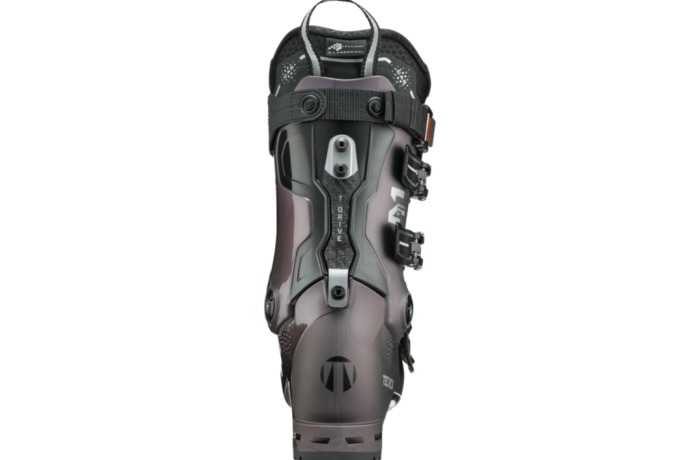
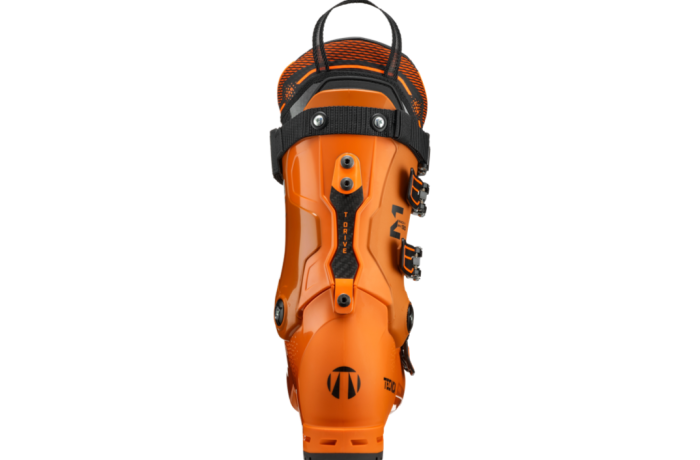
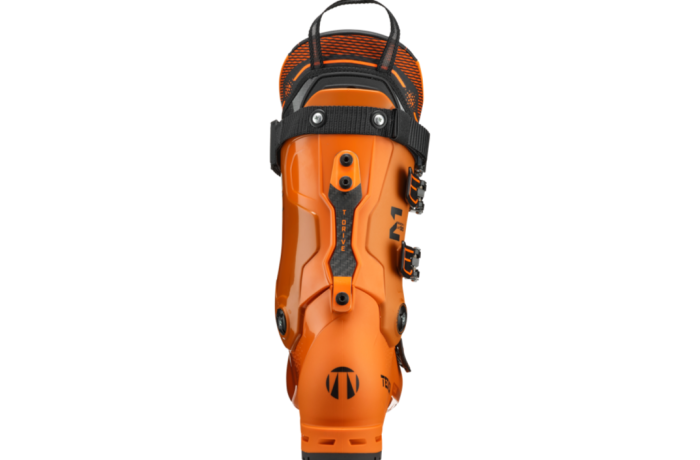
How is it that the Mach1 MV 115 can be so comfy and yet ski so strongly and quickly from turn to turn? It doesn't hurt that the Mach1 stance angles have been refined over several years to a well-balanced bullseye. Nor does it hurt that the Mach1 boots rely on tried-and-true polyurethane plastic with more traditional shell wall thicknesses for vibration damping and stability. But the real magic may be the T-Drive cuff to lower shell connector, which ties upper to lower in a rigid way laterally, for strong edging, but a flexible way in forward flexing movements. It restrains the forward movement of the cuff while reducing distortion of the plastic at the intersection of cuff and lower shell in a way that also allows for the use of slightly softer plastic which aids in entry, exit and a more easily wrapping closure of the boot around the foot. Testers liked T-Drive the first time it was introduced and continue to laud its benefits on every model where it's utilized.

Yes, testers like the CAS line-up of bootfitter-friendly custom tech features in both the shell and liner, but in the MV few testers make mention of needing to deploy any of them, claiming the out-of-box fit is hot-spot free and good to go. The truly high volume foot could stuff themselves into this 115-flex MV if the 105-flex in the roomier HV version wasn't going to be supportive enough, and in that case some CAS fit tricks could work nicely. Testers like the up-hooking, cam-cranking power strap that comes with the 115 flex boot, and as always they approve of double pull loops, dual cuff adjusters and GripWalk soles. But, let's be honest here, it's probably that iridescent, matte finish sorta-purple that got it the gold. And that's fair--it is amazing.

Total Avg Score 
4.83
Shell/Cuff/Tongue Plastic 
PU/PU
Dry-Test Fit 
4.42
Dynamic Balance 
5.00
Edge Power & Fore-Aft Support 
5.00
Quickness, Steering & Feel 
5.00
Convenience, Warmth & Features 
4.75
Tech Compatible 
No

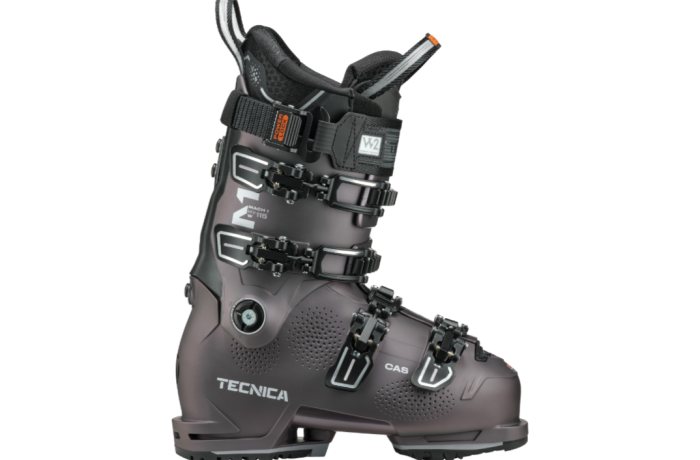
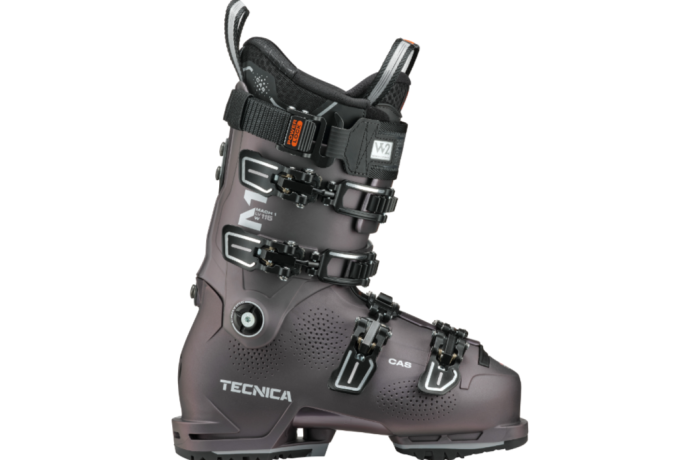
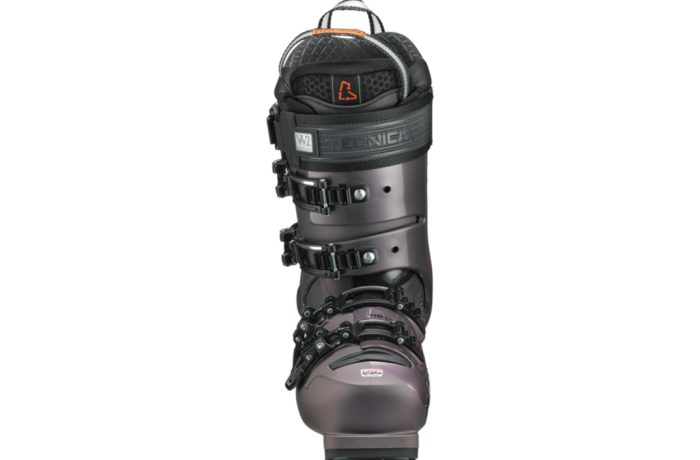
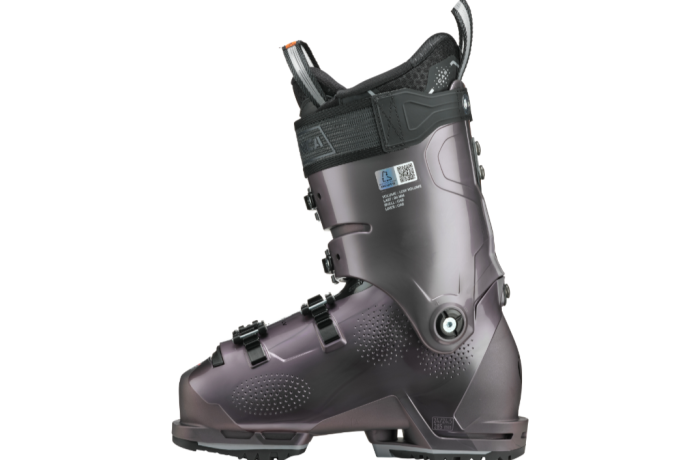
Tecnica Mach1 LV 115 W

Gender 
Women's
Sizes (MP) 
22.5-27.5
Hike Mode 
No
Construction 
Overlap
Boot width profile 
Narrow
Also in this Collection 
105, 95, 85
Special Sizes 
22.5 and smaller
Cantology Compatible 
Yes

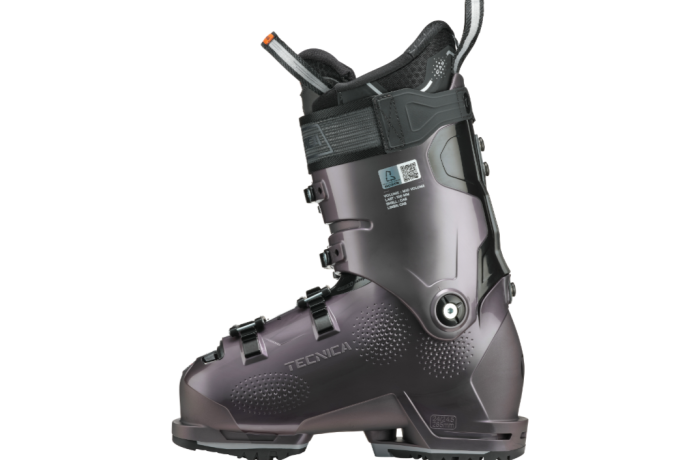
Why does our women's boot test team continue to love the Tecnica Mach1 LV 115 W so much, aside from the iridescent dark purple? It's because it hits the fit tension target, or tightness quotient, for a narrow-last performance model right in the middle.

We assess the boot's fit in eight distinct fit zones--toebox, forefoot, instep, lateral column, navicular, heel, ankles, calf--and provide a fit impression score for each of them on a scale of 1 through 5, with a 1 being tight like a World Cup race boot and 5 like a packed-out rental boot. The consumer narrow width boots that we're testing in the 96-98mm range should have a score of a 2, while a medium width fit score hovers around a 3, an all-mountain performance wide around a 4...you get the picture. Every single fit zone score average for the Mach1 LV 115 W was close to a 2. The toebox offered the most relief of squeeze at a 2.25. The ankle pockets were the most tight spot (though nobody complained about them) at 1.67. The average of all eight fit zones was 2.04. That's a heck of an evenly narrow fit from front to back and top to bottom.

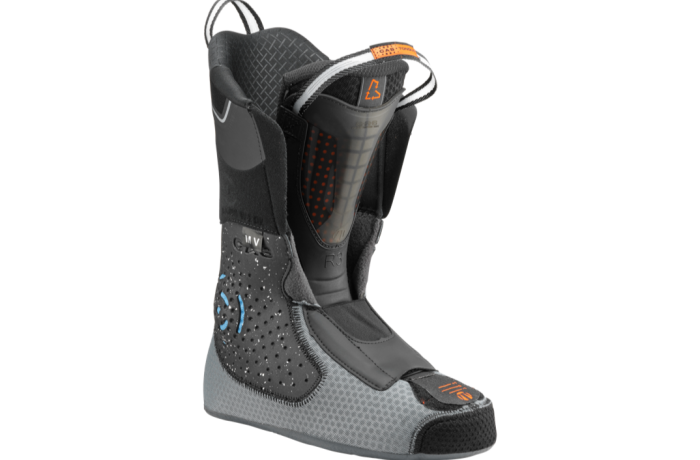
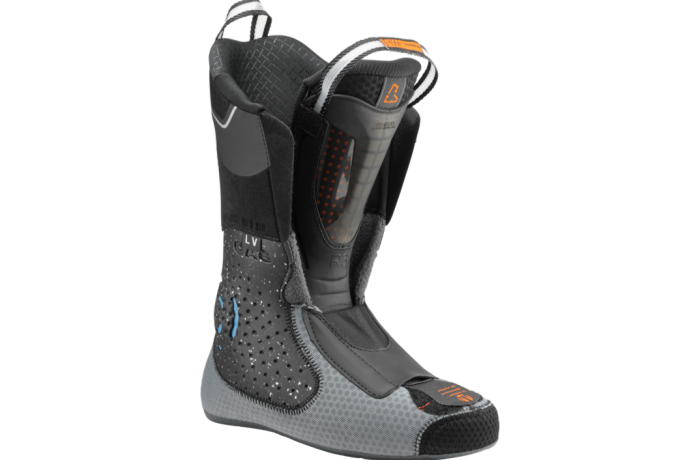
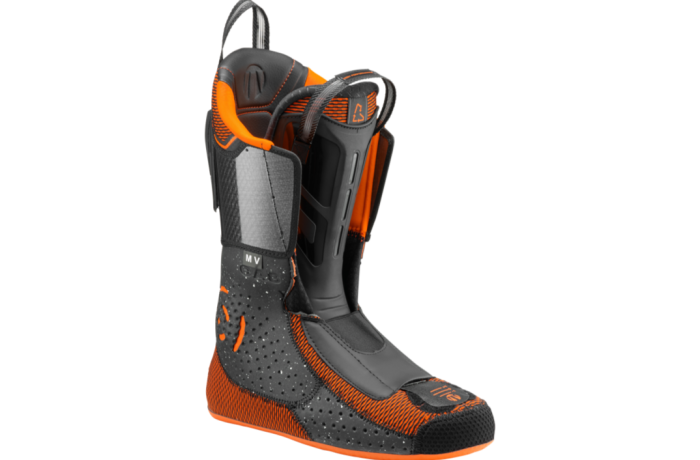
Okay, they love the way the boot skis too, and always have, but this season the Mach1 liners are revised so testers spent a lot of time complimenting the super snug yet more comfortable fit than they recalled previously. The primary liner change was the use of a 15% softer interior material that addressed the skier's sock with a slightly more cushioned, silky feel and yet didn't allow increased movement or a sense of pack-out as a tester's 3-run session went on or toward the end of our eight-day test period. Another new element of the Mach1 liners was a more slick rear strip to help the heel glide down into the boot upon intial entry. Our testers approved of the change, noticing the difference, though one still complained about the ease of entry, or lack thereof (we think her blood sugar was low).

The skiing prowess of the Mach1 LV 115 W is legendary--it doesn't get any better for our test team for a combination of race level power and stability with the frontside boot's quickness and accuracy of steering, all wrapped in a more cushioned and shock-absorbing package for all-mountain attacking, all day long. Testers remain fans of the traditional feel of a polyurethane lower shell--damp and solid underfoot, aggressive to the edge--but they've come around to the lighter weight polyolefin plastic upper cuff. Sometimes the lighter-than-PU materials get twitchy or collapsible in their flex feel, but the Mach1's T-Drive rear spine connection between the cuff and lower adds enough rigidity to the cuff of the boot that it is not dependent purely on thicker, heavier plastic to get the job done. Testers couldn't find anything that the Mach1 LV 115 W couldn't do over a week of varied weather, snow conditions and temperatures. It didn't get too stiff in the cold or too soft on warm afternoons.

And yes, the iridescent dark purple may have helped propel it to one of the top scores of the entire women's test, but not by much.

Total Avg Score 
4.80
Shell/Cuff/Tongue Plastic 
PU/PU
Dry-Test Fit 
4.83
Dynamic Balance 
4.67
Edge Power & Fore-Aft Support 
4.83
Quickness, Steering & Feel 
4.83
Convenience, Warmth & Features 
4.83
Tech Compatible 
No

Tecnica Mach BOA HV 120

Gender 
Men's
Sizes (MP) 
25.5-32.5
Hike Mode 
No
Construction 
Overlap
Boot width profile 
Wide
Also in this Collection 
110
Special Sizes 
31.0 and larger
Cantology Compatible 
No

Tecnica’s foray into BOA boots is constrained to its widest last models and the 120-flex Mach BOA HV is the men’s flagship leading the charge for thick-footed skiers who are looking for maximum room with a convenient new twist on the all-day, all-mountain ski boot.

Testers loved the Mach BOA 120 HV for its well-put-together set of useful design elements—front and center for them was the hugely open fit in the lower shell. Testers said that it offered a massive amount of space for the thickest feet to spread out in and relax—well, if not relax, then at least exist in a not-numb state. The ease of entry is a home run, testers said, and the initial fit was soft and inviting without losing a grip on the ankles and heel. They all loved how easily they got the boot buckled and dialed to their liking—easy and straightforward, which equated to one of its highest scores, recorded in the Convenience, Warmth & Features test criterion.

Most of our test team didn’t have enough meat on the hoof to fully fill the available space offered by the Mach BOA HV and yet universally, testers had two things to say. One, the BOA worked its magic to cleanly close the lower boot around the foot without distorting the fit or the way the boot flexed. Two, testers said the boot felt perfectly balanced in all directions, regardless of the level of looseness they might be experiencing. This, in our experience testing wide boots, is always a great bit of feedback from testers—the best wide boots offer a stance that works, no matter the volume of flesh taking up residence in its cavernous inner sanctum. Not surprisingly, the Mach BOA 120 HV’s score for Dynamic Balance was a nearly perfect 4.90.

The top of the line 120-flex was solid enough for our biggest testers, but guys fighting at the top of the heavyweight card who need a 130 will have to do without the convenience and clean closure of the BOA system, as the boot for the biggest beasts--the Mach1 HV 130--is still buckles-only. Our crew said that the 120 pumped out plenty of power that they thought suited the boot well. The boot’s quickness scores were probably unfairly low, as lower-volume testers made comments of not having much contact with the shell walls! Our tests of wide models have shown that with an appropriately high volume foot, instep and calf the boot’s responsiveness edge-to-edge increases exponentially—so we’re pretty certain this boot will crank off short radius turns at any pace that’s asked of it by the guys who'll be in it.

The shell offers Tecnica’s dimpled C.A.S. zones for making clean and permanent heat stretches for guys who need more width or relief for bony bits colliding with the shell, however, the highly moldable and grindable C.A.S. liner is not available here. Our testers had no issue with this, as the regular N.F.S. liner felt great to them, and they pointed out that it was likely the trade-off for adding BOA but keeping the list price at a reasonable (we think) $750.

Total Avg Score 
4.58
Shell/Cuff/Tongue Plastic 
PU/PU
Dry-Test Fit 
4.50
Dynamic Balance 
4.90
Edge Power & Fore-Aft Support 
4.50
Quickness, Steering & Feel 
4.10
Convenience, Warmth & Features 
4.90
Tech Compatible 
No

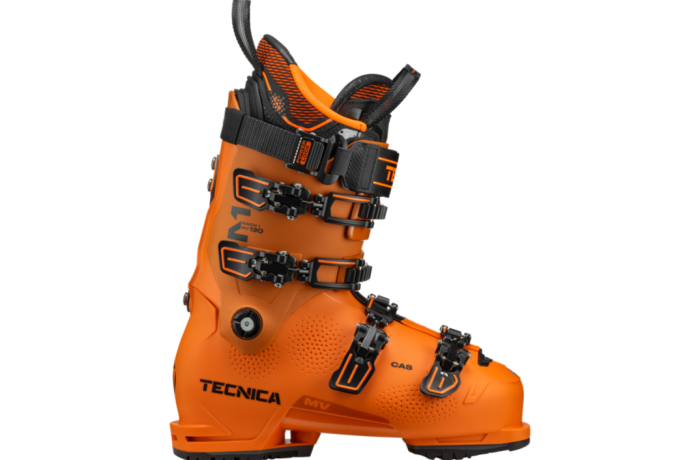
Tecnica Mach1 MV 130

Gender 
Men's
Sizes (MP) 
24.5-30.5
Hike Mode 
No
Construction 
Overlap
Boot width profile 
Medium
Also in this Collection 
120, 110, 100, 90
Cantology Compatible 
Yes

When writing boot reviews there are two main tasks--look at the tester's written commentary (there's lots) and look at the test data (there's lots) to come up with a consensus of opinion about a boot, then put that into words and try to do it with some sort of new twist or humorous anecdote. That last part is mainly fluff and B.S. but the first two components, comments and data, are objective. What's tough is when you look at those two information sources and see a hodge podge of disagreement and divergence of opinion--that makes for a waffling, vague review, and its also usually associated with lower scores.

What makes writing a boot review easy is when the commentary and data is decidedly of one mind--similar impressions of a boot's initial fit, its stance, its edge power and quickness. Well, that's what you see when you look at the Tecnica Mach1 MV 130's base information--a lot of the same, very positive takes on all of those criteria. It was an obvious gold medal winner based on its overall score of 4.73 out of 5.00, on the podium in the All-Mountain Traditional medium width group, and in the top-ten high-scoring boots club for our men's test.

Other interesting homogeneity was found in the fit data. Our fit impressions scores range from a 1 for a World Cup race boot kind of tightness to a 5 for a packed-out rental boot sort of looseness. The 100mm, medium-width boot's fit score target is a 3. We assess the fit of a boot in eight unique fit zones: toebox, forefoot, navicular, lateral column, instep, ankles, heel and calf. While there were spots of slightly more snugness for the Mach1 MV 130, like in the heel pocket that averaged 2.9, and areas of some squeeze relief, like the forefoot that averaged 3.1, the Mach1 MV 130 was essentially a numeric model of the perfect medium width fit. The average of all eight fit zones over 11 individual testers' scores came to a 3.01.

Looking at the boot's data spreadsheet under the fore-aft stance criterion shows a list of 11 entries of "ideal," and in the lateral stance criterion a list of 11 entries of "neutral." It's almost like testers are comparing notes as they write up the boot--but they're not. This is one of the indications that a boot is one of the best--it works for lots of different skiers' shapes, sizes, abilities and styles. And in the case of the Mach1 MV 130 it manages that without a least-common-denominator, dumbed-down effect to achieve broad appeal. It fits and skis at the top of the heap alongside the world's best boots, period, and does it for a lot of skiers.

Here's what one, veteran tester said about the Mach1 MV 130: It has great heel hold-down and perfect medium fit tension throughout the boot. Rocking distribution of force through the the boot to the ski edge. Intuitive--mindless ability to change direction on a dime. This is a performance skier's all-day, all-mountain boot. So easy to ski with huge horsepower available at speed or on steeper, harder snow surfaces.

Add 10 more comments just about like that and you've got a pretty good idea of what this boot's all about.


Total Avg Score 
4.73
Shell/Cuff/Tongue Plastic 
PU/PU
Dry-Test Fit 
4.63
Dynamic Balance 
4.75
Edge Power & Fore-Aft Support 
4.88
Quickness, Steering & Feel 
4.75
Convenience, Warmth & Features 
4.63
Tech Compatible 
No

Tecnica Mach1 LV 130

Gender 
Men's
Sizes (MP) 
24.5-30.5
Hike Mode 
No
Construction 
Overlap
Boot width profile 
Narrow
Also in this Collection 
120, 110, 100
Cantology Compatible 
Yes

Just how good is the new Tecnica Mach1 LV 130? Well, let's just throw a few numbers at you: out of a potential perfect score of 5.0 the Mach1 LV 130 maintained an average total score of 4.89 over five separate, scored parameters, and that's after 12 different testers lodged their votes. Its Edge Power score was a perfect 5.0. It's lowest score element? There wasn't one--each of the other four scores (Anatomical Fit, Dynamic Balance, Quickness & Steering, Features & Convenience) were 4.86's. It was the top scoring boot model in the men's All-Mountain Traditional narrow group, but it was also the highest scoring boot in the entire boot test, including women's boots. It's a new boot, so is it better than the old boot? Well, testers said emphatically, yes! Its score the last time we tested the Mach1 LV 130 (in 2021) was 4.88 and it won its category that year, too--but hell yeah, 0.01 more is better!

One veteran tester, who skied the Mach1 LV 130 late in the week-long test period after testing many other models in the All-Mountain Traditional category said this: Skiing the Mach1 LV 130 again re-frames your perspective on how a narrow boot is supposed to fit, and ski. It's just an awesome boot that makes you a better skier, instantly. The ways that testers convey the message about the Mach1 LV's skiing performance may fluctuate--one compared it to Italian supercars, another to a rally car build and one said it cranked the amp to 11 and blasted Black Sabbath--but the meaning is always clear. This is one of the best skiing boots available anywhere. Perhaps skiers should spend a season in one as a controlled-experiment designed to find out what's limiting their performance--their boot or their skills.

There was no reason for Tecnica to change the shell shape in this year's update--it had just gone through a revision the last time we tested it--but the liner's interior material was re-built with a 15% softer material to improve initial fit and a low-friction panel was integrated into the rear of the liner to help the heel glide down during entry. Testers noticed both of these updates straightaway, commenting about an easier slide in than before and a more plush feel against the sock with less aggressive bony spot pressure points. They said that the kinder, gentler entry and feel against the foot and leg did not translate to a looser-feeling fit or a loss of tightness as the boot warmed up. Rather, they just liked the boot more than they had in the past--even if 0.01 wouldn't suggest big wow-factor. It was wow-worthy, they assured.

Testers continue to heap praise on Tecnica's T-Drive cuff-to-lower connector that anchors the two essential components in a flexible-forward but rigid-sideways fashion. They say the flex feel is as good as it gets--progressive in resistance against the shin without any collapse or folding feel and snappy in its return-to-center at each turn transition. They agree that the softer plastic in the lower shell (enabled by the buttress-effect of T-Drive) makes the boot a bit more supple and more easily buckled-up around the foot without negatively affecting power transmission to the ski.

This year's addition of a stretchy Booster-type element to the hook-in-loop power strap did not go unnoticed by testers, who felt that the added elastomer enhanced the flex feel and snappy rebound from turn to turn without incidental softening of the boot-top closure. Testers also maintain their appreciation of the C.A.S. line-up of bootfitting-friendly features in both the shell and the liner, but as always, they mention that the shape of both are good-enough out of the box to render those fit solutions nearly moot.

Total Avg Score 
4.89
Shell/Cuff/Tongue Plastic 
PU/PU
Dry-Test Fit 
4.86
Dynamic Balance 
4.86
Edge Power & Fore-Aft Support 
5.00
Quickness, Steering & Feel 
4.86
Convenience, Warmth & Features 
4.86
Tech Compatible 
No

Salomon S/Pro Supra 90 W

Gender 
Women's
Sizes (MP) 
22.5-27.5
Hike Mode 
No
Construction 
Overlap
Boot width profile 
Medium
Also in this Collection 
80
Special Sizes 
22.5 and smaller
Cantology Compatible 
No

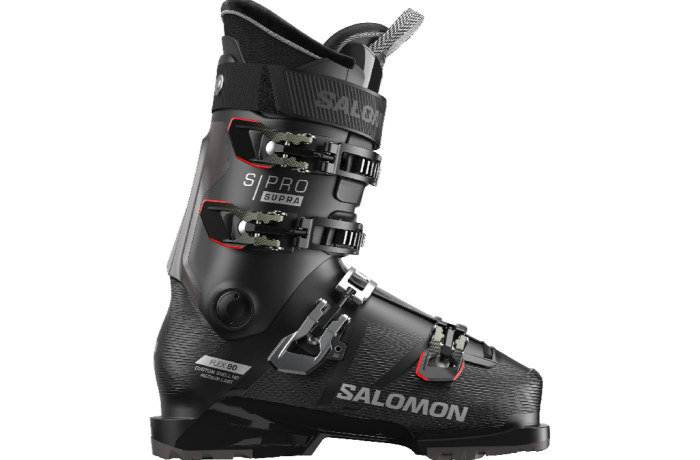
The Salomon S/Pro Supra 90 W flew a bit under the radar at the boot test but testers say it's a obvious bargain at a list price of $450. They said it's stiffer and more stable than its 90-flex labeling would suggest and had zero deal-breaker fit or performance issues. They said the buzz of BOA may have pushed the buckled Supra 90 out of its well-deserved limelight but assured that it was a competent all-mountain cruiser for intermediates and price-conscious advanced skiers alike.

Testers thought it fit the bill for a what's expected of a medium-width fit--plenty of room at the forefoot and toebox for warmth and wiggle but a suitably snug fit to the rear of the foot for ski control movements. Testers liked the cuff wrap around the average leg but said that there was enough flare at the boot top to handle a bigger calf without trouble. They liked the option of a Custom Shell HD oven-cook-and-mold mission in the case of fit problems but mentioned that simply heating up the stock liner would be enough to moderate the few minor fit inconsistencies they noticed during testing.
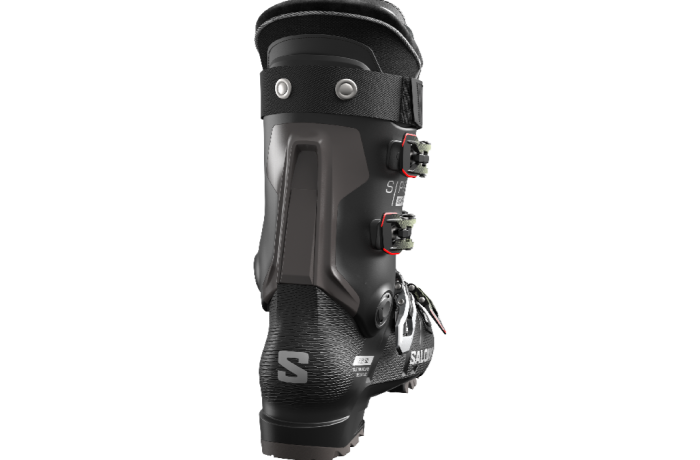
One tester had an initial problem with the tongue biting a bit, mid-shin, but reported that with some wear time this was manageable, again suggesting the full liner mold as the obvious next step to eliminate that issue if it were to persist.

While testers didn't have any big issues with the Salomon BOA system, they did like the regular old buckles here and the savings that they brought to the table without any notable performance deficit. The features set was standard for the category but exceeded the typical fare found at this price point: dual liner pull loops, 35mm Velcro power strap, lateral cuff adjustment mechanism and GripWalk soles. 

Our crew said the S/Pro Supra 90 W skied admirably, holding its own on firm, fast groomers and off-piste exploring, both. It was predictable and balanced with no-surprises appeal for a wide variety of skiers. While they said it lacks the top-end power and quickness of the 110- and 115-flex boots, testers said there was nothing missing here, with the exception of a bunch of extra dollars that didn't need to be spent.

Total Avg Score 
4.25
Shell/Cuff/Tongue Plastic 
PU/PU
Dry-Test Fit 
4.50
Dynamic Balance 
4.25
Edge Power & Fore-Aft Support 
4.25
Quickness, Steering & Feel 
4.25
Convenience, Warmth & Features 
4.00
Tech Compatible 
No

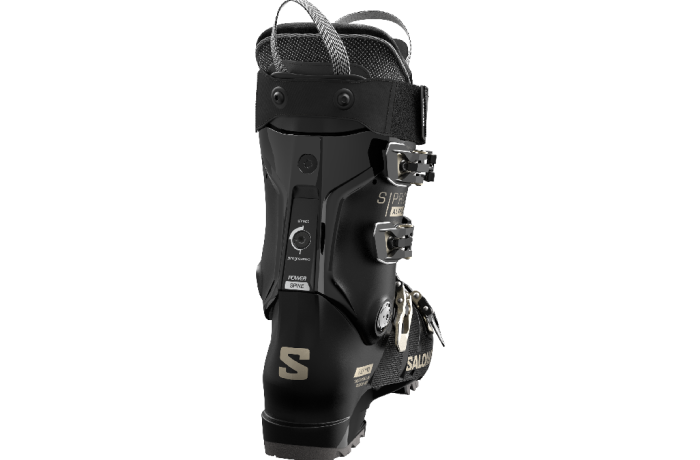
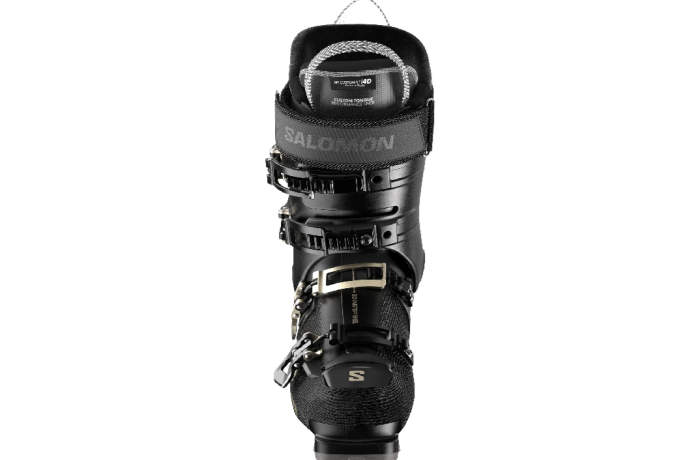
Salomon S/Pro Alpha 110 W

Gender 
Women's
Sizes (MP) 
22.5-27.5
Hike Mode 
No
Construction 
Overlap
Boot width profile 
Narrow
Also in this Collection 
100, 90, 80
Special Sizes 
22.5 and smaller
Cantology Compatible 
No

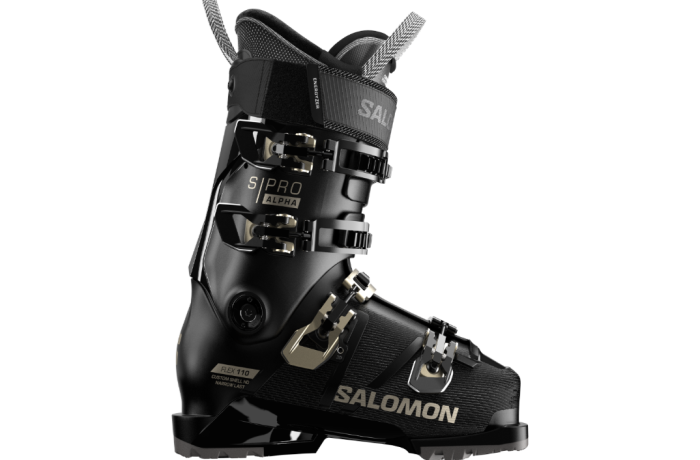
A common complaint we hear from our women's test team when it comes to narrow boots is that it's not really a narrow. Well, there is no way that gripe will ever be directed toward the Salomon S/Pro Alpha 110 W. Testers had two words in common in their reviews of this narrow All-Mountain Traditional gold medalist--snug or tight, take your pick. These were terms of endearment, mind you--our test team loves a heel-gripping, ankle-grabbing and calf-squeezing narrow--and the S/Pro Alpha 110 W did not disappoint when it came to a shrink-wrapped foot and leg match throughout the whole lower shell and upper cuff.

Testers made so many comments about how snugly this boot fit that we did some digging. The S/Pro Alpha 110 W was the tightest fitting boot in the women's All-Mountain Traditional narrow group. It was tighter than its next-tightest competitor, the Nordica Promachine 115 W, by 20% in the heel and ankle zones and by 40% in the toebox and forefoot. We took a look at the women's Frontside category where the boots are typically even more snug-fitting, and found that only the Lange RS 120 SC had a more snug heel fit score--however the overall tightness quotient, averaged over all fit parameters still went to the Salomon S/Pro Alpha 110 W, by 15%. So yeah, the Alpha's a tight one, and just right for accomplished skiers with low-volume feet and legs our testers said.

They loved how it skied. Absolute precision of steering inputs, transitions between turns and quick pressure controlling moves were enabled by the painted-on fit. They said that once they placed the ski (exactly where and how they wanted it) the 110-powered cuff over-performed to control their biggest, stiffest skis at high speeds over and through any type of snow surface. They couldn't find its performance threshold--calling it a ninja and a scalpel--except for a couple testers who went numb from the high-performance squeeze-chamber and lost control of their precise foot movements altogether.

Maybe it was too much of a good thing for the S/Pro Alpha, as its lowest score fell in the Anatomical Fit and Initial Feel criterion--most likely driven by a too-tight fit for some testers, especially at the "throat" of the boot where the lower leg transitions down into the instep area. One tester said this performance fit unleashed her inner Hulk, but another said it rendered her locked in a cast. Suffice it to say, a slender leg and lower-volume instep will fit best into this limited berth space.

The Alpha 110 W's highest score was for, not surprisingly, its Quickness and Steering, at a 4.83, but testers matched that high score in the Convenience, Warmth and Features criterion where they gave props to the boot's functional features. They liked its relatively new cuff adjustment ability, fat 45mm Velcro power strap, screw-affixed buckle and strap hardware, GripWalk soles and Custom Shell HD moldable polyurethane up and down on the shell for a maximum variety of bootfitter-friendly modification options.


Total Avg Score 
4.63
Shell/Cuff/Tongue Plastic 
PU Custom Shell HD/PU Custom Shell HD
Dry-Test Fit 
4.17
Dynamic Balance 
4.67
Edge Power & Fore-Aft Support 
4.67
Quickness, Steering & Feel 
4.83
Convenience, Warmth & Features 
4.83
Tech Compatible 
No

Salomon S/Pro Supra BOA 130

Gender 
Men's
Sizes (MP) 
24.5-31.5
Hike Mode 
No
Construction 
Overlap
Boot width profile 
Medium
Also in this Collection 
120, 110, 100
Special Sizes 
31.0 and larger
Cantology Compatible 
No

We've been testing the S/Pro boot for many years and seen it evolve through several variants. At one point Pro meant medium, but now you can have an S/Pro Alpha, which is a narrow, forcing the use of modifier Supra to designate Salomon's medium width all-mountain range. Last year we got an advance look at the new Supra BOA in a 120-flex, and this year we tested the S/Pro Supra BOA 130. Testers loved the extra 10-points of power and stability it brought to the table and they still loved the way Salomon has integrated the BOA system into its liner design for maximizing the shell’s cable-cranking, three-dimensional closure--even if that comes with some associated ease-of-entry challenges (more on that later).

This S/Pro (so-called Supra now) is the best version we've seen from Salomon, testers agreed. Gone as of last year is its former, ungainly Core Frame insert and bloated lateral shell shape, and in its stead we find a slightly more robust version of the svelte S/Pro Alpha narrow boot shape that preceded it. The S/Pro Supra’s is a clean, anatomically-inspired shell shape with curvature where it makes sense but without extraneous doo-dads to clutter its classic four-buckle overlap design. The best parts of the narrow Alpha's fit blueprint can be found in the Supra, just slightly expanded in its proportions for the higher-volume foot it seeks to house.

The ideally contoured and padded liner tongue that mirrors the instep and base of shin in the Alpha (one of our favorite fit features there), does so here in the Supra with slightly more ceiling height throughout. Some testers complained about an initially lumpy, inconsistent feel in that zone, which was worrisome as it should be one of the best fit areas of the boot. However, follow-up notes from these testers showed that some warmth and wear time evened out those fit glitches nicely--so, prospective buyers who experience this same phenomenon should give the liner some extra time to settle in during try-on, testers suggested. The vertically spacious and squared-off toebox shape works even better for skiers looking for a true medium-width fit than it does in the narrow-lasted version of the S/Pro, and testers commented that their foot felt just enough room to spread out and tune into the skis’ feel against the snow in the Supra, without numbness but also without any loss of connection to the ski or quickness of steering inputs.

The test team agreed that the lower boot held the foot nicely, with a comfortably firm grip on the ankles and a snug heel pocket. They also concurred that closing-down the boot around the foot with the BOA reel worked exactly as billed, wrapping in a consistent and three-dimensional way in easily-tuned, clicky increments. Testers liked the graphic tightness meter lines scribed on the shell overlap for their instant, visual appeal to the OCD bucklers and dialers on our team who just can't handle it when ridge hippies tell them to "just relax and feel it, bro."

Testers really liked the 120-flex Supra BOA they tested last year (it was a gold medal winner too) but they really, really liked the additional power and torque that the 130-flex delivered to the ski this time around. Enabled by a dead-on-the-money stance set-up (the Supra’s highest score metric), the boot's stable, strong attitude was apparent to testers who got their skis up on high edge angles, at speed, through some very sketchy off-piste conditions and early morning frozen spring cord. Testers found no chink in the S/Pro Supra's armor when it came to its descent performance--they loved how this boot skied.

Oh, but the trade-off for what testers called the test’s best execution of BOA from a fit-wrapping perspective was a limitation on the ease-of-entry that we think is related not to the BOA itself but to the built-to-BOA liner's ExoWrap instep gauntlet. The tubular material encircles the liner over the top of the foot to create a low-friction glide path for the shell above to smoothly transect as the BOA constricts, tightening the shell. It's one of the reasons testers say the S/Pro Supra's BOA closure quality lives up to the technology's hype--but at the expense of an easy slip into the boot. A few testers struggled, certainly. We suppose you could snip the ExoWrap out of there with scissors (we can already hear the gasps from Salomon reps), but we think the loss of the sweet fit-wrapping wouldn't be worth it. Our suggestion to the entry-challenged is to suck it up and deal with it or step down to the 120-flex version that's easier to get on.

Total Avg Score 
4.56
Shell/Cuff/Tongue Plastic 
PU Custom Shell HD/PU Custom Shell HD
Dry-Test Fit 
4.33
Dynamic Balance 
4.78
Edge Power & Fore-Aft Support 
4.56
Quickness, Steering & Feel 
4.67
Convenience, Warmth & Features 
4.44
Tech Compatible 
No

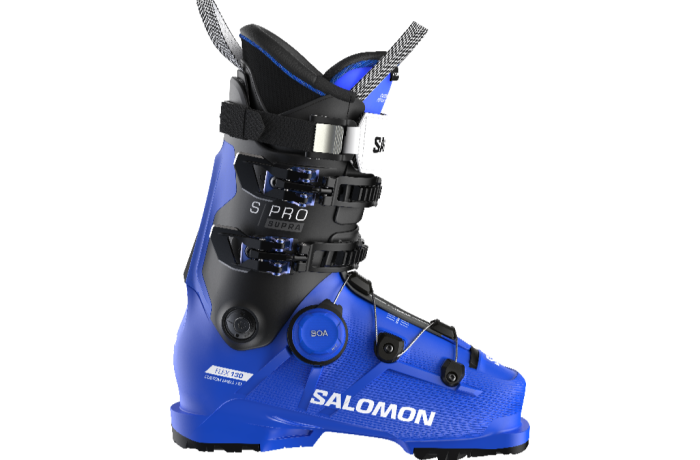
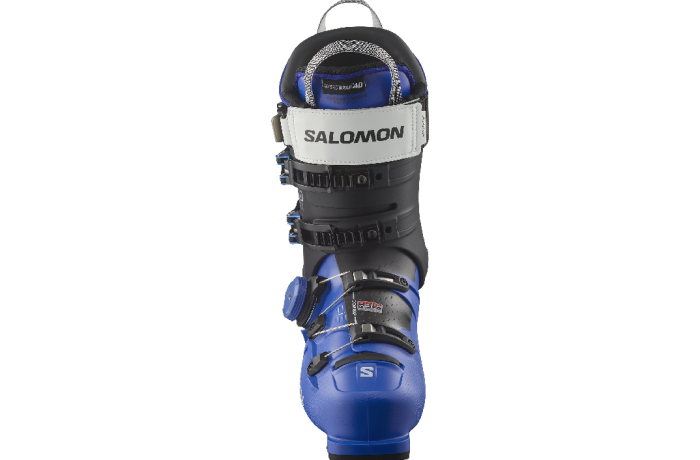
Salomon S/Pro Alpha 130

Gender 
Men's
Sizes (MP) 
22.5-30.5
Hike Mode 
No
Construction 
Overlap
Boot width profile 
Narrow
Also in this Collection 
120, 110, 100
Special Sizes 
22.5 and smaller
Cantology Compatible 
No

The Salomon S/Pro Alpha 130 is one of our test team's favorite narrow, all-mountain boots for its simultaneously tight and cushioned fit character and unique set of traits that set it apart from the rest of the narrow-class crowd--and we don't just mean its bold Race Blue tone, though testers like that too.

One tester said it had a best-in-industry transition of fit from the lower leg shaft through the throat of the boot and over the top of the foot at the instep. Another testers said it has the lightest weight feel of any boot in the category, without loss of power. And several praised its slightly flatter ramp angle and slightly more upright cuff angle for a strongly leveraged starting position that helped load tons of power to the shovel of the ski at turn initiation. These are highly specific nuances that our testers notice and they made sure to give credit where credit's due. These unique fit and stance traits do take it slightly out of the average for the category, which may have hurt it in its final scores, but for certain testers (and skiers) those same niche elements propel it to the top of the leader board.

The boot comes with two rear spoilers and the thicker, 6mm comes mounted on the boot. Testers saw little reason to change it unless the wearer had a really muscular calf. In fact, most testers thought the boot stood more upright than most with the 6mm spoiler in, which they liked for a tall and relaxed starting position that could apply a lot of leverage to the front of the ski upon forward flexion. The flipside was that the backseat was ready and waiting to receive skiers who didn't stay on line or encountered unexpected terrain changes--similarly, shorter testers felt challenged to get out in front of the boot while our taller testers loved the set-up right out of the gate. A couple of our testers mentioned that their first mod, if they were to take it home, would be to add a small amount of heel lift to the internal boot board.

The room in the toebox is notable, especially vertically, and with a relatively low-slope internal ramp angle testers occasionally found themselves heel heavy and looking for leverage above the toes to pry themselves back into more-forward balance. Some testers wanted a thicker-toebox sock or a pad applied to the top of the liner toebox to snug up this area while others with chronic bloodflow limitation and resulting cold toes gave this fit zone a double-thumbs-up.

The Custom Fit 4D World Cup liner is spectacularly padded-feeling but without straying into mushy, gonna-pack-out territory, testers report, claiming that the cushioning along the shin and down into the instep is the best of the group--possibly best of the test. It's a well-shaped and well-executed liner tongue to begin with but testers note that it's also easily modified as its plastic front is not stitched all along the tongue, so removing padding or even possibly adding more is an option for skilled bootfitters without a lot of surgery involved.

Salomon successfully thins the plastic shell wall where thickness is not critical for stability and power. This makes the boot better wrapping over the top of the foot during buckling and shaves some ounces off the total. The S/Pro Alpha 130 is one model that manages to pull off some weight savings in the shell design without any apparent loss of edge control or dampness--many lightweight alpine boots get twitchy and unstable, that's not the case here, testers assure.

Testers like Salomon's return to a laterally adjustable cuff on the new S/Pro boots, including the Alpha 130, and the fat cam buckle power strap was a hit with testers for its broad capture of the front of the tongue and shell for a well-wrapped leg fit and solid flex feel. Dual pull liner loops are standard fare but appreciated and while GripWalk soles are the norm, testers love having both the grip and shock mitigation on a piste-powerful all-mountain boot like this one.

Total Avg Score 
4.56
Shell/Cuff/Tongue Plastic 
PU Custom Shell HD/PU Custom Shell HD
Dry-Test Fit 
4.33
Dynamic Balance 
4.56
Edge Power & Fore-Aft Support 
4.78
Quickness, Steering & Feel 
4.89
Convenience, Warmth & Features 
4.22
Tech Compatible 
No

Gold