All-Mountain Access

For many skiers the boot itself still represents one of the biggest barriers to fully enjoying our snow-sliding sport. It used to be a matter of comfort that stood in the way of some folks’ love of skiing, but boot designs have made huge comfort gains through better mold shapes and more sophisticated liners. Same goes for complaints of cold boots—insulative laminates, wicking liner materials, improved sock technology and electric heater options have largely addressed these chilly concerns. And worries about walking across a massive parking lot? Well, with releasable-cuff walk modes and rockered GripWalk soles ski boots have never been easier to walk in.

Boots that are difficult to get on (and off) now remain the sport’s biggest stumbling block for skiers, veteran or rookie alike. While we think boots are as easy to put on as they’ve ever been, there are still skiers who struggle, whether due to physical inflexibility, reduced hand-strength or other injury- or health-related complications. There are boots that make ease of entry a primary design feature. Some of these are re-purposed rear-entry designs from the 80’s that have been reconfigured with modern materials and finishes. Other models might focus on the releasable cuff of the walk-mode style boot to enhance entry—a rearwardly releasable cuff generally aids entry as the “corner” between upper and lower boot is more straightened-out. The combination of an open-topped cabrio design with a spiral-wrapping liner can also help those with entry and exit challenges.

The All-Mountain Access category is open to models that offer some enhanced fit element or design feature that reduces a skier’s barrier to entry and enjoyment of skiing. Our testers understand that sometimes gains in these criteria may result in sacrifices in other, higher-performance test metrics. Our testing process rewards boots that deliver for their intended audience for fit, features and performance, so a Gold Medal boot in the All-Mountain Access category might not ski as strongly at high speeds as, say, those found in the Frontside category.
Best All-Mountain Ski Boots of 2021-2022

The broadest and most popular ski boot category remains the All-Mountain Traditional group--mostly four-buckle overlap designs with non-releaseable cuffs--and there our testers find the most variety in fit profiles in narrow, medium and wide lasts and all possible flexes. These go-everywhere boots balance comfort and performance like no other category and will suit any foot, leg or instep shape and volume. While boots are getting lighter, the All-Mountain Traditional category is still dominated by polyurethane plastic, though increasingly in thin shell wall designs that reduce weight, improve wrapping for better fit and closure but maintain a strong foundation where it counts for stability and performance.

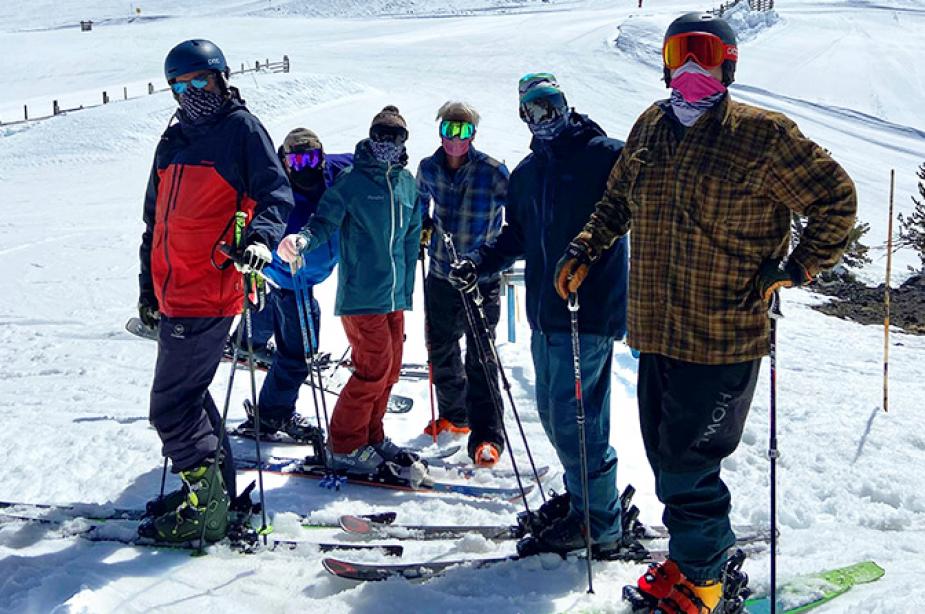
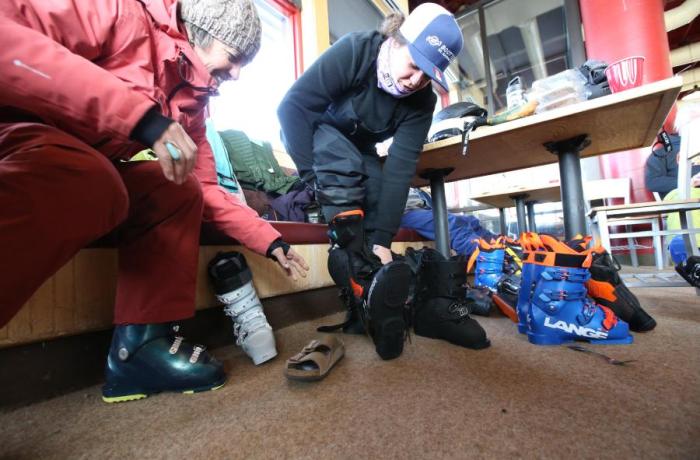
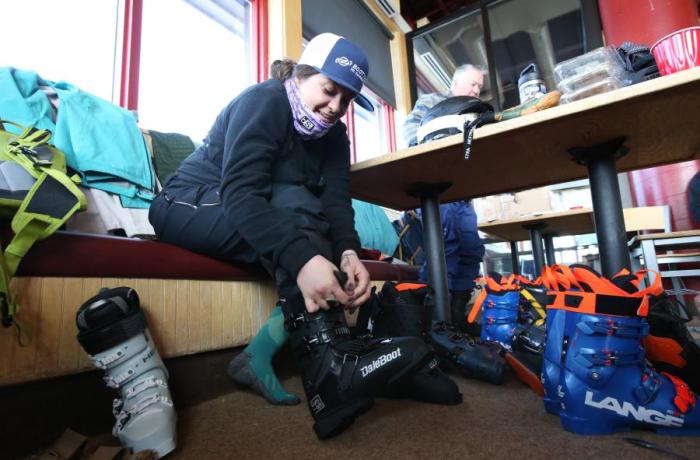
Of course we're smiling behind these masks!

Special Ops: Boot Test Team April 2021 Mt. Bachelor, Oregon

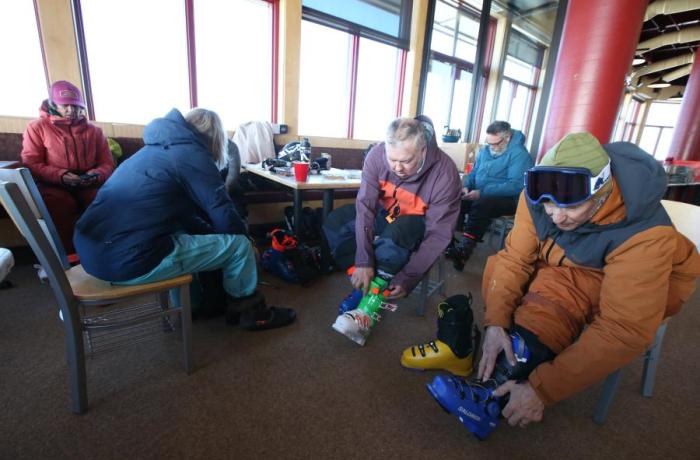
This year's ABB Boot Test was accomplished with the help of an agile, experienced team of veteran boot testers who were willing to don masks and spread out in physically-distanced fashion in our mountain-top test center at Mt. Bachelor to stuff their feet into 65 brand new boot models of all varieties. Without brand liaisons in attendance this season and without the typical after-testing social activities, this was an all-business sort of affair but that didn't dissuade these dedicated gear junkies from showing up. We utilized our Bend, Oregon home team to large extent but we had travel-in testers from Colorado, New Mexico and California bolstering our ranks.

Buying Ski Boots in The Time of Covid

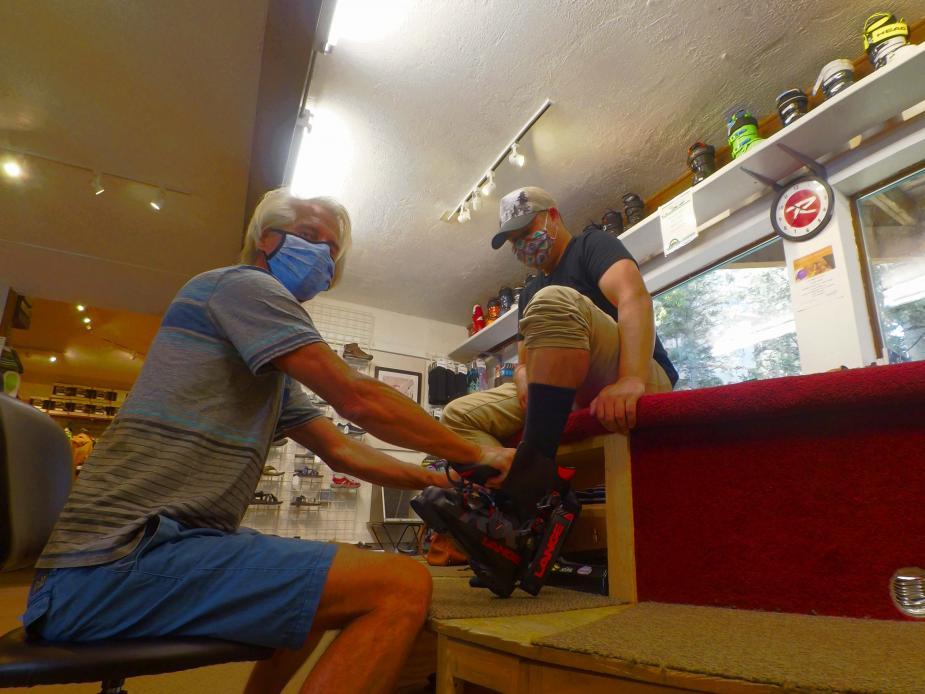
The world may not be changed forever but it certainly is for the near future, and as skiers we’re all wondering how participation in our sport will be altered in the coming season. We bootfitter types (like you) wish this virus would simply disappear but in the case that it doesn’t we’re already changing how we do things as it relates to selling boots and working on them. We’re optimistic that what we do will still be essential and possible and safe, and we know for a fact that getting in-person time with a skilled bootfitter is still the only way to buy the right boot and get it dialed--but here are some things to think about when strategizing your return to boot world.

Ski Boot Testing Adapts

Our late March Boot Test scheduled at Silver Mountain Resort in Idaho is typically attended by testers from around the country and by boot brand liaison teams, often comprised of boot design engineers, many of whom are from Europe. It became apparent that the boot test as we knew it was going to be different when boot companies began banning international travel due to Covid-19 concerns in early March. It only got more dire when the Italian government locked-down the entire region of Veneto, where the towns Montebelluna, Asolo and Treviso all reside—homes to Dalbello, Full Tilt, Head, Lange, Nordica, Rossignol, Roxa, Scarpa and Tecnica.

A New World Cup Plug: Head Raptor WCR

Yup, there’s a new plug in town and we ain’t talkin’ about a plodding horse or old timer’s tobaccy—it’s a new World Cup race boot from Head, the Raptor WCR which replaces the venerable but long-in-the-tooth B-series boots. If you’re not clear where the narrowest lasted, lace-up liner then cram into shell race boot gets its nickname from, it’s because the narrowest internal mold a boot company uses on their true race boots is referred to as the “plug.” Often, more consumer market narrow boots may be based off that plug but with more anatomical curves added to the internal mold to make them initially more comfortable and saleable.

Gold